Eight Washington transit agencies issued their first competitive procurement in more than 12 months during the last 30 days alone, a cluster of activity that signals something more than routine budget cycles. From Link Transit in Wenatchee to Grant Transit Authority in Moses Lake to Ben Franklin Transit in Richland, agencies that were largely quiet through 2025 have all surfaced at once, and the reason is a collision of three separate funding clocks that happen to be expiring at the same time.
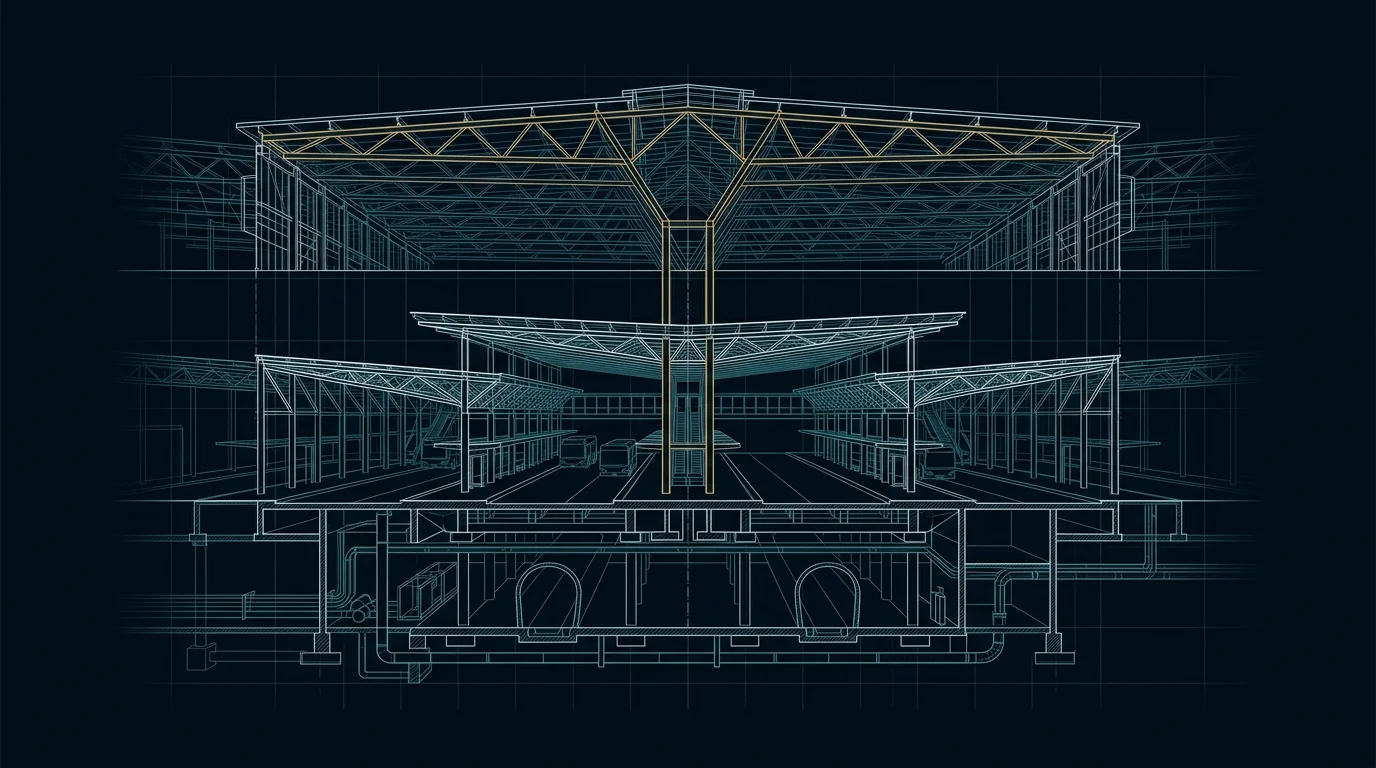
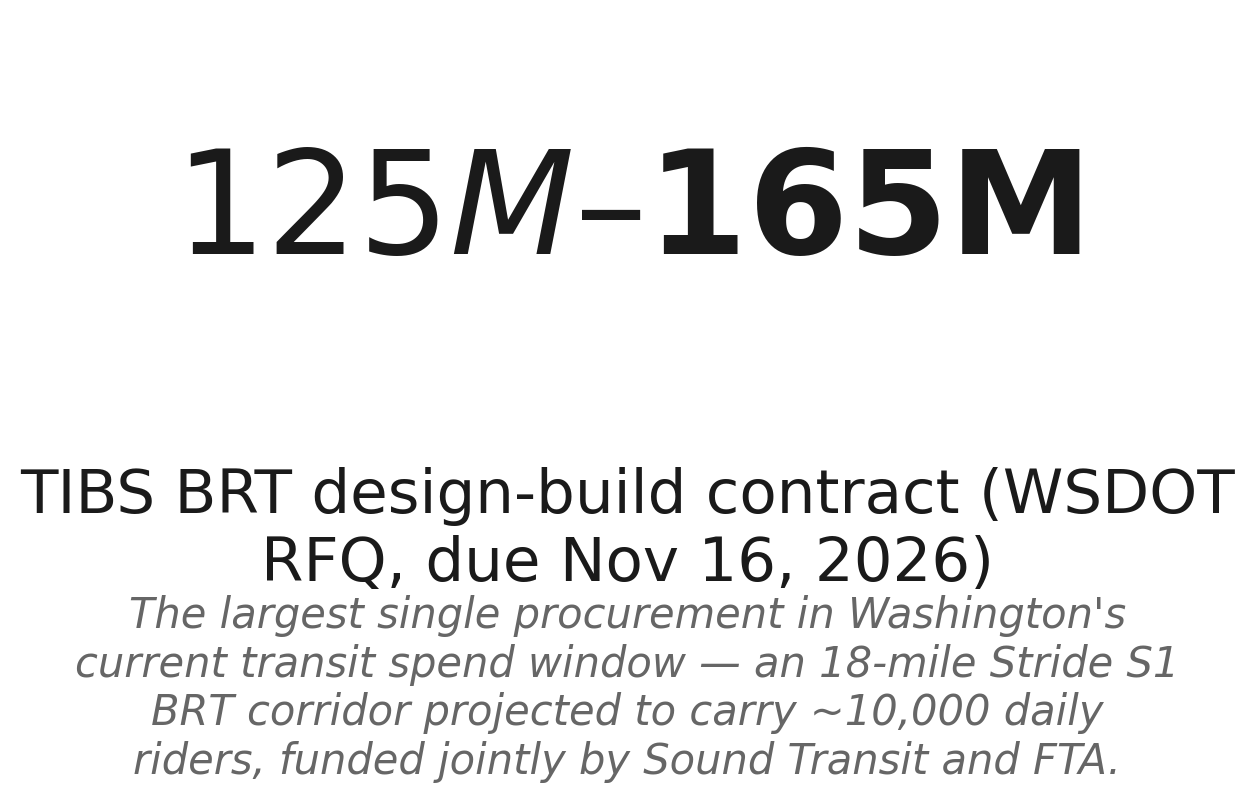
The largest single contract driving the surge is WSDOT's $125M–$165M design-build RFQ for the Tukwila International Boulevard Stride BRT station on SR 518, with responses due November 16, 2026. That procurement is jointly funded by Sound Transit and a federal Capital Investment Grant, it runs on Sound Transit's board timeline, independent of any state appropriation cycle. But its sheer scale is pulling adjacent agencies and local governments into coordination-related procurements of their own, contributing to the broader spike in first-time RFP activity.
The second clock is the state's. Move Ahead Washington's 2025–27 biennium appropriated $454 million from the Climate Commitment Act's cap-and-invest revenues for transit, including $188.9 million in Transit Support Grants and $31.3 million in Green Transportation Capital Grants for fleet electrification and facility upgrades. WSDOT's internal grant cycles require projects to be shovel-ready by 2027 to access biennium funds, meaning an agency that hasn't yet issued an RFP is already behind. The Transportation Choices Coalition noted after the 2026 legislative session that CCA revenue is declining and will need to be addressed in the 2027–29 cycle, making the current biennium the peak spend window and, for practical purposes, the last one at this funding level.
Source: NationGraph.
The third clock is federal. The FTA's FY 2026 Buses and Bus Facilities and Low-No Emission competitive rounds total roughly $610 million nationally, with applications closing September 21, 2026, and awards expected in December. For rural Washington operators, agencies like Mason County Transit Authority in Shelton or Grant Transit in Moses Lake, the deadline is effectively earlier, because rural projects must be submitted through WSDOT as the state DOT, which sets its own internal deadline ahead of the federal close. That routing requirement makes WSDOT a procurement bottleneck: small agencies that didn't have a project ready when WSDOT's internal window opened were locked out of this federal round entirely.
These three mechanisms are genuinely distinct. Move Ahead Washington's state grant programs flow directly from the CCA through WSDOT to transit agencies, with no federal involvement. The FTA competitive grants are federal dollars where WSDOT acts as an intermediary for smaller operators. The TIBS BRT contract is a regional capital procurement set by Sound Transit's board, anchored by a separate federal Capital Investment Grant. They share a calendar overlap, not an authorization chain, which is precisely what makes the current window unusual. Agencies are not responding to a single policy signal; they are responding to three independent deadlines that happen to land within the same 90-day corridor.
The geographic spread of the eight new RFPs underscores that this is a statewide phenomenon, not a Puget Sound story. Link Transit's EV DC charger Phase 2 in Wenatchee, Ben Franklin Transit's Short Range Transit Plan in Richland, and Spokane Transit Authority's actuarial services procurement represent agencies well east of the Cascades, where the state's formula grants and federal rural-routing requirements matter more than Sound Transit's construction schedule. King County Metro's bus glass replacement RFP and the City of Everett's emergency response plan sit at the other end of the geography, in the dense metro core where FTA capital grants dominate. The convergence is visible across agency sizes and regions simultaneously.
What this means practically: Washington's $1.92 billion active federal transit grant portfolio is currently disbursing, running through 2031, and the state has received $121 million in new federal transit commitments in the past six months alone. Agencies that successfully procure in this window will be drawing on funds that are already obligated. Agencies that miss it face a two-year gap before the next Move Ahead Washington biennium cycle opens, and face it at a moment when CCA revenues are projected to be lower.
The signal to watch is whether the October procurement pace holds. The month is already tracking 12 RFPs in its first 11 days, compared to a February 2026 surge of 126 for the full month. If the TIBS BRT design-build RFQ closes on schedule November 16 and FTA awards its FY 2026 competitive grants in December as planned, the agencies that moved will know by early 2027 whether the bet paid off. The ones that didn't will be filing applications into a smaller pool.