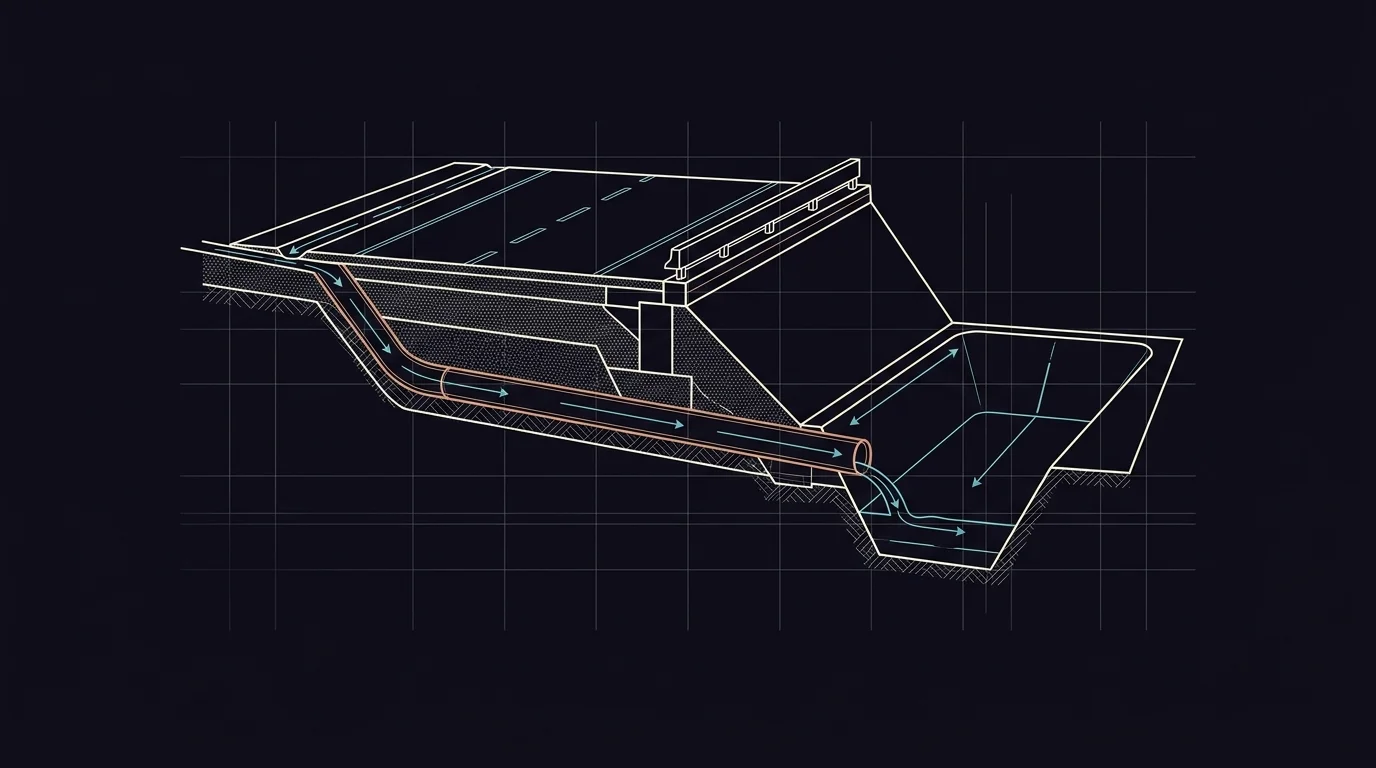
Indiana has issued 25 stormwater-tagged procurement requests in the last 30 days, two and a half times its 12-month monthly average of roughly 10. The number alone is striking. What's less visible is where these contracts are hiding: inside bridge deck overlays, scour protection jobs, pipe lining projects, and small structure replacements, road work that most budget-watchers would never flag as a water infrastructure story.
Twenty of the 25 requests came from a single agency, the Indiana Department of Transportation, posted between August 12 and August 30, 2026. The timing is not a coincidence. Two forces arrived in Indiana almost simultaneously, and their collision produced the procurement spike.
The first force is regulatory. On January 14, 2026, INDOT Standards and Policy Director Elizabeth P. Mouser signed Design Memorandum 26-01, effective February 1. The memo updated post-construction stormwater best-management practice requirements under IDEM's Construction Stormwater General Permit, and it applied broadly: any INDOT project disturbing between 10,000 square feet and one acre of impervious surface, reaching Stage 3 milestones on or after February 1, now carries a mandatory stormwater management line item. Because INDOT has been designated a Municipal Separate Storm Sewer System operator by EPA and IDEM, there is no opt-out. Stormwater compliance became a standard element of essentially every road and bridge contract the agency issues.
Source: NationGraph.
The second force is meteorological and federal. Beginning August 11, severe storms dropped six to nine inches of rain across parts of Indiana, pushing multiple rivers to major flood stage and forcing widespread road closures. Governor Mike Braun requested a major disaster declaration on August 20. President Trump approved it on August 25 as FEMA Major Disaster Declaration DR-4933-IN, covering 21 counties including Marion, Hamilton, Lake, LaPorte, and Porter. A federal emergency declaration had already been approved ten days earlier, on August 15. Twenty of INDOT's 25 stormwater RFPs in the window were posted after August 12, the day the storms began.
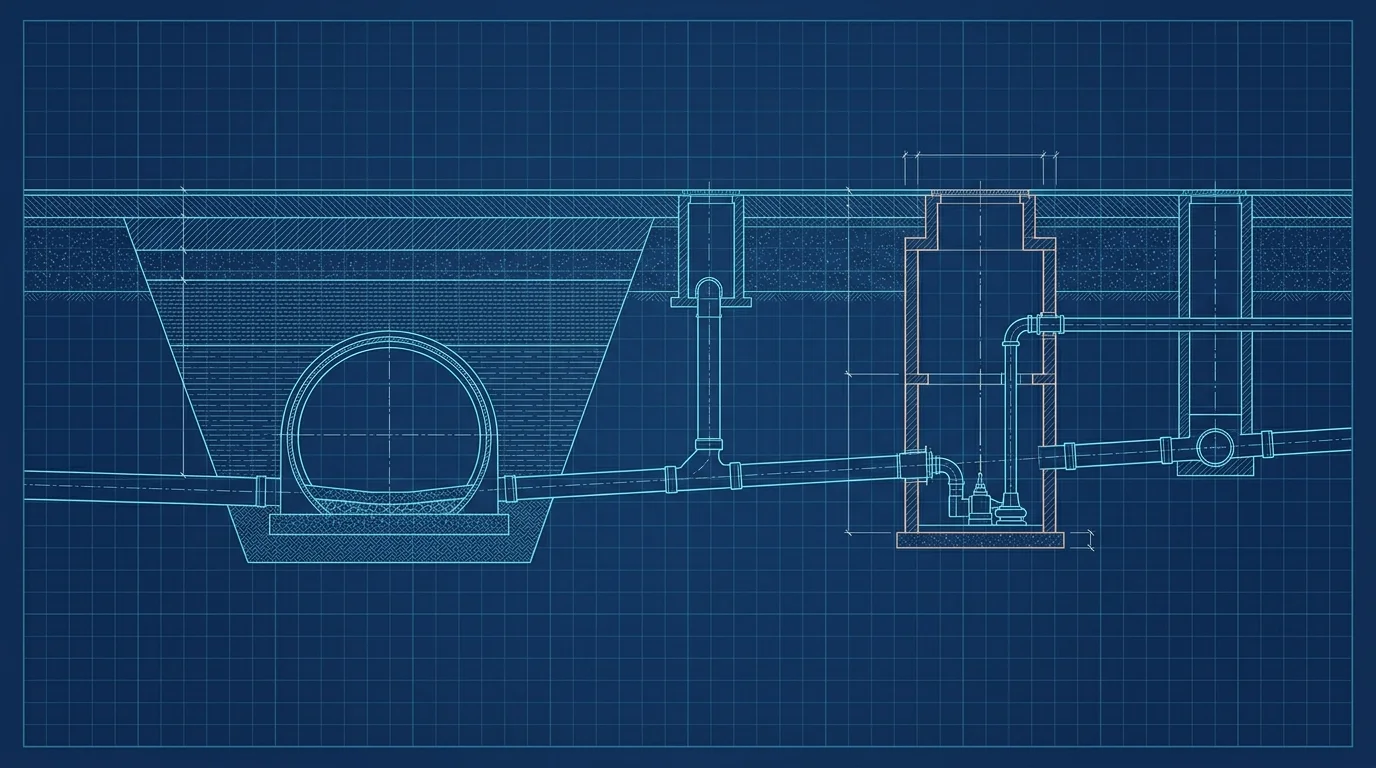
The result is a procurement picture that looks like a stormwater infrastructure push but functions as something more compound. The compliance memo means every repair contract INDOT writes to fix flood-damaged roads now arrives pre-loaded with stormwater management requirements. A standalone RFP titled "Post-Construction Stormwater Management (PCSM)" that appeared August 12 confirms that DM 26-01 compliance work has matured into its own procurement category, separate from the construction contracts it shadows.
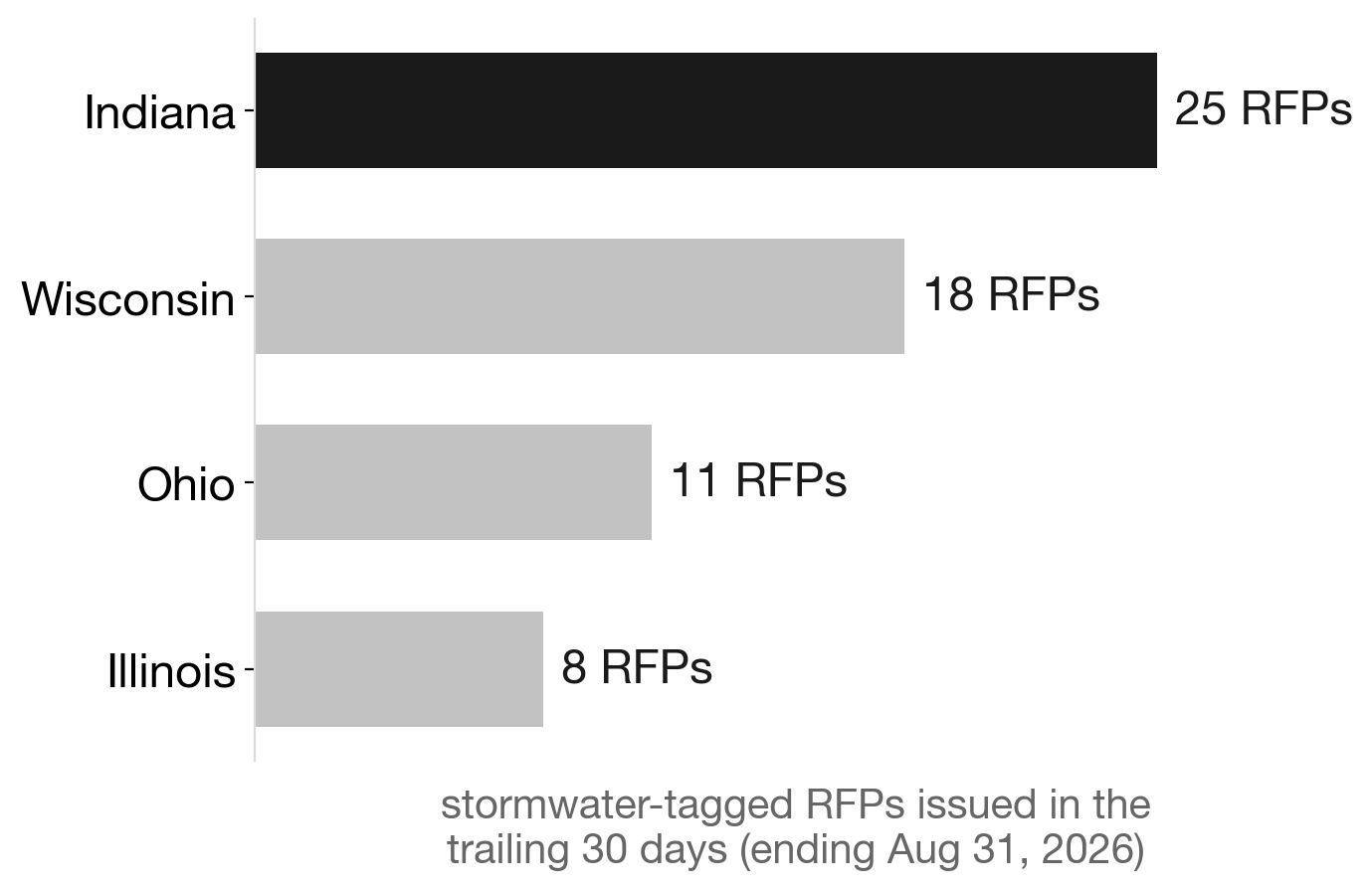
The regional comparison underscores that this is an Indiana-specific dynamic, not a Midwest-wide weather response. Indiana logged 25 stormwater RFPs in the trailing 30 days; Wisconsin issued 18, Ohio 11, Illinois 8. Neighboring states faced some of the same storm systems. None produced procurement volumes close to Indiana's. The difference is the January mandate.
For residents in the 21 counties covered by the disaster declaration, the practical meaning is that road repairs are coming with stormwater controls attached, detention features, infiltration measures, and runoff management built into the same contracts that replace a culvert or resurface a bridge deck. That's a departure from how Indiana has historically procured road work, where stormwater was often a separate, later-stage consideration. INDOT's designation as an MS4 operator made that separation untenable; DM 26-01 formalized the change.
The broader context matters here. Indiana has now received four federally declared disasters or emergencies since March 2025, including DR-4882-IN covering spring 2025 flooding across 25 counties, a January 2026 winter storm emergency, and now DR-4933-IN. IDEM's MS4 General Permit, which took effect in December 2021 with staggered implementation deadlines, has been steadily tightening the compliance environment throughout that period. The state's flat, glaciated topography, which causes rivers to rise quickly and roads to flood early, means that precipitation events translate almost immediately into transportation infrastructure damage, which now translates directly into stormwater procurement.
The next signal to watch is whether FEMA Public Assistance funds under DR-4933-IN unlock Category C (roads and bridges) and Category D (water control facilities) reimbursement at the same scale as the spring 2025 disaster, which covered both categories across 25 counties. If they do, INDOT's procurement volume could sustain or exceed its current pace well into the fall construction season, as federally reimbursable repair projects move through the contracting pipeline with DM 26-01 stormwater requirements already embedded. The question for Indiana contractors and county engineers alike is whether they have the capacity to execute stormwater compliance work at the volume the state's regulatory calendar and its weather are now jointly demanding.