Traffic signals at some of the most dangerous intersections in Rockland and Westchester counties, New York, are getting a federally funded overhaul as pedestrian deaths across the country remain near historic highs.
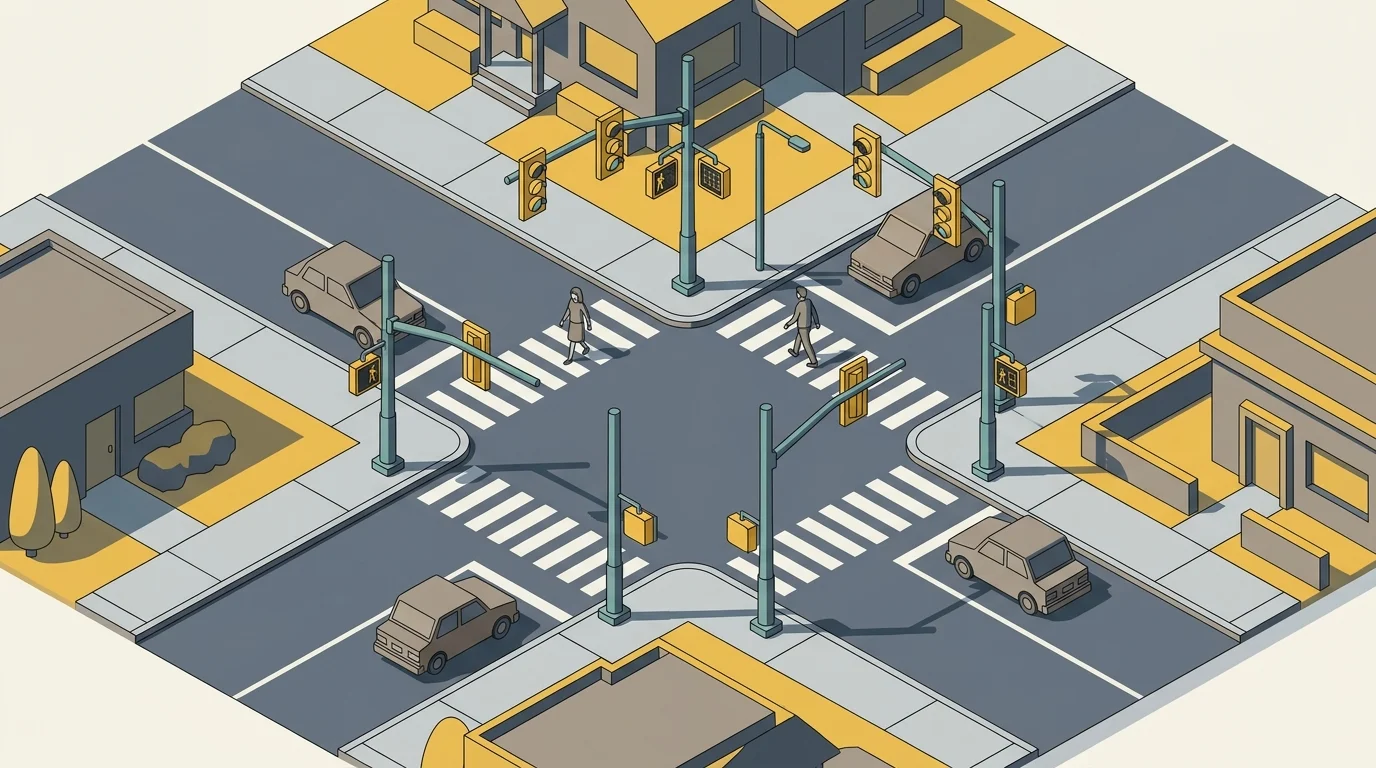
The $2 million Highway Safety Improvement Program grant will replace outdated traffic control equipment at intersections in seven municipalities: the towns of Orangetown, Greenburgh, Northcastle, and Mt. Kisco, and the villages of Elmsford, Mount Kisco, and Nyack. The work will also include pedestrian facility upgrades at intersections where they're needed, likely adding features like countdown timers, ADA-compliant push buttons, and leading pedestrian intervals that give walkers a head start before cars get a green light.
The intersections targeted weren't chosen at random. New York State's transportation engineers signed off on the project only after reviewing crash data, meaning these specific locations have documented histories of collisions. The Hudson Valley suburbs are caught in a tension that plays out in communities across the country: roads built wide and fast for postwar car traffic now run through village centers with aging populations, denser neighborhoods, and more people on foot. Arterials like Route 9W through Nyack, Route 119 through Elmsford, and the commercial corridors around Mount Kisco's commuter train station were designed decades ago with little thought for anyone not behind a wheel.
Nationally, pedestrian fatalities hit roughly 7,500 in 2022, a 40-year high and nearly double the rate from 2009. New York's suburbs around the city saw some of the sharpest increases during that period. Much of the signal infrastructure in these communities dates to the 1970s and 1990s and lacks the technology that modern safety standards require.
The funding comes through the federal Highway Safety Improvement Program, which received about $15.6 billion nationally through the 2021 Bipartisan Infrastructure Law. HSIP typically covers 90 percent of project costs, making the total investment here closer to $2.2 million with state and local contributions. For smaller municipalities like Nyack and Elmsford, that federal cost-sharing is the difference between getting the work done and deferring it indefinitely.
The spread of $2 million across seven municipalities does limit how many intersections each community can address, and advocates in places like Nyack have pushed for more sweeping changes on state routes passing through their downtowns. Whether this round of funding resolves the most dangerous spots or serves as a starting point for broader work remains to be seen as the state moves forward with a larger statewide signal modernization effort announced in 2023.