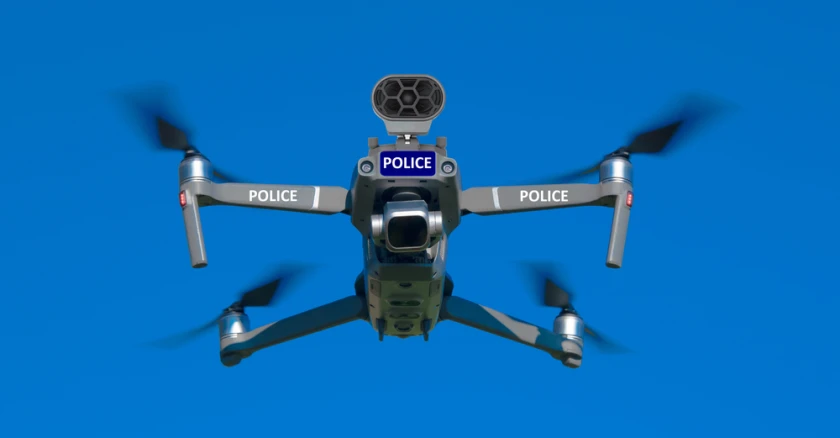
When someone calls 911 in Montgomery County, Maryland, a drone launches from a rooftop dock and arrives at the scene in an average of 64 seconds. The national average response time for a patrol car is about 7 minutes.
That gap is the entire pitch for drone-as-first-responder programs. And cities are buying it fast.
Chula Vista, California started the first DFR program in 2018. Since then, its drones have responded to over 20,000 calls and assisted in 3,038 arrests. Average drone response on Priority 1 calls: 3.5 minutes, compared to about 8 minutes for a patrol unit. In 25% of calls, ground units were released before they even arrived. The drone had already provided enough information to clear the scene.
The LAPD ran a six-month pilot that logged 3,000 flights. During that period, drones handled 10% of calls without any officer ever showing up. The department approved a $3.9 million expansion in February 2026 to deploy 24 drones citywide.
Las Vegas now operates the largest police drone program in the country: 75 drones, 13 rooftop skyports, and 10,000 flights in 2025 alone. They're projecting 20,000 flights in 2026.
One department cleared 41% of its calls with drones alone, no officers dispatched, across 1,200 incidents in 22 weeks.
The explosion in adoption traces to a single regulatory change. From 2018 to 2024, the FAA approved just 50 drone-first-responder waivers, each taking 11 months or longer. In spring 2025, the FAA overhauled the process. Average approval time dropped to one week. By June, 300 applications had been submitted and 214 approved. Cities that had been watching from the sidelines rushed in.
Portland, Miami, Cleveland, Columbus, Charlotte, Philadelphia, West Palm Beach, Fremont, Fargo, and Evanston all launched DFR programs in 2024 or 2025.
The cost comparison seals it. Cincinnati's sheriff's office used to spend $400,000 a year just maintaining police helicopters. That didn't include the aircraft, crew, or fuel. The city's new 22-drone fleet costs $450,000 a year total for software and maintenance, with each drone running about $62,000 fully loaded.
One FAA rule change. One year. The way American police respond to emergencies is being rewritten.