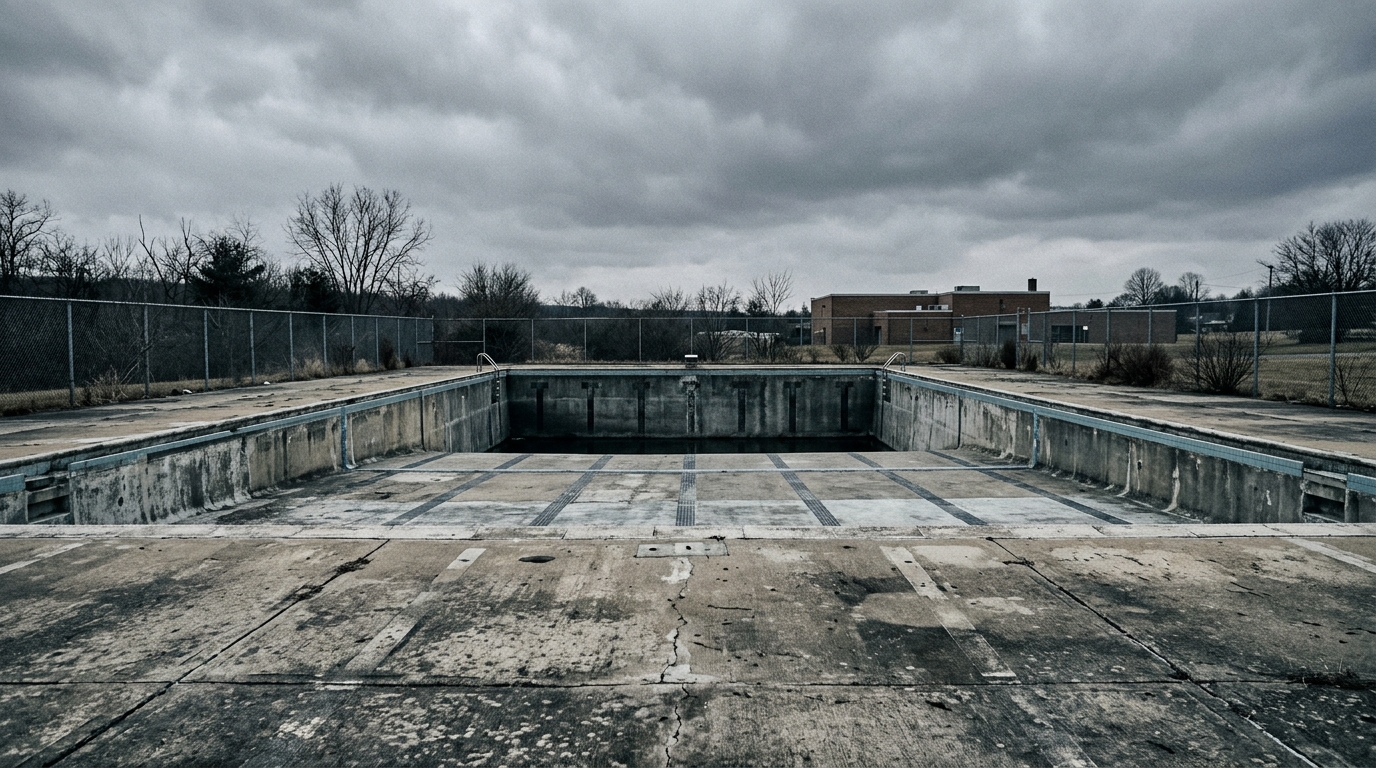
Altoona, Pennsylvania is pushing ahead with renovations to Prospect Pool, choosing to invest in one of the city's public recreational facilities rather than let it deteriorate — a notable commitment for a small Rust Belt city still finding its footing after years of financial distress.
The decision carries real weight in a place like Altoona. The city of roughly 43,000 residents in Blair County sits at roughly half the population it had at its 1930 peak, when it was a booming railroad hub. Decades of economic decline following the collapse of Pennsylvania Railroad employment left the city struggling to maintain infrastructure built for a much larger tax base. Altoona was formally designated a financially distressed municipality under Pennsylvania's Act 47 program in 2012, and only exited state oversight in 2020 after years of tax increases and spending cuts.
For residents in a city where median household income runs well below state and national averages, public pools like Prospect aren't a luxury. They're often the only accessible option for swimming, recreation, and summer youth programming. Across the country, aging public pools built during the New Deal era and postwar decades are reaching or exceeding their designed lifespans, and many cash-strapped cities have simply closed them rather than pay for repairs. That outcome disproportionately hits lower-income communities hardest.
Altoona appears to be betting on a different path. The city has posted a solicitation for the Prospect Pool renovation project through PennBID, Pennsylvania's standard electronic platform for public construction bids. Specific costs and a construction timeline have not been publicly detailed in the available summary, and full project specifics would be found in the bid documents.
Contractors responding to the solicitation will ultimately determine the price tag. What comes next is a clearer picture of what it will actually cost Altoona to keep Prospect Pool open — and whether the city's post-recovery budget can absorb it.