South Carolina's Department of Environmental Services pulled in $20.87 million in new EPA water infrastructure grants in a single 90-day window this spring, nearly five times what it secured in the same period last year, and the surge is not an accident. It is a deadline.
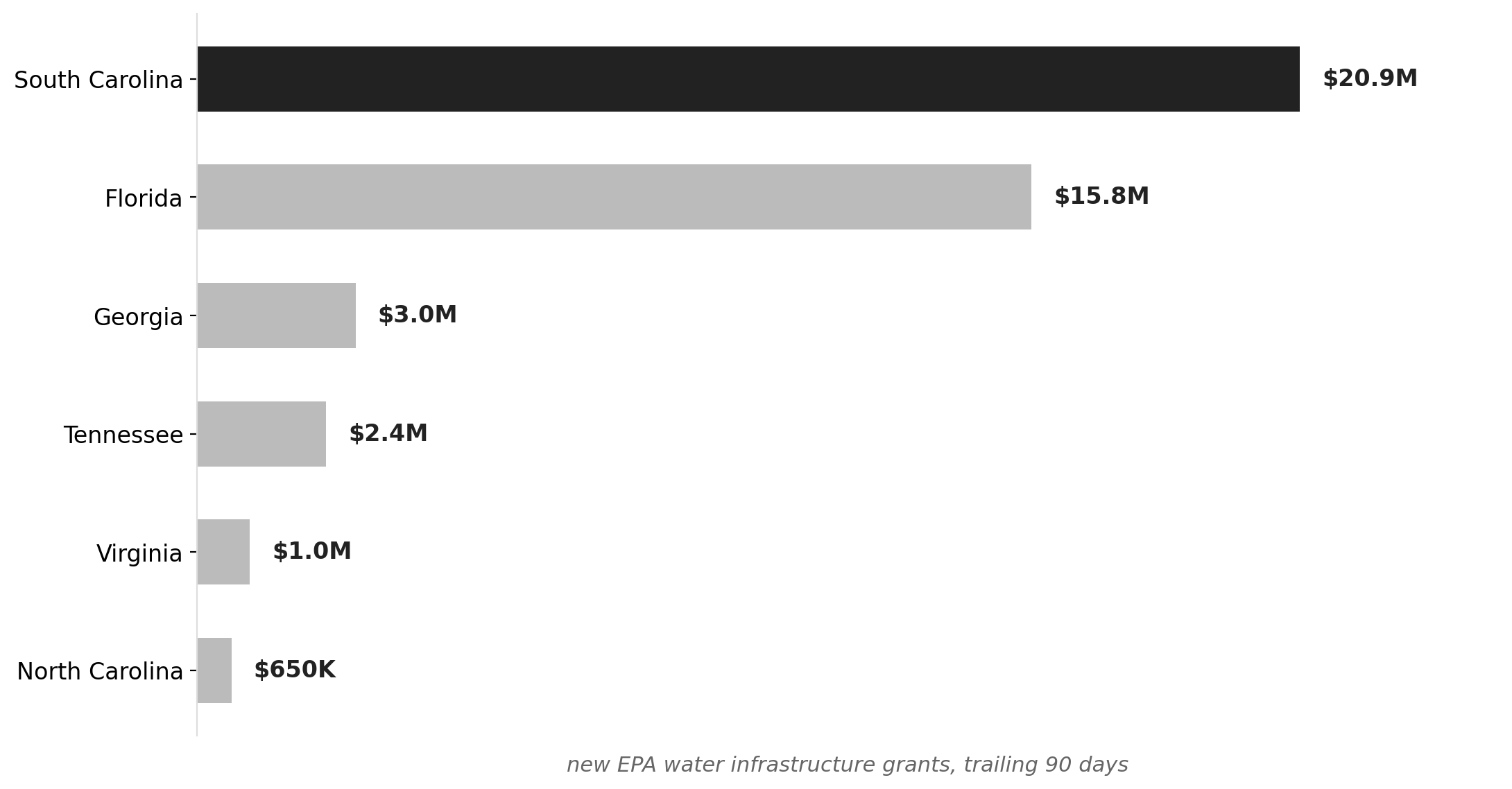
Both awards landed on April 1, 2026: a $17.77 million Drinking Water State Revolving Fund capitalization grant and a $3.10 million Clean Water SRF grant, both running through March 2033. Together they pushed SCDES's active federal water grant portfolio past $350 million. The $20.87 million also put South Carolina ahead of every other state in the Southeast over the same window, outpacing Florida ($15.79 million across three grants), Georgia ($3 million), and Tennessee ($2.44 million).
The force driving that acceleration is a hard calendar stop. The Infrastructure Investment and Jobs Act authorizes its final year of supplemental SRF capitalization grants through September 30, 2026. As the National League of Cities has noted, FY2025 and FY2026 represent the peak IIJA allotment years, with $2.603 billion flowing annually to both the Clean Water and Drinking Water SRFs nationwide. After the authorization lapses, those supplemental pools close. What isn't obligated by September 30 doesn't roll over.
Source: NationGraph.
The White House's proposed FY2026 budget compounds the pressure. It calls for a 31.5 percent cut to SRF appropriations, meaning the baseline funding that predates the IIJA could also shrink once the supplemental authority expires. For a state agency managing a nine-figure grant portfolio, the math is straightforward: the window to claim near-grant-level federal dollars at peak volume is measured in months, not years.
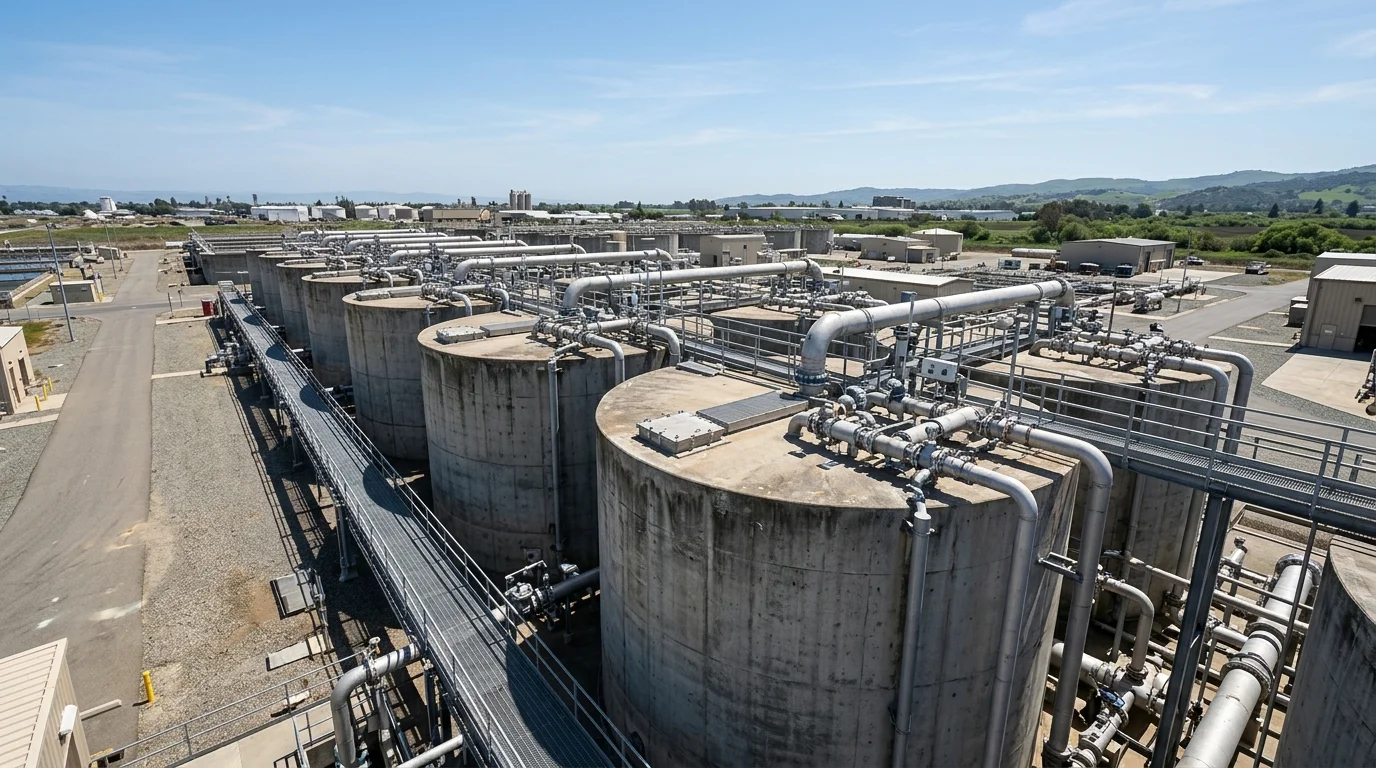
South Carolina has a second, overlapping reason to move quickly: PFAS. The state carries a significant contamination footprint from textile manufacturing, military installations, and industrial landfills, concentrated in the Upstate and Lowcountry. EPA's April 2024 final rule established enforceable maximum contaminant levels for six PFAS compounds including PFOA and PFOS, triggering a compliance clock for utilities that need treatment upgrades now. The IIJA created a separate $4 billion emerging contaminants stream for exactly this purpose, with a statutory requirement that funds be deployed as 100 percent principal forgiveness, meaning outright grants with no repayment obligation.
SCDES has been drawing aggressively from that stream. A $23 million WIIN Emerging Contaminants grant started in October 2023 targets PFAS treatment in small and disadvantaged communities. An additional $11 million tranche started in October 2025. The agency's published FFY2025 DWSRF Emerging Contaminants Intended Use Plan sets its current allotment at $9.549 million, all of it forgivable principal. The April 2026 capitalization grants land on top of all of that, filling the broader SRF pool that distributes money to individual water systems as low-interest loans and, for qualifying communities, outright forgiveness.
The national backdrop makes South Carolina's spring surge more striking. Across the country, IIJA water award volumes in the first half of 2025 fell 53 percent year over year, suppressed by executive orders, EPA staffing reductions, and uncertainty around the PFAS regulatory framework after EPA signaled in May 2025 that it intended to revise the April 2024 rule. SCDES said it was monitoring that process. The regulatory ambiguity did not slow the agency's grant intake; if anything, the April 2026 rebound suggests SCDES moved the moment the pipeline cleared.
For South Carolinians served by small or rural water systems, the practical meaning of this sprint is treatment infrastructure that would otherwise be financially out of reach. The emerging contaminants grants, by federal statute, flow preferentially to systems that lack the rate base to self-finance PFAS filtration. A community water system in the Upstate drawing from contaminated groundwater near a former textile site is not going to bond its way to a granular activated carbon system. The federal forgivable loan is the mechanism, and the mechanism expires in four months.
What to watch between now and September 30: whether SCDES can obligate its remaining FY2025 and FY2026 IIJA allotments before the authorization closes, and whether Congress passes any extension or bridge funding as part of the broader appropriations fight. The SRF programs are not new, they predate the IIJA by three decades, but the supplemental capitalization layer that has made the last four years exceptional does not have an automatic successor. The September deadline is both a finish line and, depending on what happens on Capitol Hill, potentially a cliff.