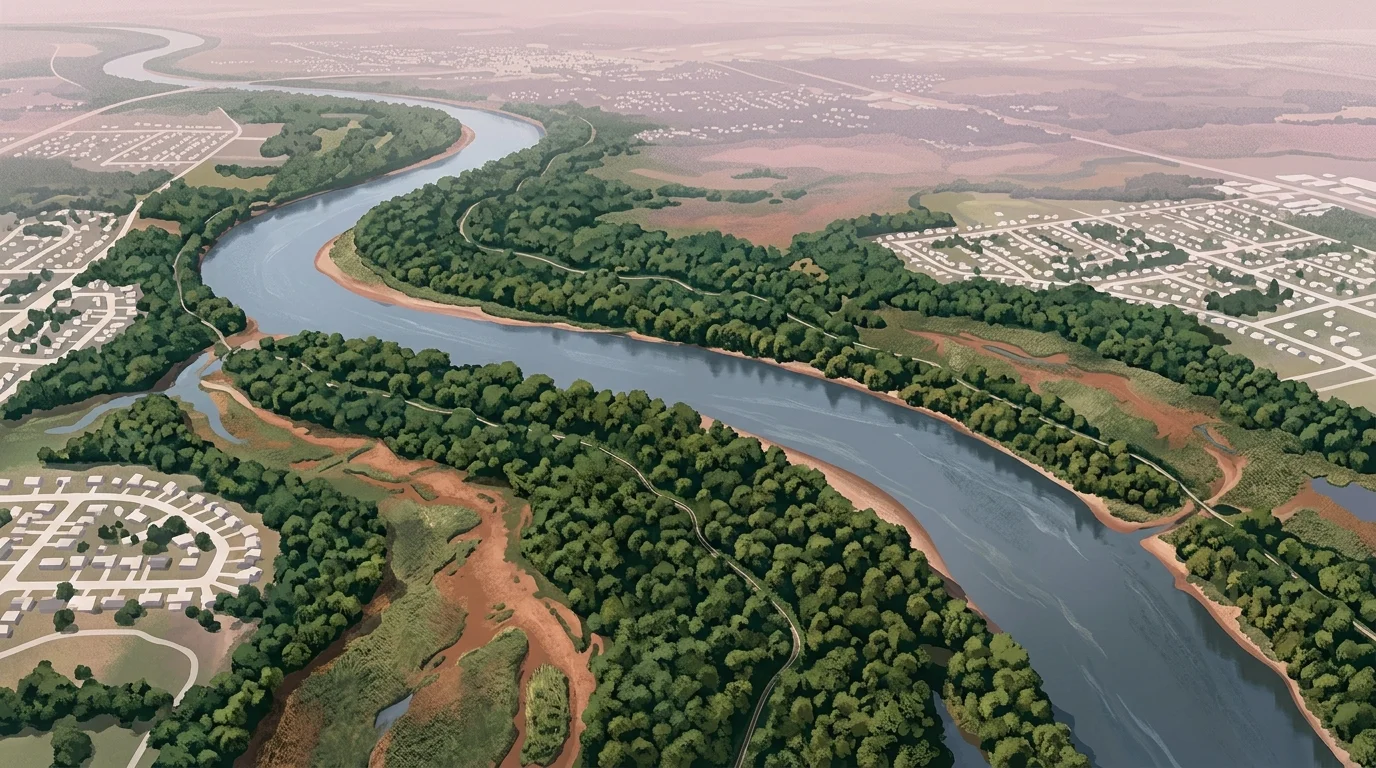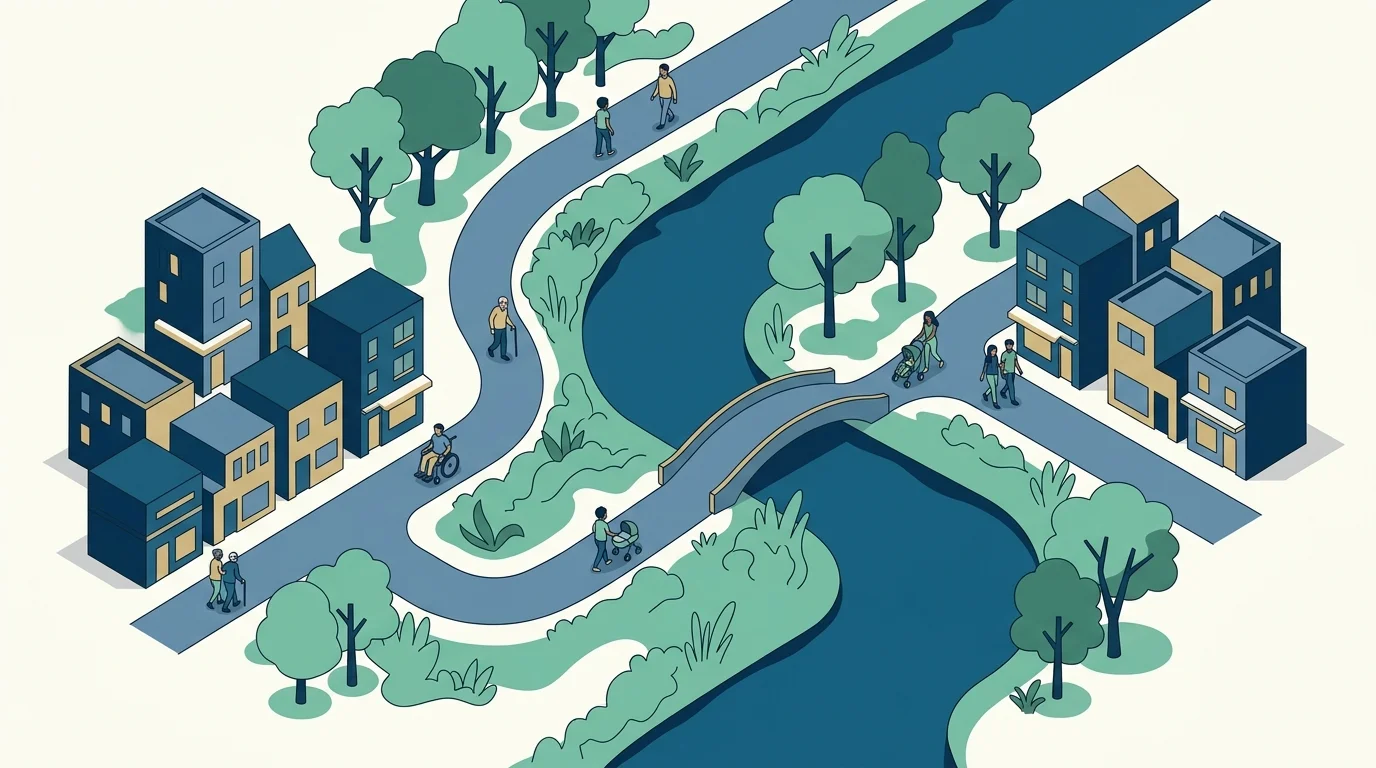
A Georgia community organization is moving into construction on a universally accessible riverside trail designed to connect neighborhoods that have long been separated by the river corridor, with the project now open to contractors.
The trail, called "Wheel Beautiful: RiverLands Universal Access Trail," goes beyond the minimum requirements of the Americans with Disabilities Act. Universal design trails are built to accommodate wheelchair users, people who use strollers, older adults, and people with sensory disabilities, with wider paths, gentler grades, and smoother surfaces than standard accessible routes.
The specific community and river corridor involved aren't identified in the procurement listing posted through Georgia's state bidding system, though the procuring entity appears to be a local government or community organization rather than a state agency. Georgia has no shortage of candidates: the Chattahoochee, Ocmulgee, Oconee, Flint, and Savannah rivers all run through communities that have invested in or pursued riverfront revitalization in recent years. The project's emphasis on connecting neighborhoods suggests it serves a transportation and equity function alongside recreation.
The timing fits a broader national pattern. Federal infrastructure funding from the 2021 Bipartisan Infrastructure Law boosted trail and pedestrian projects across the country, with explicit priority given to historically disconnected or underserved communities. Riverside corridors that once housed industrial uses or were simply neglected have become targets for public investment in dozens of cities, following the model of projects like Atlanta's BeltLine.
Georgia also has a particular stake in accessible infrastructure. Roughly 13 percent of Georgians report living with a disability, a rate above the national average, and rural and small-town communities in the state have historically had fewer accessible recreational options.
Design and planning for the trail appear to be complete, given that the project has reached the construction contracting stage. Who ultimately builds it, and when construction begins, depends on the contractor selection now underway.