Thirty New York public institutions issued a housing-related RFP in the last 30 days for the first time in over a year, a count that stood at zero for the entire prior 12-month baseline. The burst followed Governor Hochul signing the 'Let Them Build' SEQRA reforms into law on May 27, 2026, the first major legislative overhaul of the State Environmental Quality Review Act since its adoption in 1975. The timing is not coincidental.
The reforms, embedded in the $268.5 billion FY2027 Enacted Budget, exempt qualifying housing projects from environmental review for the first time in the law's fifty-year history: up to 300 units in urban areas, up to 500 units in high-density New York City districts. For developers and the public agencies that fund them, SEQRA had long been the procedural weapon of choice for project opponents, capable of delaying construction by years. Removing that exposure appears to have released a procurement queue that had been building in the background.
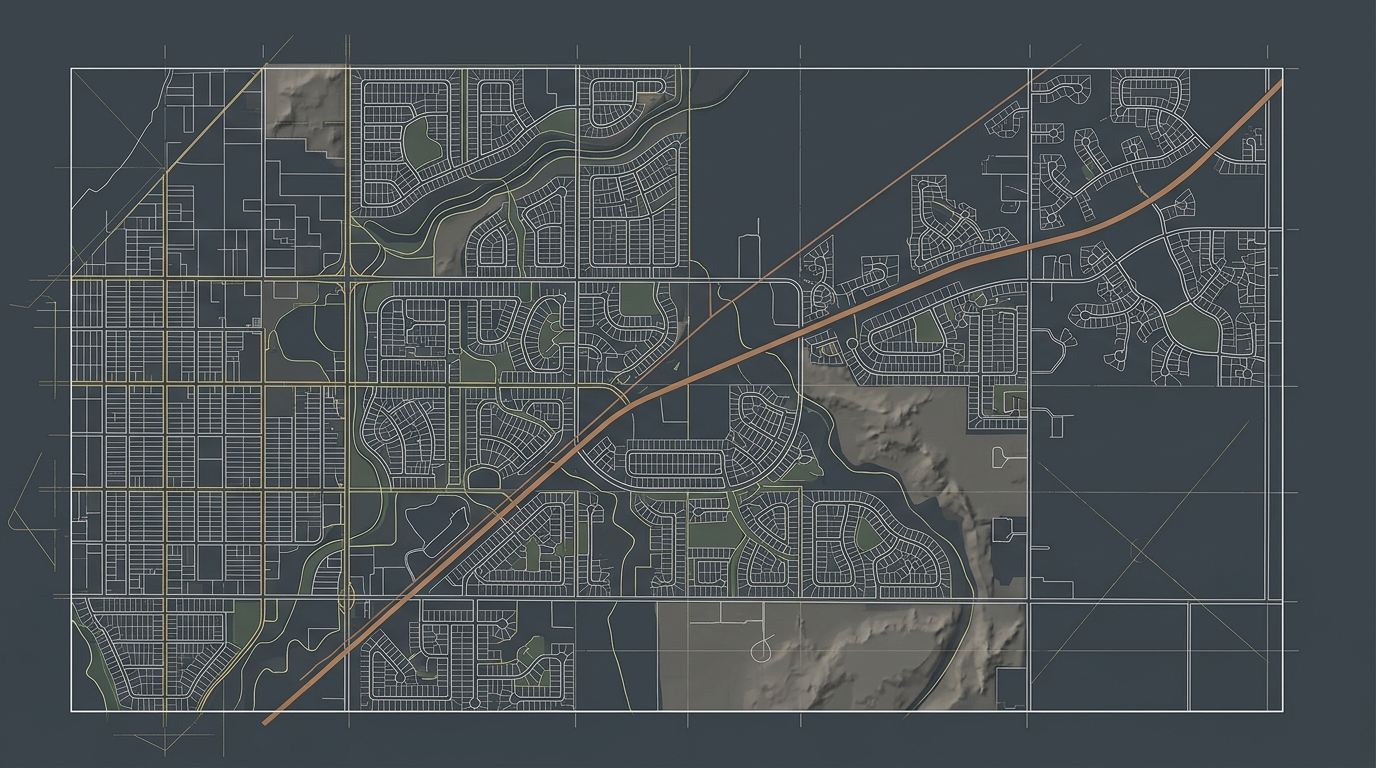
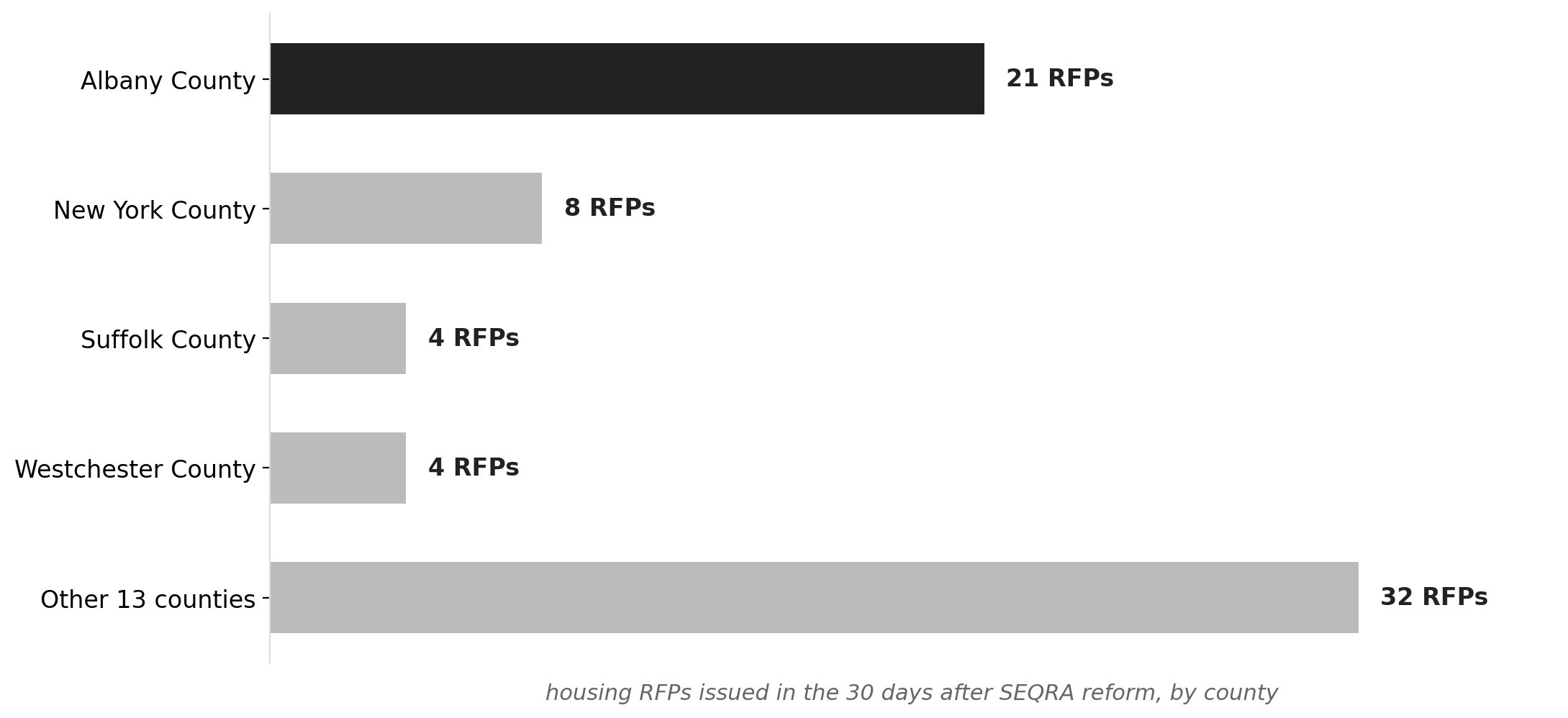
The 36 institutions active in the 30-day window collectively produced 69 housing RFPs, and the geography is the more telling signal. Albany County accounts for 21 of them, drawn from eight state agencies including OTDA, OMH, NYSERDA, HCR, and DASNY, the capital's housing infrastructure firing simultaneously. New York County added eight more, including NYC HPD's 15/15 Rental Assistance RFP targeting 15,000 units by 2030 and a 100%-affordable housing solicitation to redevelop the New Utrecht Library site in Brooklyn. Suffolk and Westchester counties each produced four. Altogether, 17 counties are represented, reaching from Tompkins and Chemung in the Southern Tier to Nassau and Suffolk on Long Island, a statewide signal, not a downstate one.
Source: NationGraph.
The OMH launch of ESSHI Round 10 on June 12 exemplifies how the state-level activity is structured. The Empire State Supportive Housing Initiative has now produced roughly 1,400 units per year across nine rounds toward a 20,000-unit goal by 2031; this round continues that cadence. Simultaneously, OTDA issued the Homeless Housing and Assistance Program RFP (due July 28) and the New York Supportive Housing Program RFP (due July 15). Nassau County's industrial development authority issued its first housing-related RFP in over a year, focused on affordable and transit-oriented projects; Orange County sought an operator for a Housing Resource Center. Both county-level reentries suggest the reform's signal propagated well beyond the agencies that drafted it.
The financial underpinning matters here. New York carries an active federal housing grant portfolio exceeding $1.2 billion in currently running awards, anchored by a $320 million DOE-HCR energy efficiency program running through 2029, $205 million in HUD grants to the New York City Housing Authority, and $170 million via NYC OMB. That existing federal exposure gives agencies confidence to issue new solicitations: the money to execute is already in the pipeline, and the legal barrier to starting construction has just been lowered.
According to a legal analysis by Cuddy & Feder, the SEQRA amendments represent "the first major legislative streamlining of SEQRA since its adoption in 1975", a framing that captures why the procurement response looks different from prior budget cycles. Past housing budgets funded programs without removing the review hurdle; this one does both. NYC Mayor Zohran Mamdani publicly backed the reforms ahead of passage, stating that "New Yorkers can't wait any longer for action on housing."
HCR reports that more than 22,000 affordable homes were created or preserved in FY2025-26 alone, the single highest annual total under Hochul's five-year plan, with more than $20 billion invested statewide since 2021. The Governor's office puts the cumulative count at more than 81,000 homes toward a 100,000-home target, leaving roughly 19,000 units to close before the plan's end. The RFP burst now converts that remaining gap into live procurement, with agencies competing to place capital before the five-year clock runs out.
For New Yorkers, the most immediate change is the prospect of projects that would previously have spent two or three years in environmental review moving directly to procurement and construction timelines. The reader's signal to watch is whether the proposal responses match the solicitation volume: issuing 69 RFPs is a necessary condition for accelerated production, not a sufficient one. Submission deadlines cluster in July and August 2026, which means the first round of awards and rejections will arrive before the end of the year, a concrete test of whether the market is ready to build at the pace the state is now asking for.