The federal data shows North Carolina received $5.2 million in new water infrastructure grants over the last 90 days, down from $625 million in the same window a year ago. That number looks like a collapse. It is not.
The $623 million that recorded last July was a single annual accounting event: the State Revolving Fund capitalization grants that flow from EPA to NC DEQ each year land on July 1, by design. This year's equivalent allotments were published by EPA in April 2026 under P.L. 119-74 and are still cycling through NC's spring application and award process, with new obligations expected in July and August. The active NC water infrastructure portfolio exceeds $1.2 billion, including a $409 million Drinking Water SRF and a $58 million emerging contaminants grant currently disbursing. One new grant start appears in the trailing window: a $5.2 million EPA congressionally-mandated award to the Town of Fuquay-Varina, which began August 1. The pipeline is full. The calendar is the artifact.
The real story is not a funding cliff. It is a demand crisis.
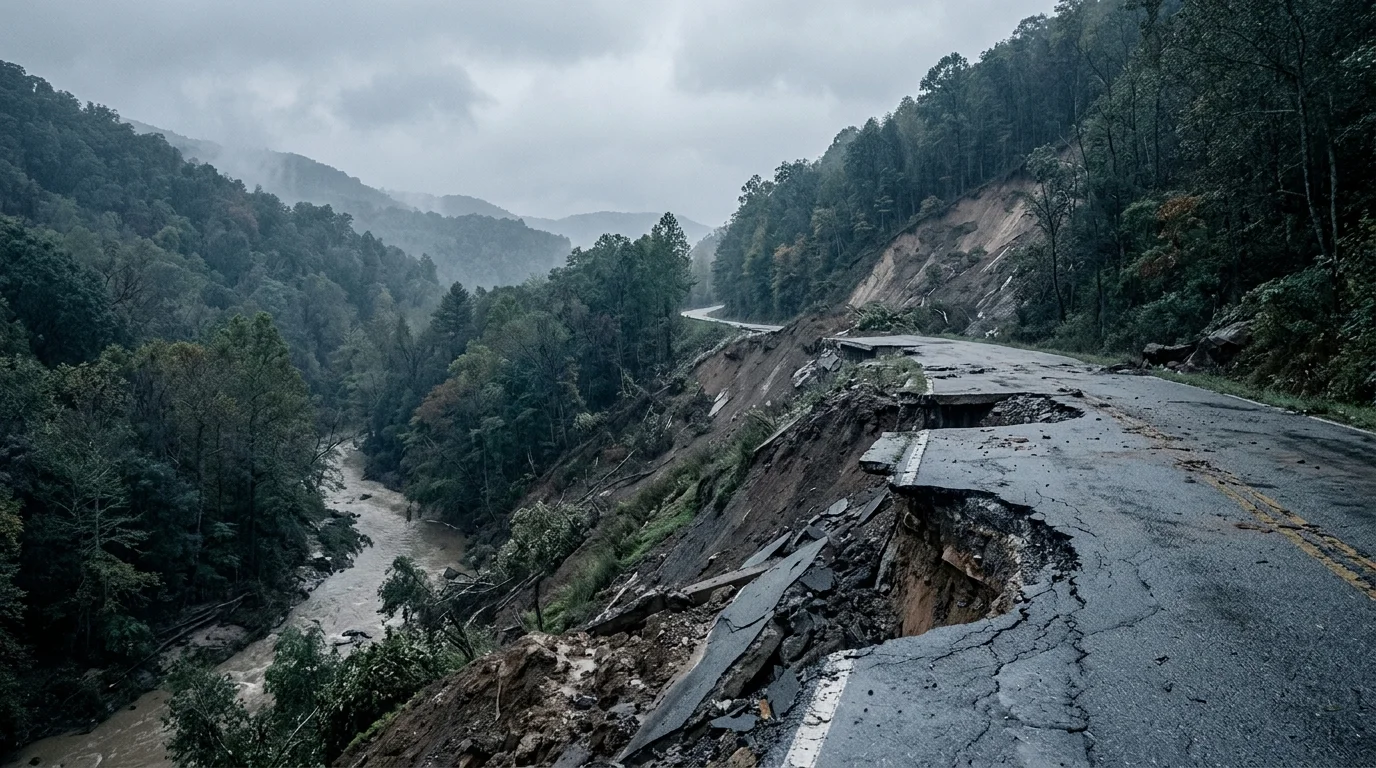
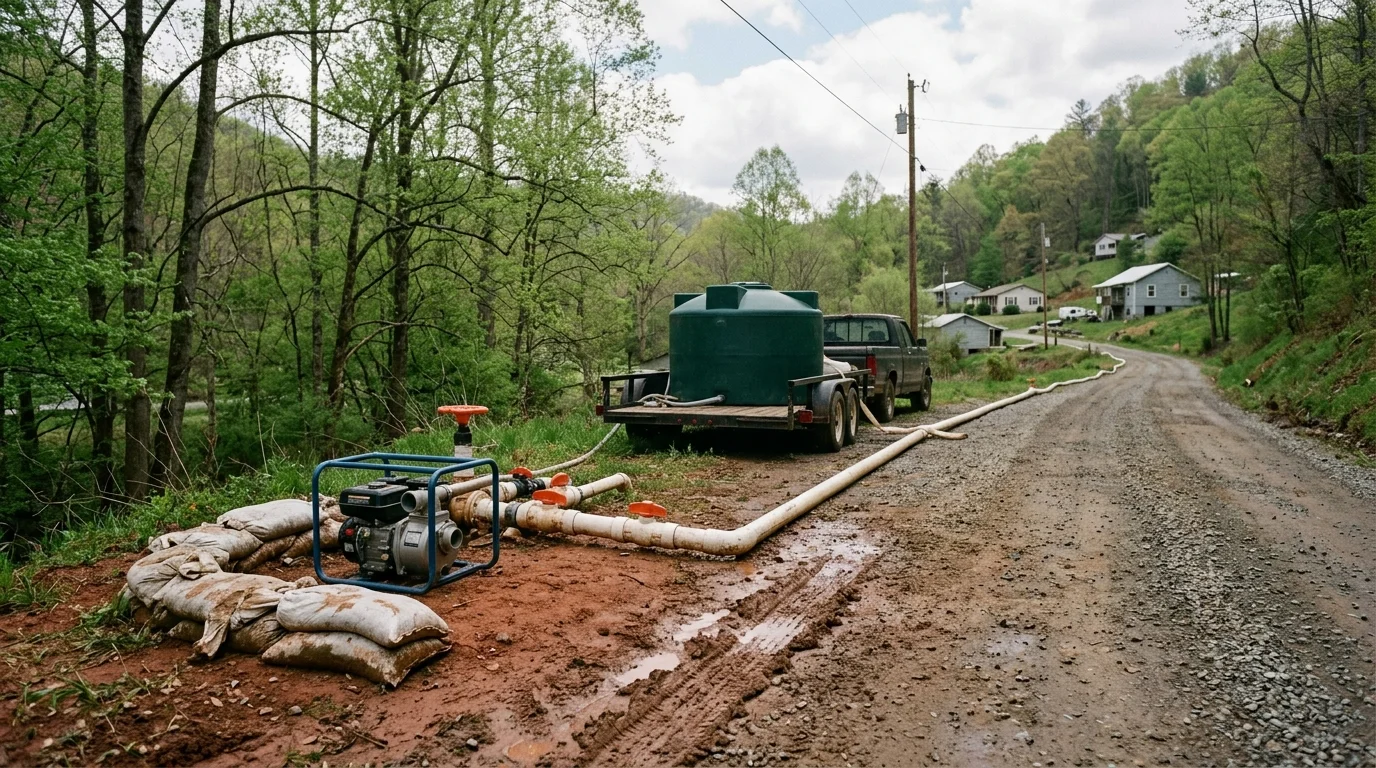
Hurricane Helene hit western North Carolina in September 2024 and destroyed water systems across the mountains at a scale the state's grant programs were never built to absorb. NC's Division of Water Infrastructure received $1.3 billion in Helene-specific applications. The State Water Infrastructure Authority's April 2026 funding round awarded $215 million against that pile, leaving $655 million in projects categorized as critical needs with no committed funding source. Governor Stein's April announcement described communities in the region still operating damaged or interim systems nearly 18 months after the storm.
The July 2026 round did not close that gap. It drew 123 applications requesting $1.6 billion and awarded $244 million, under 16 cents on the dollar. Of that, $44 million went to western NC counties still in active Helene recovery. As Governor Stein confirmed on July 16, 28 counties received funding across the state, but the mountain communities that took the worst damage are competing in a field where demand now runs six times faster than available awards.
The structural mismatch predates Helene but Helene made it visible. North Carolina's SRF programs operate on a twice-annual award cycle, spring and fall, and national EPA water infrastructure funding under FY2026 is flat at $3.04 billion, the same level as FY2025. The EPA's published FY2026 allotments do not reflect any surge for disaster-affected states beyond what was already built into the IIJA supplemental formula. North Carolina is not being shortchanged relative to its peers; it is simply presenting a post-disaster demand load that the existing national program was not sized to meet.
None of this is invisible to state officials. NC DEQ opened its fall 2026 funding round on August 4, with applications due September 30. Another wave of requests is forming now, and given the volume of the last two rounds, another $1 billion or more in applications is likely before the end of the year. The gap between what the state can award and what communities are requesting will not close through the existing SRF cycle alone.
Two broader forces will shape what happens next. The SRF program's authorization expires at the end of 2026, and Congress is holding hearings on a reauthorization bill. How that legislation treats disaster-affected states, and whether it creates any surge capacity outside the formula-driven annual allotment cycle, will determine whether NC's backlog shrinks or compounds into 2027. Separately, the IIJA's enhanced SRF supplements, which have provided additional billions nationally since 2022, are finite. As those tranches are drawn down, states like North Carolina that arrived at the table late, with disaster-driven demand, will feel the constraint most acutely.
For residents of Buncombe, Haywood, McDowell, and the other mountain counties still waiting on water system repairs, the question is not whether federal money exists. It does, and more is coming in July and August when this year's SRF capitalization grants record. The question is whether the programs that distribute it were ever designed to absorb a $1.3 billion shock from a single storm. The September 30 application deadline will be the next signal: if demand again exceeds $1 billion against an award capacity of $200 to $300 million, the gap will have an answer.