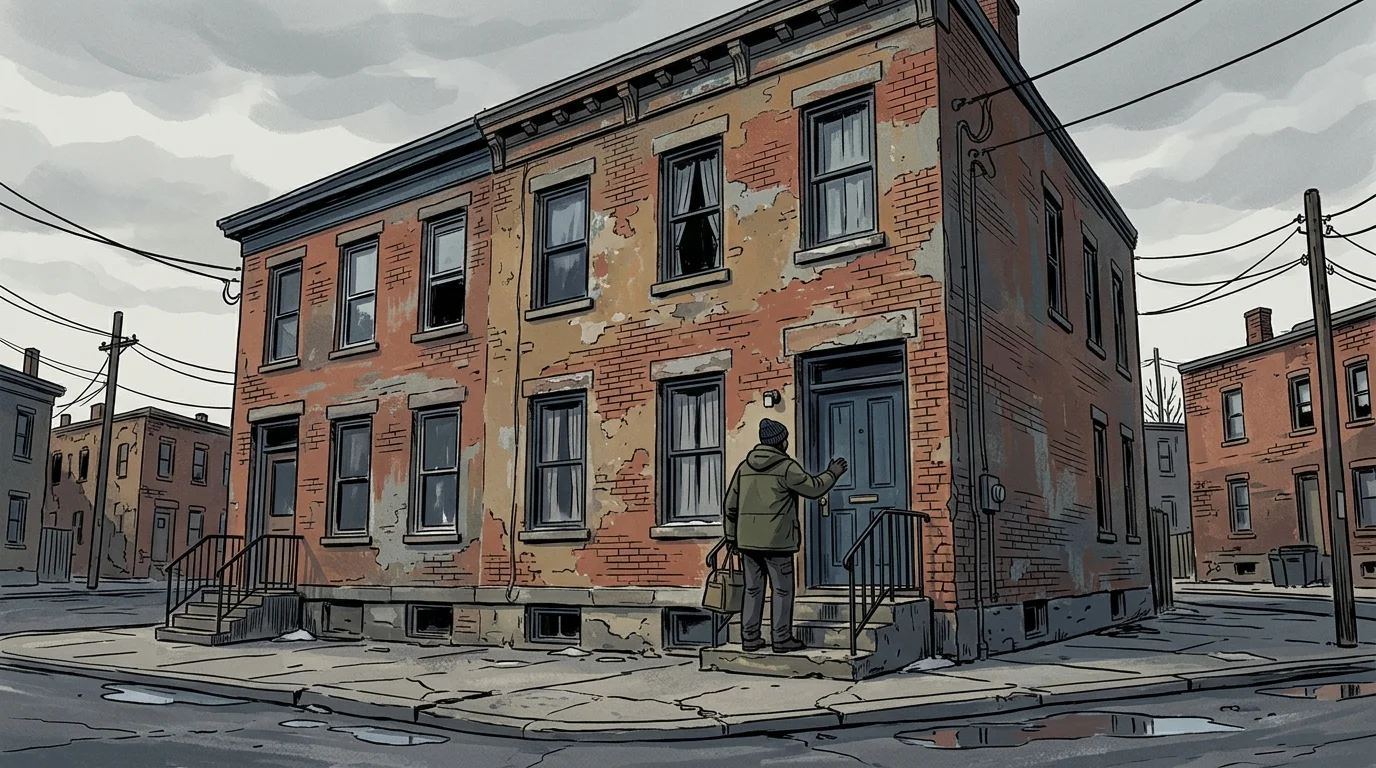
On the morning of May 3, nearly identical solicitations for roofing rehabilitation contractors went out from Gilmore City, Dows, and Duncombe, three Iowa towns most readers couldn't locate on a map without help. The same template, the same scope, the same urgency. That wasn't a coincidence. It was a deadline.
Organic Iowa housing RFPs ran at roughly 4 to 11 per month from October through January. By May 2026, that figure had climbed to at least 28 fresh-deadline solicitations in a single month, a 2 to 3 times increase from the fall baseline. The forcing function is the Iowa Economic Development Authority's CDBG Housing Rehabilitation Fund, whose Roofing Replacement application window closed May 22, 2026. Cities that want grant funding must demonstrate they have contractors lined up before they can apply. The result is a procurement pulse, visible in public bid data, that fires every spring and summer across dozens of Iowa communities at once.
This is what Iowa's housing strategy looks like from the outside: not a single large construction program, but a synchronized administrative wave in which the IEDA's calendar becomes the calendar for small-city housing investment statewide. Iowa is unusual in that it serves as a direct grantee and subgrantor of federal Community Development Block Grant funds for non-entitlement cities, meaning a single agency controls the procurement rhythm of municipalities that couldn't sustain a housing program on their own. When IEDA opens a window, dozens of towns move simultaneously.

Source: NationGraph.
The pattern matters because the need is real. Iowa is projected to require 47,000 additional homes by 2030, according to IEDA and Governor Reynolds, who has made housing her signature economic priority. The state's housing stock is aging, median home age runs around 50 years, and its smallest cities face persistent deterioration that private developers have little incentive to address. Major employers in manufacturing and agriculture have reported difficulty recruiting workers because housing simply isn't available near job sites. In September 2025, IEDA awarded $35.9 million in workforce housing tax credits across 36 counties to fund roughly 2,000 units, a significant commitment, but one that illustrates how heavily the state is leaning on grant mechanisms to move supply.
Layered on top of the routine CDBG cycle is a longer-running disaster recovery pipeline. The August 2020 derecho that tore through central and eastern Iowa left Linn, Marshall, Tama, and Benton counties in an active CDBG-DR contractor-procurement phase that is still generating RFPs years later. Marshalltown is the most visible case. After the city terminated a $2 million townhome agreement with Huegerich Construction in March 2025 following developer challenges, the city council voted unanimously in March 2026 to name Ralston Eco Homes as the new developer for an infill housing project, with homes capped at $175,000. The council's decision represented a deliberate reset: smaller scale, lower price point, local builder. Burlington, meanwhile, issued its own solicitation for owner-occupied housing rehabilitation technical services, joining the roster of cities trying to get contractor relationships in place before application windows close.
The next wave is already in motion. The Upper Story Housing Conversion window opens May 26 and runs through July 26, 2026. That program funds the conversion of vacant upper floors in historic downtown commercial buildings into residential units, a different mechanism from roofing rehab, but one that will trigger its own round of synchronized municipal procurement. Iowa housing RFP volume hit 58 fresh solicitations in July 2025, consistent with a prior-year CDBG cycle. If the pattern holds, a comparable surge is coming this summer.
For residents of the towns filing these RFPs, the immediate result is contractors showing up to assess roofs and upper floors that have been deteriorating for years. For workers at Iowa's rural manufacturers and meat-processing plants, it means, eventually, more housing stock near where the jobs are. The pipeline is slow: grant applications, contractor awards, construction timelines, and compliance reviews can stretch the gap between an RFP and a finished unit to two or three years.
The signal to watch now is whether the Upper Story Housing Conversion window generates the same synchronized burst. If it does, the spring-summer CDBG procurement cycle will have produced the largest single-year housing rehabilitation activity in Iowa in at least a decade. The application window closes July 26.