Utah communities that depend on mountain springs and small watershed systems for their drinking water are facing a threat that arrives not during a wildfire, but after it: the next rainstorm. A $5.2 million federal grant through the USDA's Emergency Watershed Protection Program is now moving to address that danger before it turns catastrophic.
When intense wildfire burns through a forested watershed, it leaves behind soil baked into a nearly waterproof crust. Rain that would normally soak into the ground instead races downhill, picking up ash, rock, and debris. These post-fire debris flows can be triggered by as little as 15 minutes of moderate rainfall and move with enough force to bury a spring, rip out water distribution piping, or destroy a road in minutes. For small Utah towns whose entire water supply runs through a handful of mountain springs and a few miles of pipe, that's not an inconvenience, it's a crisis.
The grant targets that precise vulnerability. At risk are drinking water springs and the piping that carries water to homes, hydroelectric intakes, irrigation systems, wells, roads, bridges, and culverts. The breadth of the list reflects the reality of rural Utah canyon communities, where a single watershed often powers the lights, waters the crops, and fills the kitchen tap.
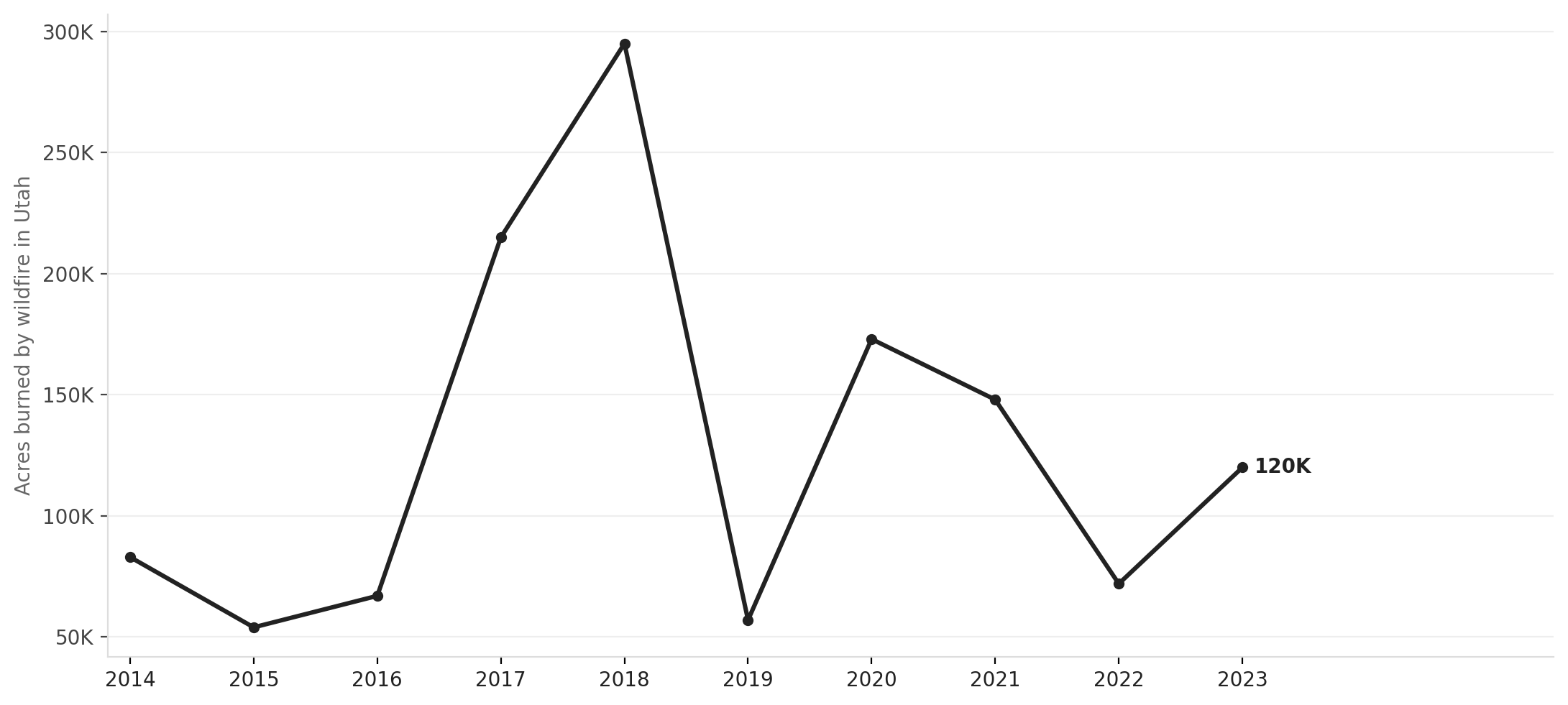
Source: NationGraph.
Utah is the second-driest state in the nation and has spent much of the past decade in persistent drought. Its wildfire seasons have grown longer and more severe, driven by record heat, decades of fire suppression that left forests unnaturally dense, and a 22-year megadrought that has stressed vegetation across the West. The result is a compounding cycle: drought dries out forests, drought-stressed forests burn hotter, and burned watersheds become flood and debris-flow hazards that threaten the very water supplies communities need to survive the next drought.
This dynamic has played out across the region. Price, Utah recently secured $1 million for flash flood and erosion protection, and Gila County, Arizona received $26.5 million to repair watersheds after similar post-fire flooding. Utah's canyon geography makes the hazard particularly acute: debris flows are funneled directly toward communities with little room and little warning.
The USDA's Natural Resources Conservation Service, which administers the Emergency Watershed Protection Program, typically covers up to 75 percent of project costs, with communities contributing a local match. The April 2026 grant posting signals that protective work is urgent, timed to get measures in place before spring snowmelt or summer monsoon rains test the burn scars. What specific fires triggered this award has not been publicly detailed, but the threat window is narrow, and the work is already underway.