Miami Gardens, Florida is building a bike path at its premier public recreation complex, using $405,307 in federal transportation funds to add cycling infrastructure that most of its neighbors built out long ago.
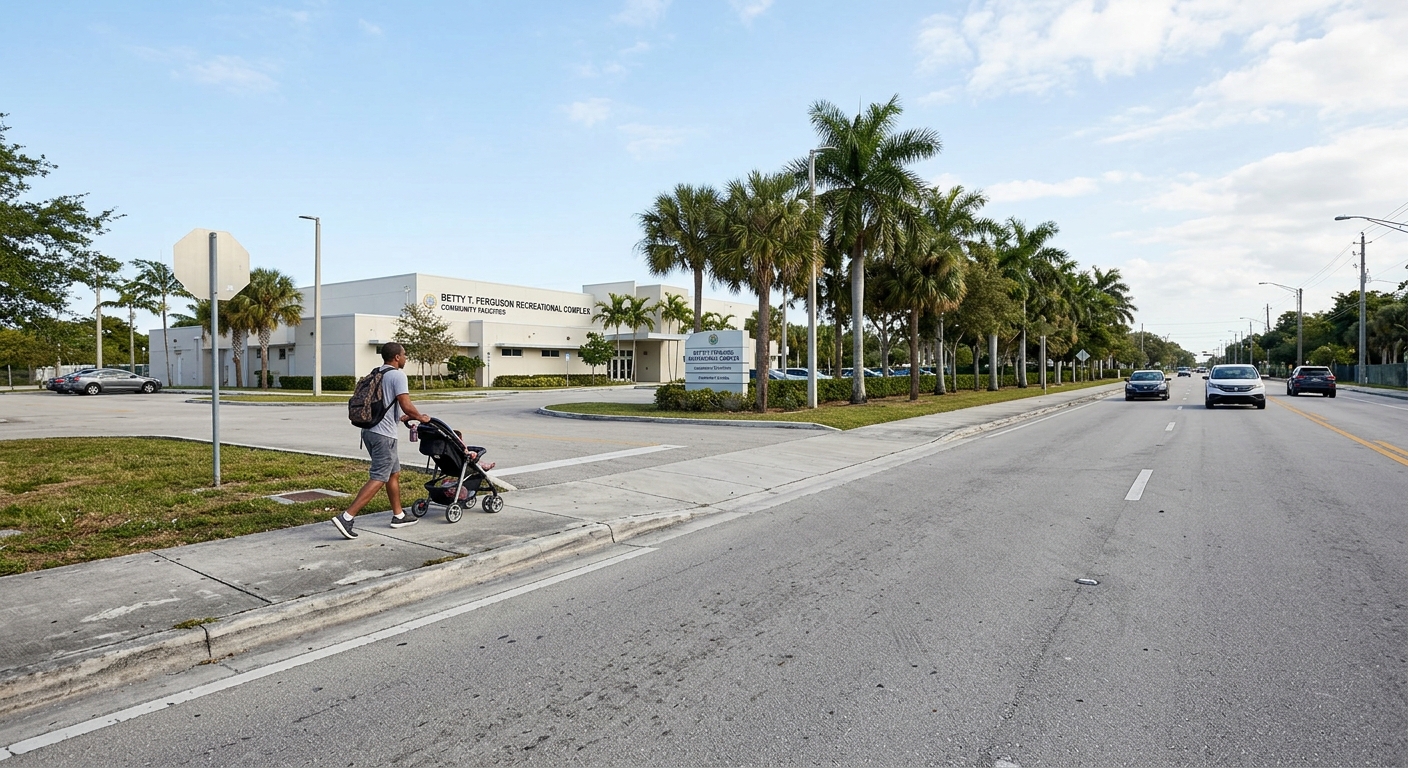
The path runs along NW 199th Street at the Betty T. Ferguson Recreational Complex, a community anchor that includes an amphitheater, splash pad, playground, and athletic facilities. It's one of the central public spaces in a city of roughly 114,000 residents that is the largest predominantly Black city in Florida.
The gap in cycling infrastructure reflects a broader story about Miami Gardens' unusual history. The city only incorporated in 2003, spending its first decades as unincorporated Miami-Dade County land where basic infrastructure like bike lanes, sidewalks, and stormwater systems went consistently underfunded. Since incorporation, the city has been working to build out what older, wealthier Florida cities already take for granted. The Betty T. Ferguson complex itself received a $28 million expansion completed around 2019-2020; the bike path extends that investment.
The need is real. Miami Gardens residents have lower car ownership rates than surrounding communities, meaning more people walk and bike out of necessity. Florida already ranks among the most dangerous states in the country for pedestrians and cyclists, and Miami-Dade County is one of the deadliest metro areas nationally for people on foot or bike, according to repeated analyses by the nonprofit Smart Growth America.
Funding flows through the federal Surface Transportation Block Grant program, which was expanded under the 2021 Infrastructure Investment and Jobs Act with an explicit push toward equity in transportation investment. Miami Gardens is managing construction directly through Florida's Local Agency Program rather than routing the work through the state.
The grant was posted in early February 2026, indicating the project has moved into the construction phase. A timeline for completion has not been publicly announced.