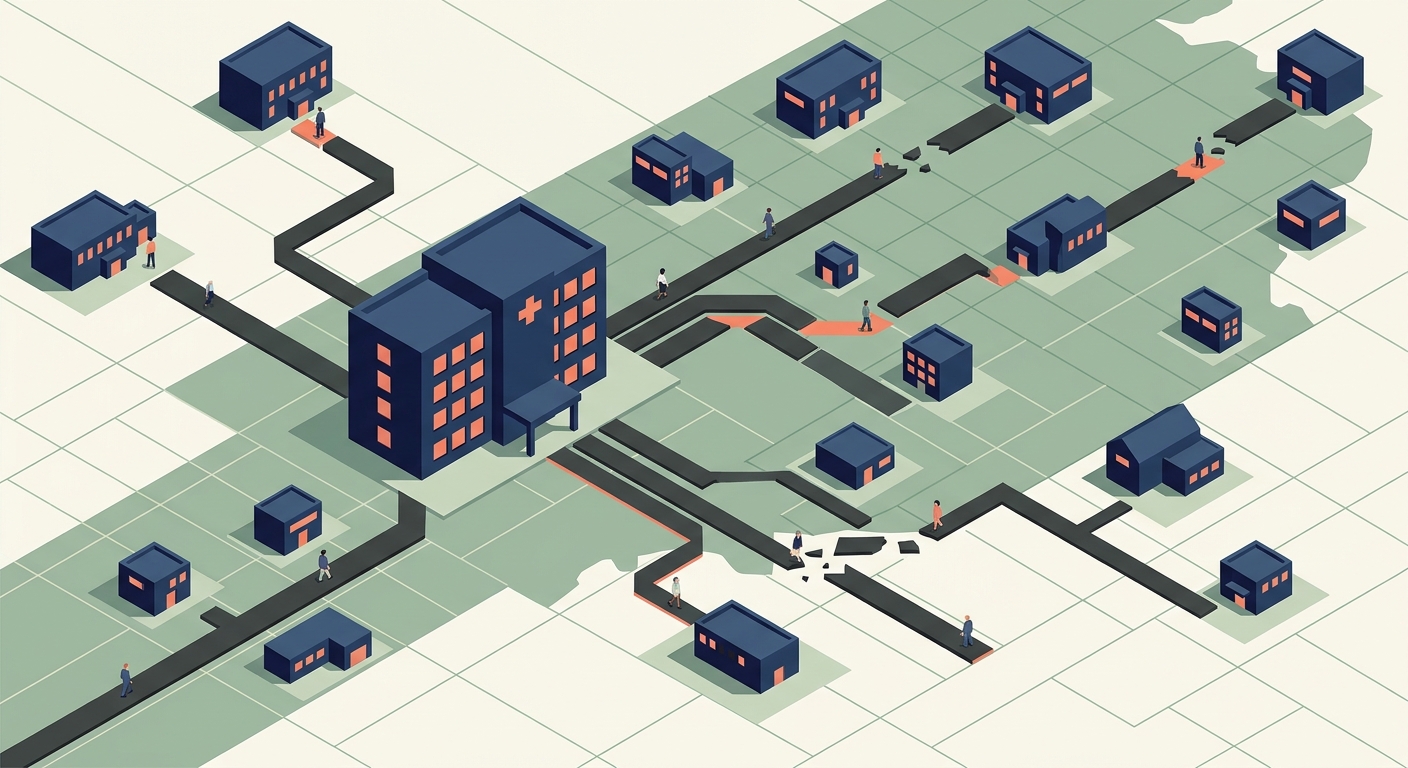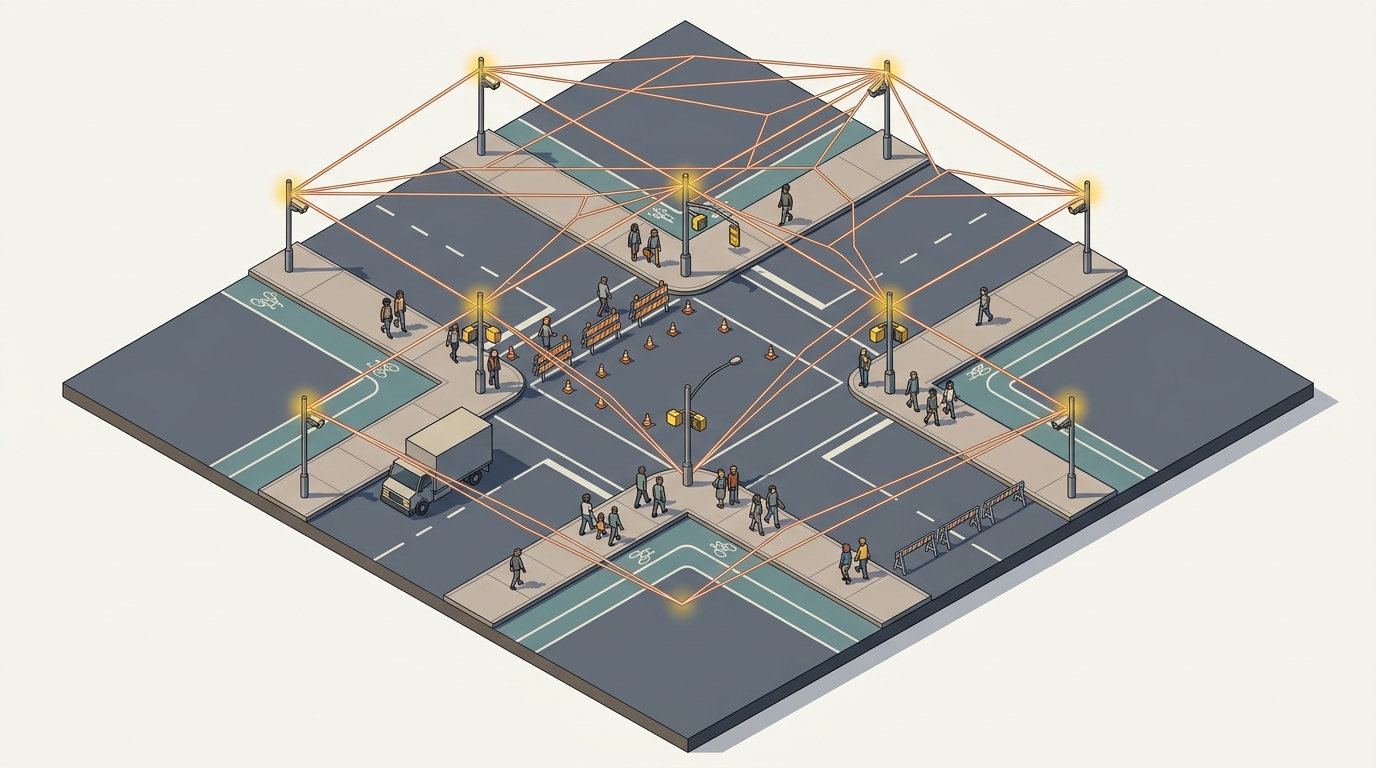
Nashville, Tennessee is so overwhelmed by its own construction boom that the city can't track who's blocking its streets on any given day. Contractors close sidewalks without permits, delivery trucks park in bike lanes, and events spill into roadways, pushing pedestrians, including wheelchair users, into active traffic lanes. Now, a federally funded AI system aims to change that.
The National Science Foundation has awarded $593,725 to a Virginia-based research team to build and pilot an automated monitoring system in Nashville that uses existing sensor infrastructure (traffic cameras, connected vehicle data) to detect unpermitted right-of-way closures in real time. The project is part of NSF's CIVIC Innovation Challenge, which pairs university researchers with cities as real-world test partners.
Nashville has grown by roughly 20 percent since 2010, and the construction boom that reshaped its skyline has buried its transportation department in permitting demands. The city issues thousands of closure permits annually for construction, utilities, events, and film production, but enforcement has depended on a small team of inspectors doing manual surveys, a math problem that was never going to work at Nashville's pace of development.
The consequences aren't just inconvenient. Blocked sidewalks without proper pedestrian detours force people into traffic. Nashville Metro Council members raised the issue publicly in 2022 and 2023, and disability advocates have repeatedly flagged ADA compliance failures when sidewalks disappear without warning. Pedestrian fatalities have also been rising in Nashville, consistent with a national trend that hit a 40-year high in 2022.
There's a financial angle too. Nashville's permit fees run from hundreds to thousands of dollars per closure, and unpermitted work means the city loses both the fee and any safety oversight that comes with the permit process. The new system is specifically designed to help recover that lost revenue by flagging closures that never went through the permitting office.
The technology will also give inspectors optimized routing tools so they can prioritize which flagged locations to check first, rather than driving the city at random. A web interface will let permit managers see what the system is catching and use that data to improve planning.
Researchers are building the system to handle messy real-world conditions, including incomplete camera coverage and inconsistent data feeds, using machine learning techniques designed to function even when inputs are noisy or partial. The entire codebase, along with deployment guides and training materials, will be released as open-source software so other cities can adapt it without starting from scratch.
The Nashville pilot is expected to serve as a proof of concept for cities across the country facing the same enforcement gap. Whether the system can perform reliably in the dense, event-heavy environment of Nashville's downtown core, and how the city navigates public questions about AI monitoring of public spaces, will shape how seriously other transportation departments take it.