Six lead-pipe replacement RFPs hit Missouri's procurement boards in the last 30 days, against a monthly average of fewer than one over the prior year. All six originate from a single city: Blue Springs, a Jackson County suburb of Kansas City with about 60,500 residents, which filed multiple versions of a construction administration solicitation for its lead service line program between May 3 and May 20, 2026. The timing is not coincidental.
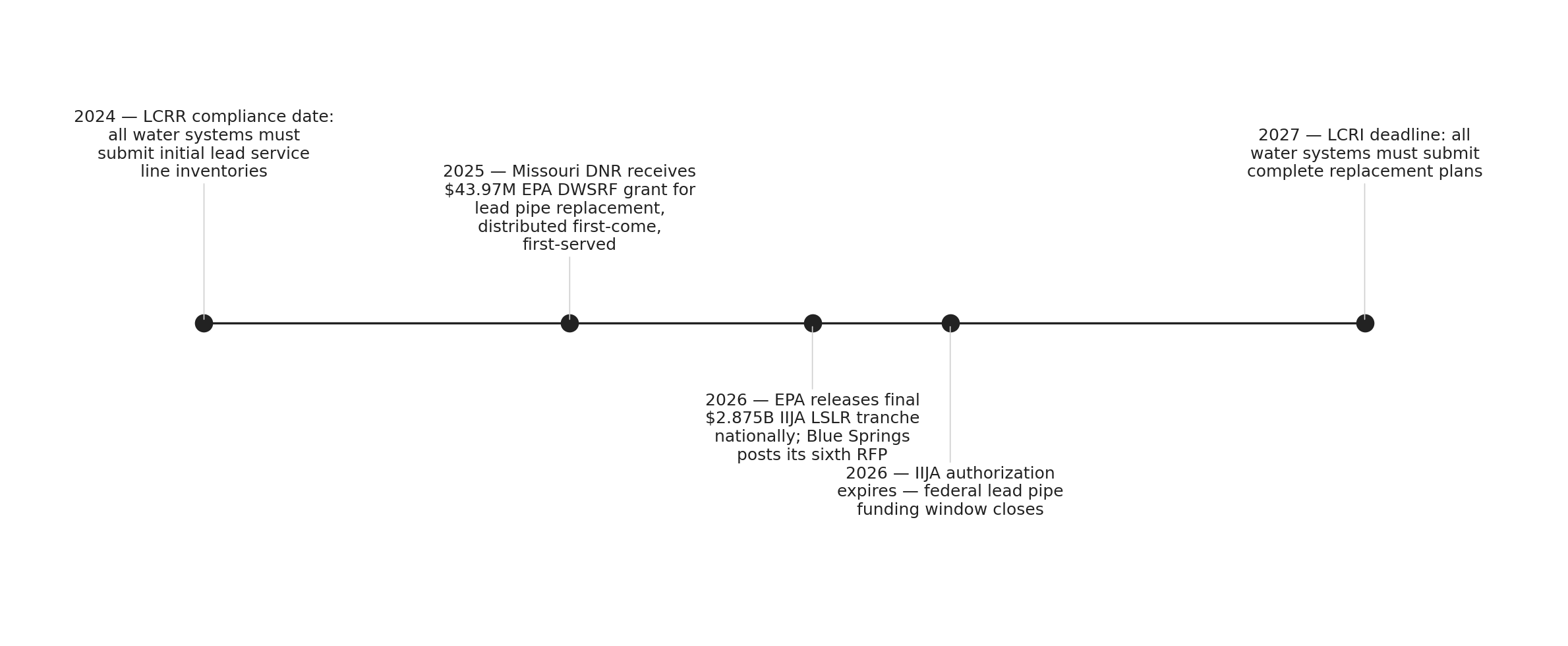
On approximately May 20, EPA released the final annual tranche of its IIJA lead service line replacement program: $2.875 billion distributed nationally, the last such allotment before the IIJA's authorization expires September 30, 2026. Missouri holds a $43.97 million EPA Drinking Water State Revolving Fund grant for lead pipe replacement, obligated in October 2025 and running through September 2030 on paper. But Missouri DNR distributes those dollars first-come, first-served, with availability explicitly described as running "through 2026." Cities that haven't filed construction contracts by the time the queue fills up may find they've missed the window.
Blue Springs cleared the first bureaucratic hurdle earlier than many of its peers. EPA's Lead and Copper Rule Revisions required all water systems to submit initial service line inventories by October 16, 2024. Blue Springs completed that inventory as mandated by Missouri DNR and has now moved to the construction administration phase, meaning it is hiring the professional services needed to manage actual pipe replacement. That sequencing matters: a city still finishing its inventory in May 2026 has almost no realistic path to a construction contract before September 30.
Source: NationGraph.
The regulatory clock compounds the funding deadline. EPA's Lead and Copper Rule Improvements, finalized October 30, 2024 and effective December 30, 2024, require every water system to submit a completed replacement plan by November 1, 2027, and to replace every lead service line by November 1, 2037. As the National League of Cities has noted, those mandates fall on water systems regardless of whether federal grant money is available to fund them. Cities that miss the IIJA window will still have to replace their pipes; they'll just have to find other ways to pay for it.
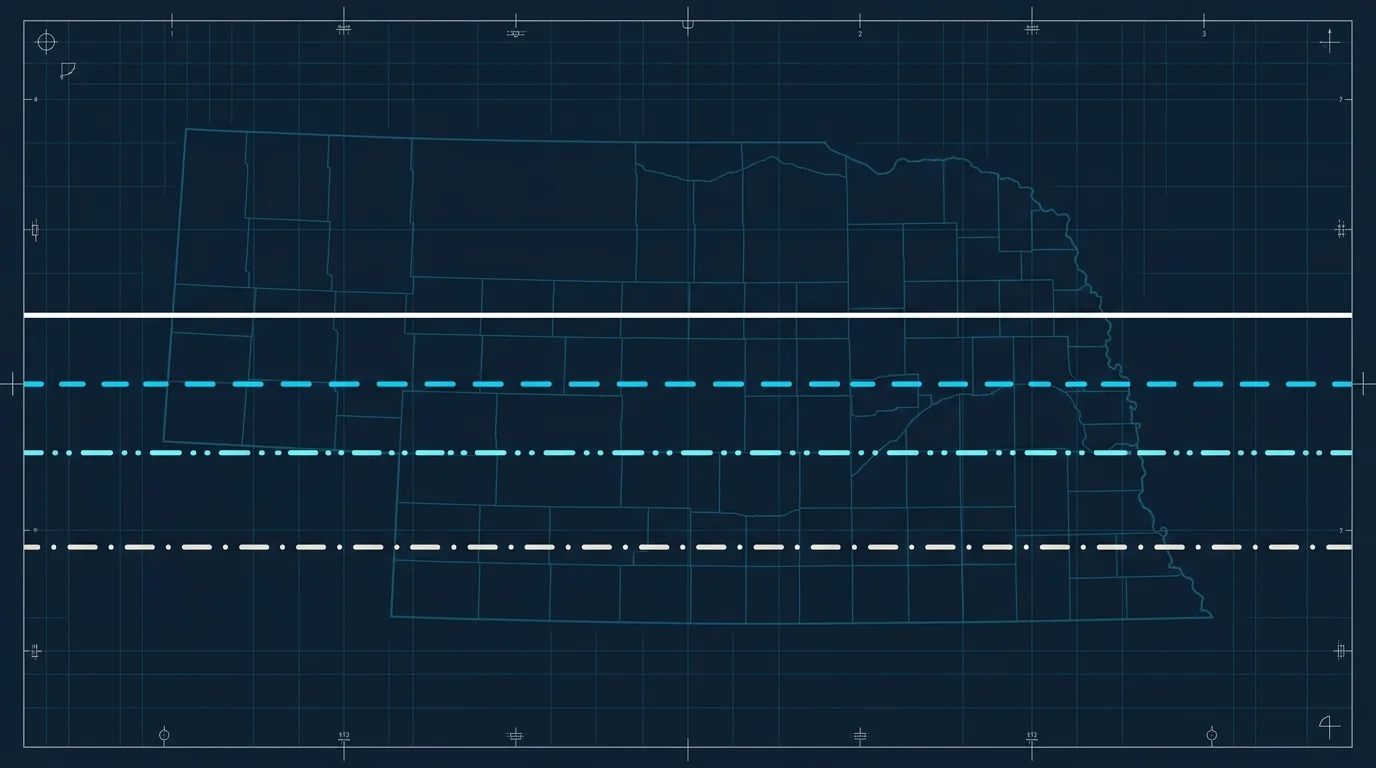
The Missouri procurement surge is sharp, but it also reveals how far behind the state was. Illinois posted 8 to 12 lead-pipe RFPs per month in early 2026, a pace driven partly by Chicago's scale but also by earlier mobilization across the state's mid-size systems. Missouri was averaging fewer than one per month before this spring. The 24-month time series shows brief pulses, including three RFPs in July 2025, two in March 2026, and three in April 2026, before the current six-in-30-days spike. Kansas and Nebraska show minimal activity. Missouri is mobilizing late but fast, and the question is whether fast is fast enough for cities still in the inventory phase.
Blue Springs is the leading indicator precisely because it is not exceptional. It is a representative mid-size suburban system: older infrastructure, a water vintage that predates the 1986 federal ban on lead solder and pipes, and a municipality without the dedicated grant-writing staff that larger cities deploy. What Blue Springs is doing in May 2026, dozens of similar Missouri communities will need to do by late summer if they want access to the remaining DNR funds. Missouri has an estimated 100,000 or more lead service lines statewide, concentrated in pre-1986 systems. The state lacks an anchor city on the scale of Chicago or St. Louis that could drive procurement volumes on its own, which makes the suburban municipality the critical unit of action.
For residents in Blue Springs and cities like it, the near-term signal to watch is whether their water utility has moved past inventory and into construction administration contracting. A city still soliciting inventory services in July or August is almost certainly too late for FY2026 federal dollars. A city that has already hired construction administrators, as Blue Springs has, is positioned to draw down grant funds before the window closes, assuming Missouri DNR's queue hasn't already filled.
The harder question comes after September 30. If the IIJA authorization expires without Congress extending it, and if state revolving fund balances are drawn down by the cities that moved fastest, slower-moving municipalities face the LCRI's 2037 replacement mandate with fewer subsidized financing tools. The November 1, 2027 deadline for completed replacement plans will arrive regardless. Cities that spent 2025 and early 2026 on the sidelines will spend 2027 explaining to regulators how they intend to pay for pipes without the federal money that was briefly on the table.