Forty-eight California institutions have issued transit-related RFPs in the last 30 days, including 11 that had not procured anything transit-related in over a year. That is not a coincidence of timing. It is the visible result of three compounding forces landing within weeks of each other, and for agencies that have been sitting on deferred capital plans, the window to act under current rules is closing.
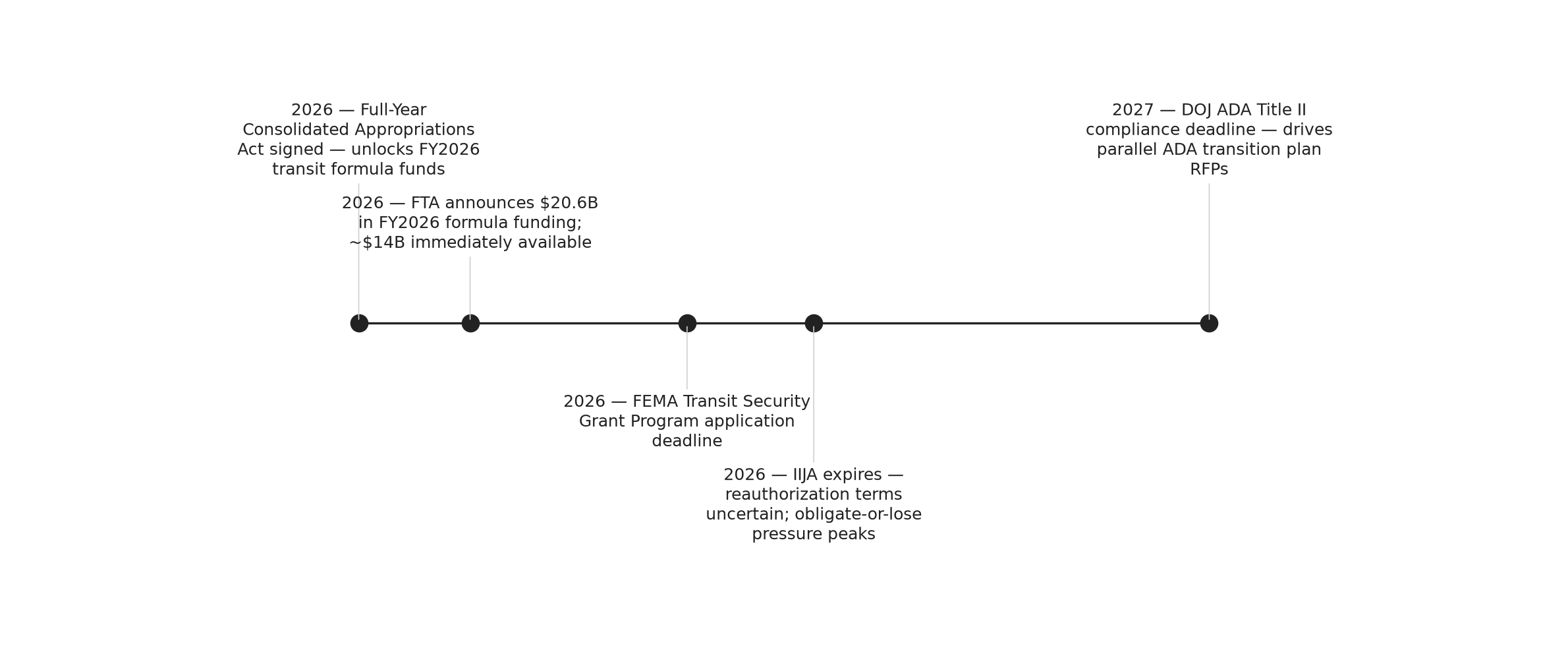
The immediate funding unlock came on March 31, 2026, when the FTA announced $20.6 billion in FY2026 formula transit funding, with roughly $14 billion made immediately available to states and urbanized areas under the Full-Year Consolidated Appropriations Act signed February 3. California, as the largest FTA formula grant recipient in the country, received a substantial share. For agencies that had been watching that money sit in authorization limbo, the apportionment notice was a starting gun.
But the federal dollars alone do not explain why small agencies, Tuolumne County Transportation Council, Soltrans, Yuba-Sutter Transit Authority, are moving at the same moment as large ones. The second trigger was structural. On February 9, 2026, Caltrans Director Dina El-Tawansy announced a reorganization that restored the agency's Division of Mass Transportation, created a new Deputy Director for Transit and Rail Programs, and released the state's first-ever Director's Policy on Transit. For decades, California's transit governance has been uniquely fragmented: dozens of independent JPAs, county transportation commissions, and city operations, with no strong state-level coordination signal. The February restructuring sent one. Local agencies that had been uncertain whether Sacramento would be a partner read the reorganization as confirmation and began moving procurement that had been queued.
Source: NationGraph.
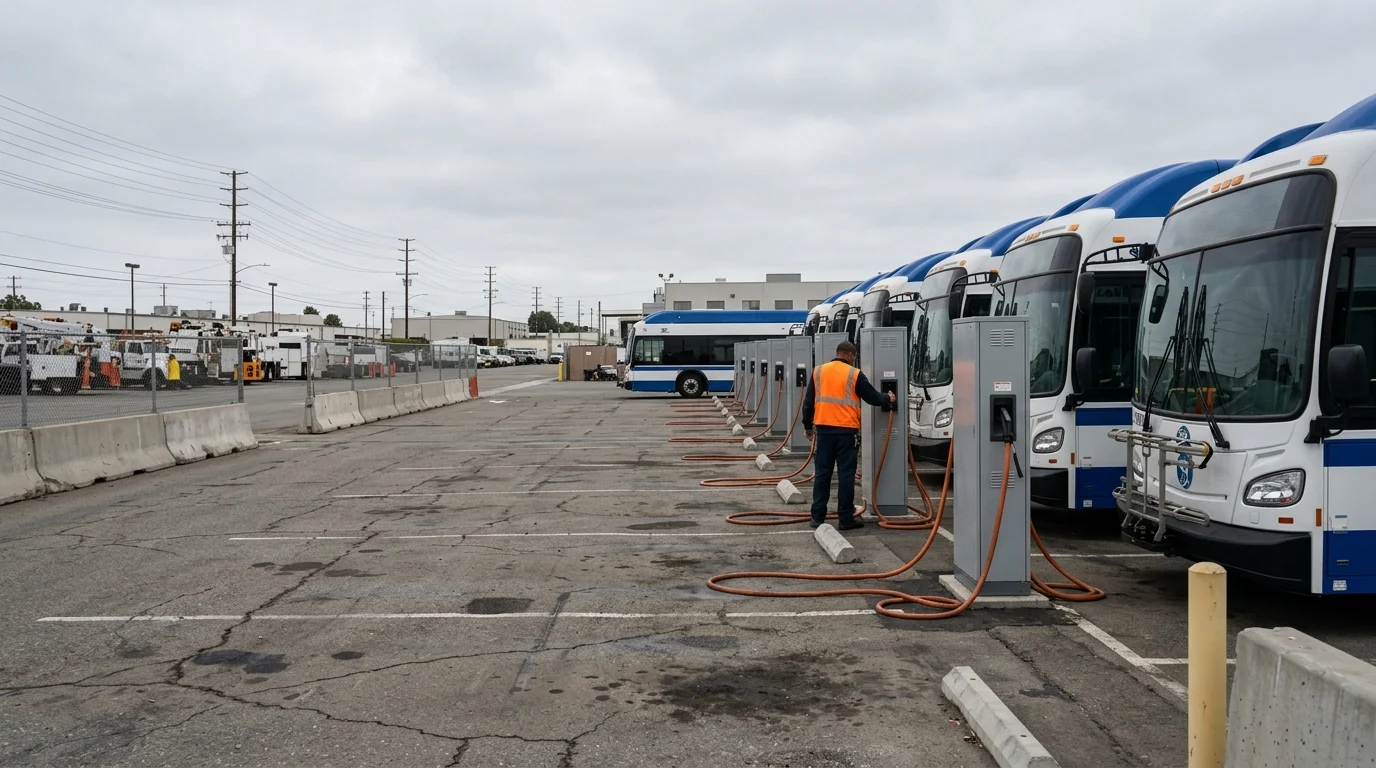
The third pressure is a hard deadline. The Infrastructure Investment and Jobs Act expires in September 2026, and reauthorization terms remain uncertain. Agencies obligating contracts under current IIJA rules have roughly one quarter to do so before the leverage shifts. That pressure is not hypothetical, it is showing up in the types of RFPs being issued. The current wave spans the full capital-to-operations spectrum: facility construction QA, operations and maintenance rebids, zero-emissions transition planning, light rail pre-qualification, multimodal environmental review, and ADA self-evaluation. These are not emergency stopgap contracts. They are implementation instruments for grant commitments agencies have already made.
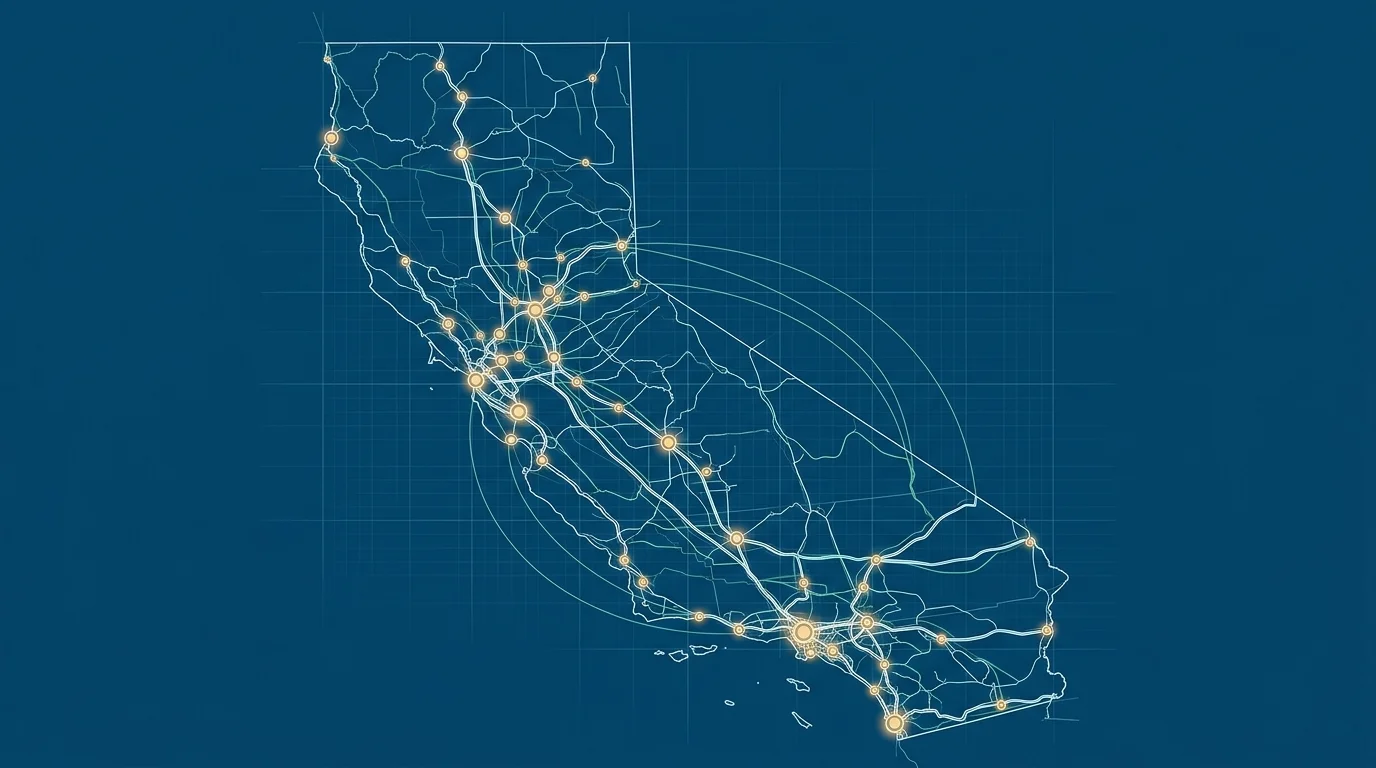
The geographic spread makes the structural point clearly. The 48 institutions issuing RFPs include agencies from the Central Valley, the North State, the Inland Empire, and the Bay Area, not just the major metros. Rural and small-city agencies, typically funded through FTA Section 5311 formula grants, appear prominently in the batch. The formula funding is not pooling in Los Angeles and San Francisco. It is reaching Merced County, Tuolumne, and Solano County simultaneously.
LA Metro is a different order of magnitude. The agency holds more than $4.8 billion in active DOT transit grants running through 2027 to 2031, and its procurement volume reflects a portfolio that has been building for years. But the story in this quarter is less about Metro and more about the mid-sized and smaller agencies that have been waiting for the combination of available funds, state coordination infrastructure, and regulatory clarity to arrive together. It has now arrived.
A parallel wave is adding volume to the RFP market independent of IIJA dynamics. The DOJ's ADA Title II Digital Accessibility Rule carries a compliance deadline of April 26, 2027 for many California transit agencies, and ADA transition plan RFPs are appearing alongside capital and operations solicitations. The FIFA World Cup also contributed: California received $18.4 million in dedicated transit funding split between Los Angeles ($9.6 million) and the Bay Area ($8.8 million), generating its own facility-readiness procurement cycle ahead of the summer 2026 tournament.
For riders and residents, the near-term consequence is implementation activity, not just planning. Agencies issuing operations contracts and construction management RFPs now are targeting project starts in late 2026 and 2027. The Caltrans implementation plan for the new Director's Policy on Transit is due in fall 2026, which will set the state coordination framework that governs how this generation of contracts is administered.
The open question is whether the procurement infrastructure, the procurement officers, grant compliance staff, and contractor capacity, can absorb a wave this compressed. California's active federal transit grant portfolio runs approximately $11.2 billion across DOT and the CA State Transportation Agency combined. The agencies now issuing RFPs are the ones converting that portfolio into physical and operational reality. Whether the IIJA reauthorization, expected to move through Congress before the September expiration, preserves current formula structures or rewrites them will determine whether the next wave looks anything like this one.