The Commonwealth of the Northern Mariana Islands, an American territory in the western Pacific struggling with a near-total collapse in airline service, is receiving $344,000 in emergency federal funding to help stabilize its tourism-dependent economy.
The Department of the Interior's Office of Insular Affairs awarded the grant this month, describing the project as "strategic" and "time-sensitive" in response to the "immediate collapse in air service and visitor arrivals" that has, in the agency's words, "severely destabilized" the territory's economy.
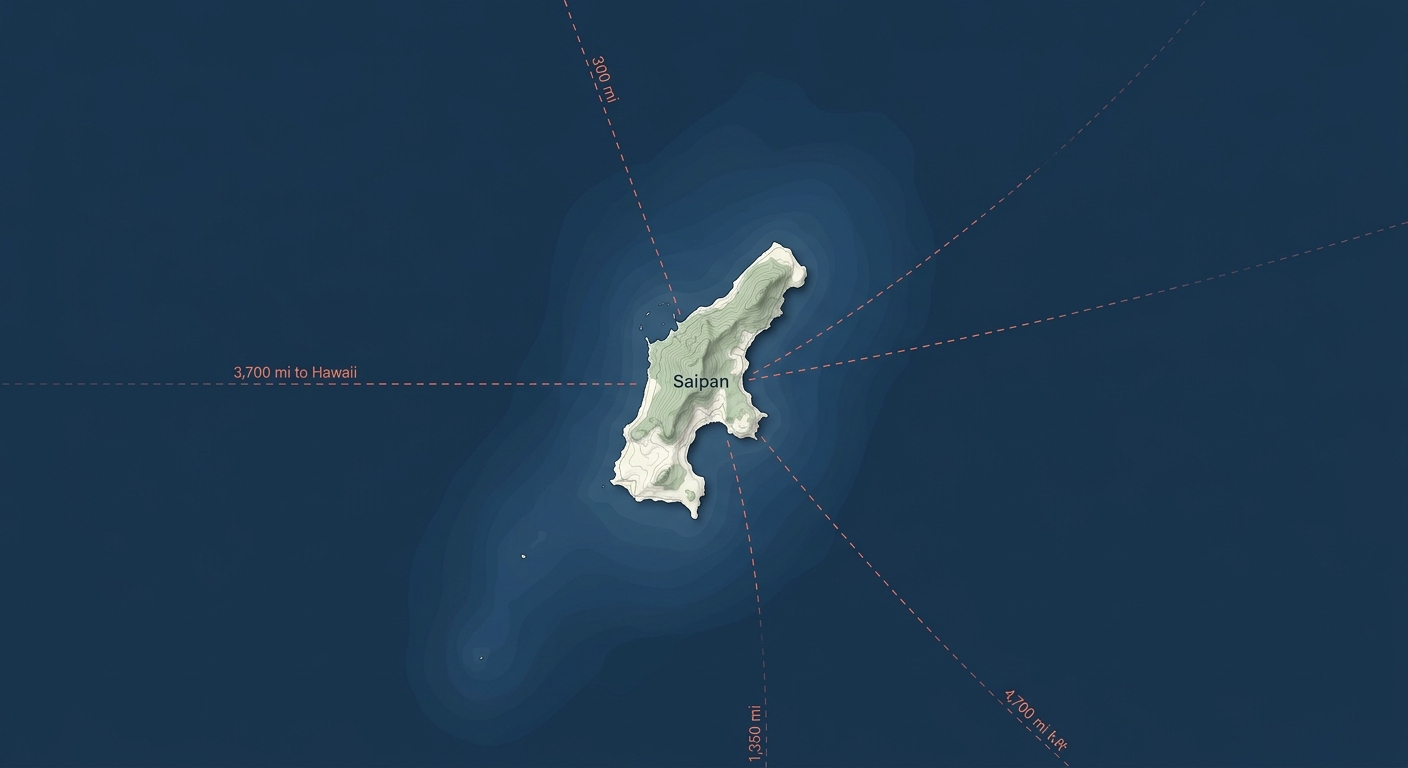
The stakes in Saipan are hard to overstate. CNMI sits roughly 3,700 miles west of Hawaii and 1,500 miles south of Tokyo, making air connectivity not a convenience but a survival requirement. Tourism has historically driven nearly all of the territory's private-sector activity, with visitors from Japan, South Korea, and China filling the hotels and restaurants that employ much of the island's workforce. When COVID-19 shut down international travel, CNMI was hit harder than almost any U.S. jurisdiction. Then, before recovery could take hold, United Airlines significantly reduced service to Saipan's international airport, and several Asian carriers pulled out entirely, creating a vicious cycle: fewer flights discouraging tourists, fewer tourists draining business revenues, and shrinking revenues making it harder to attract carriers back.
The territory's problems compound one another. A casino project that was once touted as economic diversification collapsed in scandal and unpaid taxes, removing what might have been a second pillar for the economy. Government finances have deteriorated to the point of difficulties making payroll. The population, roughly 47,000 today, has fallen by about a third since 2010, as residents leave for Guam, Hawaii, and the mainland in search of opportunity. Federal transfers now account for a growing share of whatever economic activity remains.
Governor Arnold Palacios has declared economic emergencies and repeatedly appealed to federal agencies for help. The Interior Department has a longstanding oversight and assistance role in CNMI under the 1976 Covenant that established the territory's status as a U.S. commonwealth, and has used similar emergency grants in the past to help the islands recover from typhoons, including Super Typhoon Yutu in 2018, one of the strongest storms ever to hit U.S. soil.
The $344,000 grant is a modest sum against the scale of the crisis, but the Office of Insular Affairs frames it as targeted emergency assistance rather than a comprehensive fix. What specific interventions it will fund, such as carrier recruitment efforts, tourism marketing, or technical planning, has not been detailed in public records.
What happens next depends in large part on whether the territory can use the funding to demonstrate a credible path back to air connectivity. Without reliable flights, no amount of marketing will bring tourists to Saipan, and the question of whether CNMI's economy can be stabilized at all, or whether federal support is simply slowing a longer-term contraction, remains open.