Flood-related procurement in Washington has surged to roughly 1.5 times its normal monthly pace since April 2026, with a dozen genuine engineering and planning contracts issued in the last 30 days by Pierce, King, Cowlitz, Columbia, and Whatcom counties. The proximate cause is a single federal action: President Trump's Major Disaster Declaration for Washington on April 11, 2026 covering 23 counties and unlocking Public Assistance reimbursements for the December 2025 flooding. Local governments now face a FEMA documentation deadline, and the procurement surge is the sound of jurisdictions racing to get their paperwork, and their projects, in order before the reimbursement clock runs out.
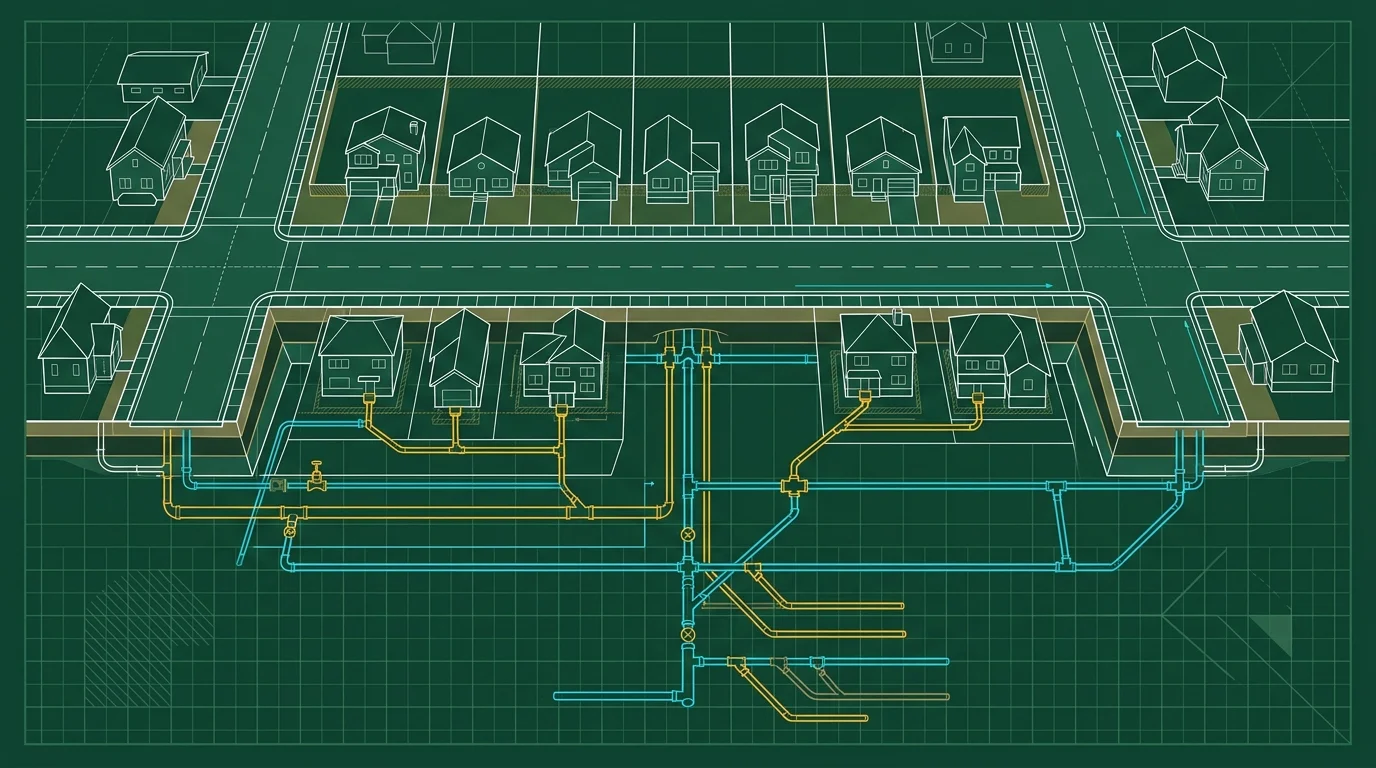
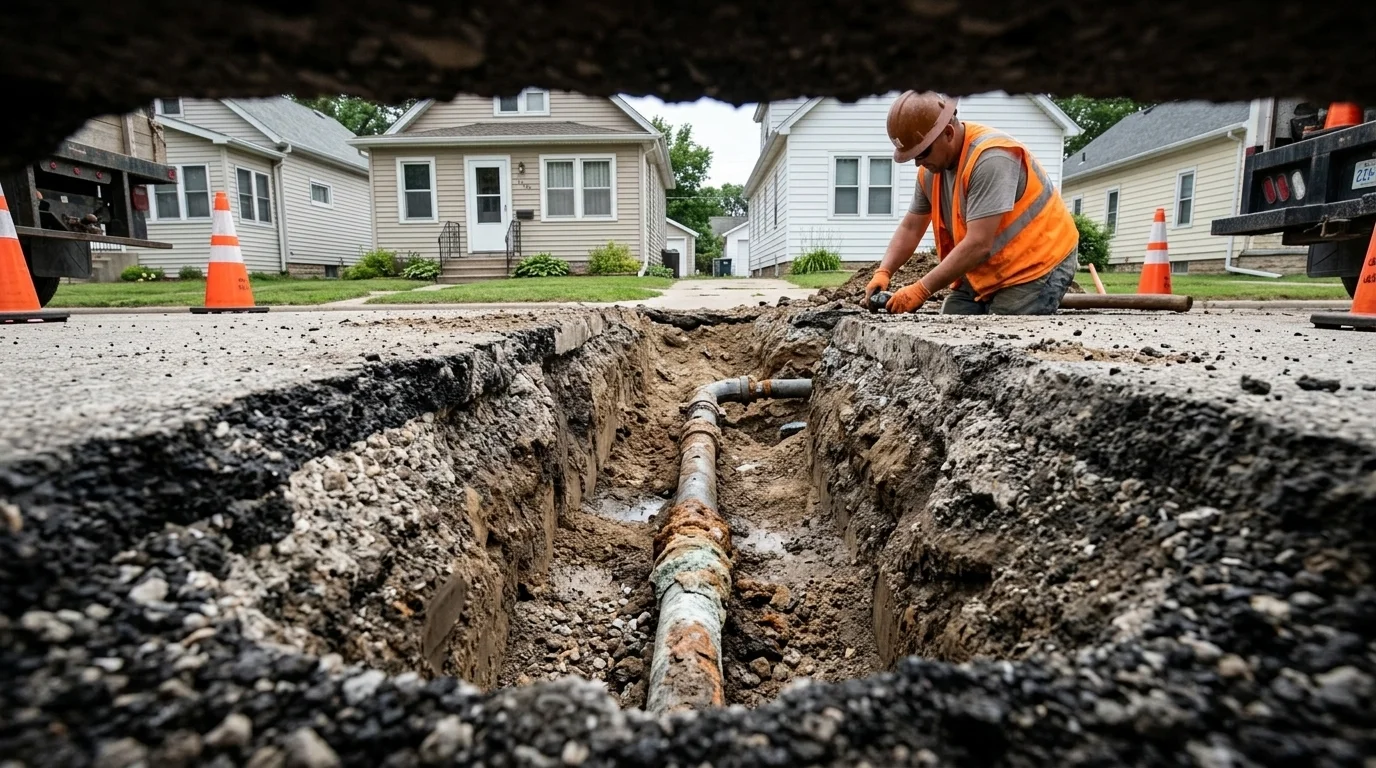
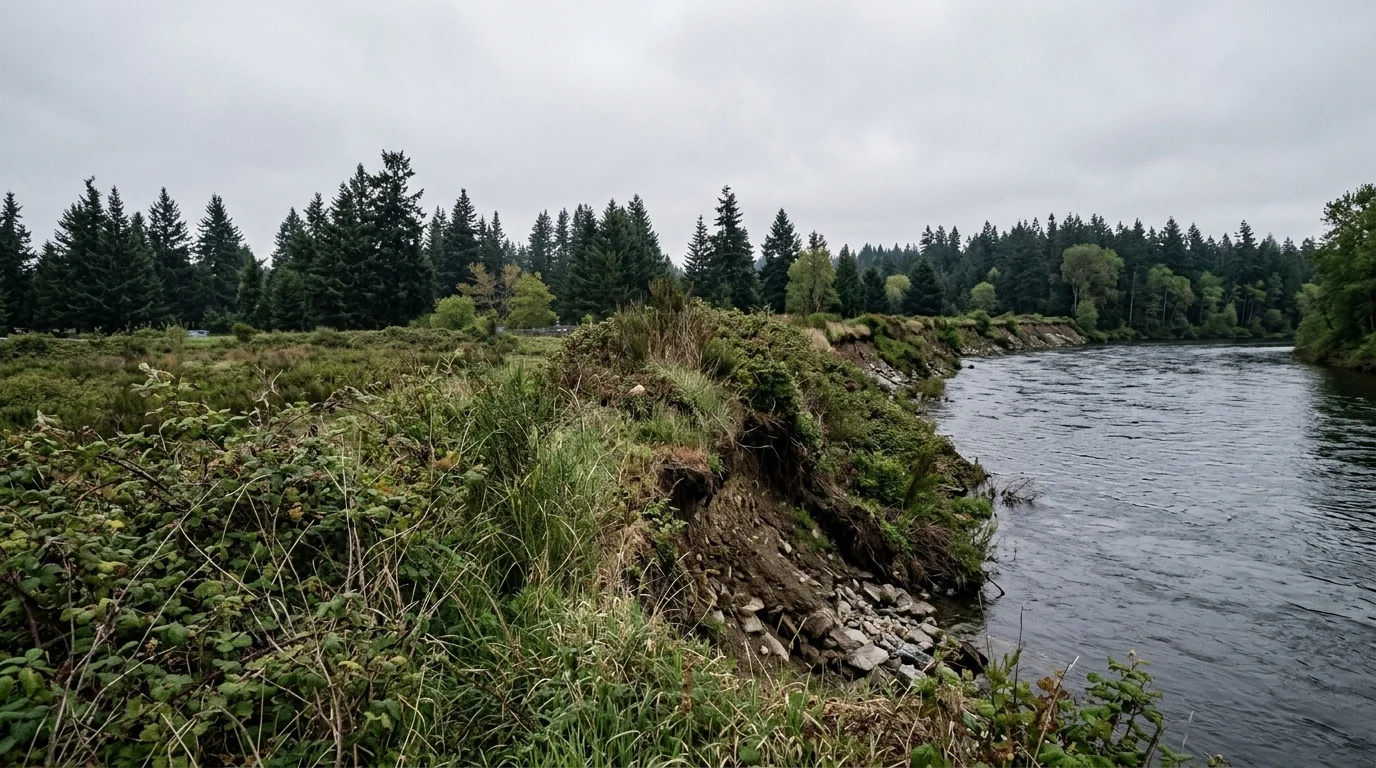
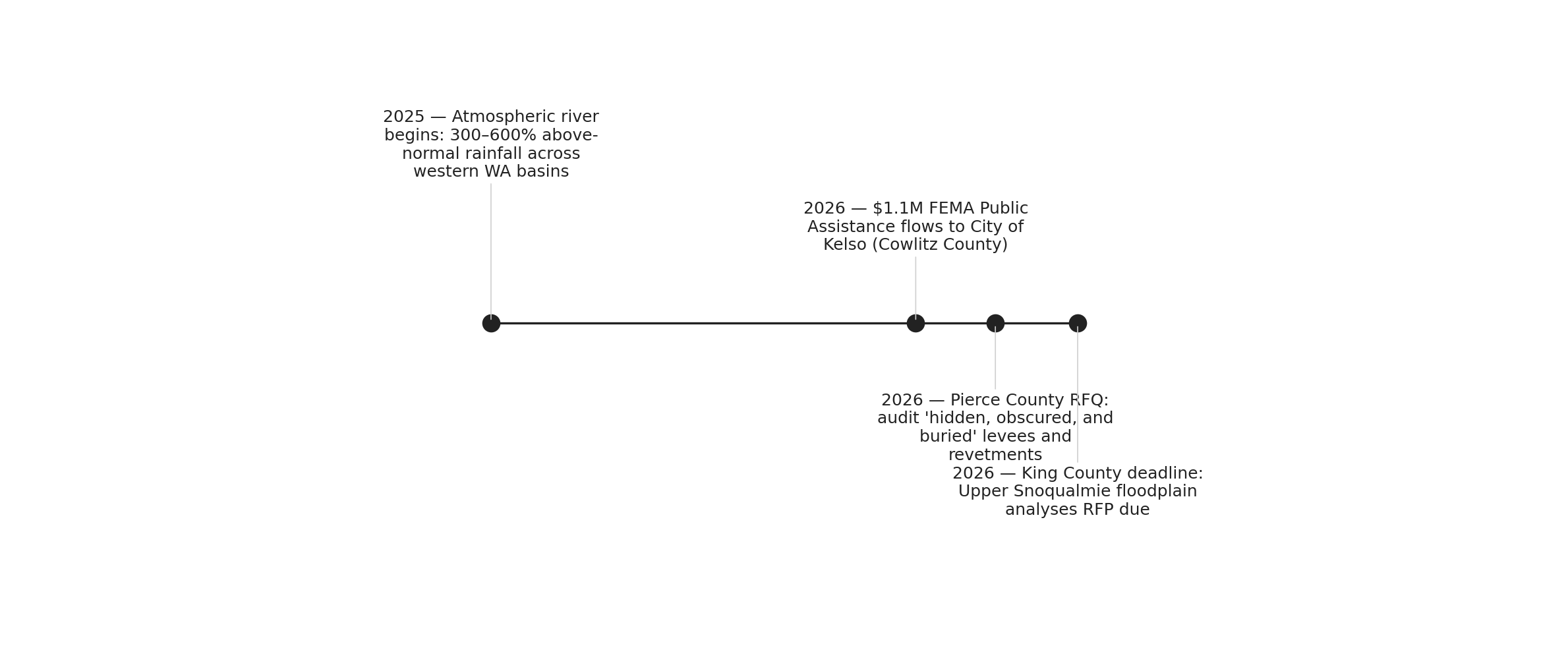
The sharpest illustration of what that rush looks like on the ground comes from Pierce County, which recently issued a request for geotechnical engineers to locate what the RFP describes as "hidden, obscured, and buried flood risk reduction assets such as revetments and levee features." Read that again: Pierce County is hiring engineers to find flood walls it has already built. Decades of deferred maintenance, incomplete asset records, and sediment accumulation have left portions of the county's riverine infrastructure effectively unmapped. Before the county can claim federal reimbursement for repairing those assets, it has to prove they exist.
That kind of audit would probably happen eventually. The December 2025 atmospheric river event made "eventually" into "now." The storm system brought 20 to 30 inches of rain across western Washington river basins, running 300 to 600 percent above normal for the period, according to reporting citing Governor Ferguson's office. Ferguson declared a state emergency on December 10, directed $3.5 million in immediate state aid, and requested federal assistance within days. Trump approved an initial emergency declaration on December 12, 2025, but the more consequential action, the Major Disaster Declaration that opens Public Assistance for infrastructure repair, took until April. Ferguson has estimated total infrastructure damages at $182 million; KUOW reported in April that FEMA Public Assistance could cover up to $173 million of that, though final reimbursement amounts remain subject to project validation.
Source: NationGraph.
The four-month gap between the storm and the disaster declaration matters because it created a period of genuine political uncertainty. FEMA had denied Washington a similar request after a 2024 bomb cyclone, which left some county budget offices reluctant to commit engineering contract dollars to a reimbursement pipeline that might not open. The April approval removed that uncertainty at once, and the procurement activity followed almost immediately.
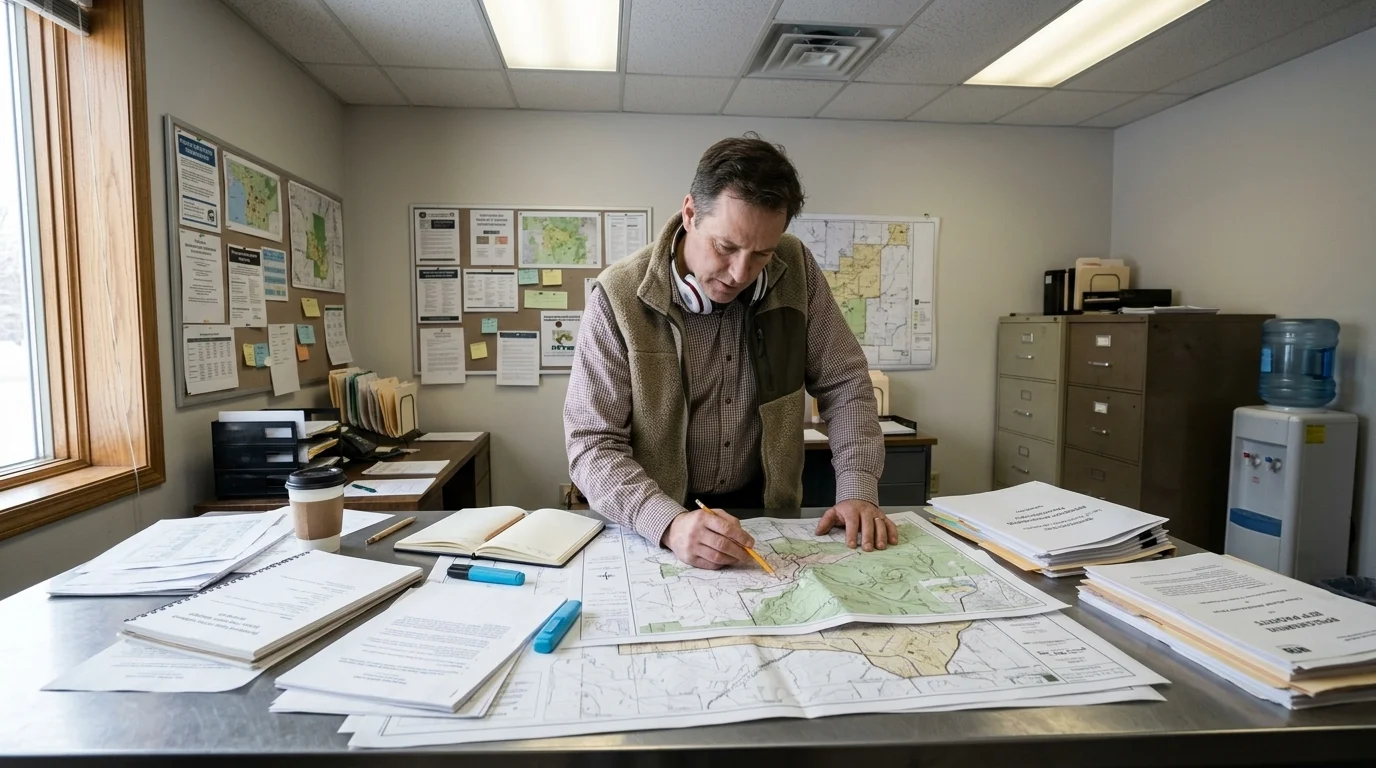
The geographic spread of the new contracts tells the story of where the December event hit hardest and where the federal cost-share math is most compelling. King County has commissioned updated floodplain analyses for the Upper Snoqualmie basin, with a submission deadline of July 16, 2026, a timeline that tracks directly against FEMA's project documentation windows. Cowlitz County, one of the state's most chronically flood-prone industrial corridors, has issued both a full Flood Hazard Plan RFP and a bridge replacement solicitation, and the City of Kelso within Cowlitz County has already received $1.1 million in early FEMA Public Assistance grants, a modest figure that signals a larger pipeline forming.
Those early grant numbers are indeed modest: roughly $1.5 million in direct FEMA Flood Mitigation Assistance has flowed to Washington through the state military department since April, alongside the Kelso payment. But the active federal flood and habitat portfolio supporting Washington through NOAA, USFWS, EPA, and the Army Corps of Engineers runs to more than $80 million. The April declaration is effectively a ramp onto that existing infrastructure of federal support, and the procurement surge is counties building the on-ramp documentation to access it.
The underlying exposure is structural, not episodic. Washington's major river systems, including the Snoqualmie, Skagit, Nooksack, Cowlitz, and Puyallup, drain steep Cascade watersheds directly into some of the most densely developed lowlands in the Pacific Northwest. The December 2025 event was severe, but it was not unprecedented in kind. The question each of these RFPs is implicitly answering is whether the infrastructure built to manage that exposure still matches the load the rivers will put on it.
Pierce County's buried-levee search is the starkest version of that question. King County's Snoqualmie basin mapping and Cowlitz County's hazard plan are variations on the same theme: jurisdictions converting a disaster window into a systematic accounting of what they actually have. The next signal to watch is whether FEMA's project submission reviews in late summer 2026 validate the cost estimates counties are now rushing to build, and whether the reimbursement pipeline proves large enough to fund the repair backlog the audits are about to reveal.