Alaska has pulled in $26.1 million in new federal transit grants over the past 90 days, a 161% increase over the $10 million the state received in the same window last year. The number looks like a breakthrough. It is not, quite, not yet.
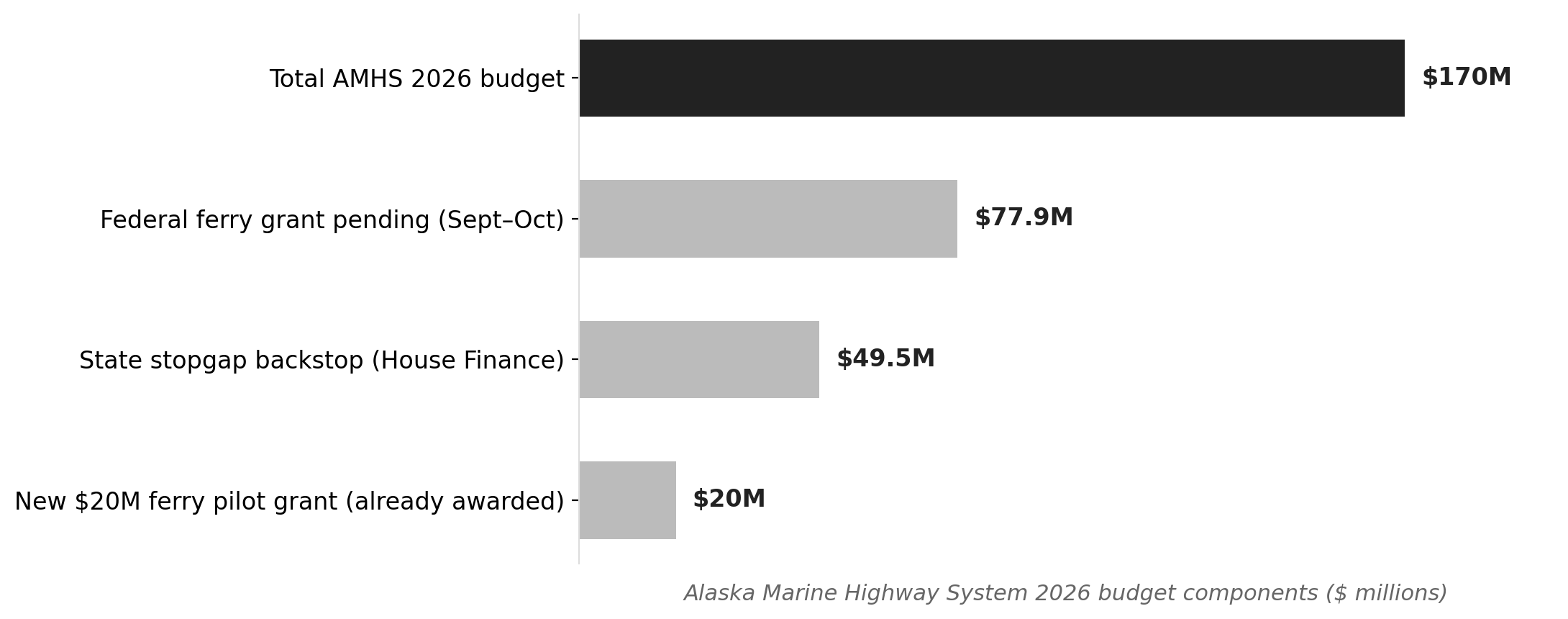
The jump is real, and it matters. The single largest award, a $20 million Passenger Ferry and Electric or Low-Emitting Ferry Pilot Program grant to the Alaska Department of Public Transportation starting March 25, 2026, represents the first federal ferry money to flow to the state in well over a year. Two formula grants to the Alaska Railroad Corporation ($1.4 million and $1.0 million) and a $2.4 million port infrastructure award to Seldovia round out the window. But the grant that actually determines whether ferries sail this summer, a roughly $78 million annual operating award that covers nearly half the Alaska Marine Highway System's $170 million budget, has not been awarded. The application window only opened on April 7. The money, at the earliest, arrives in September or October.
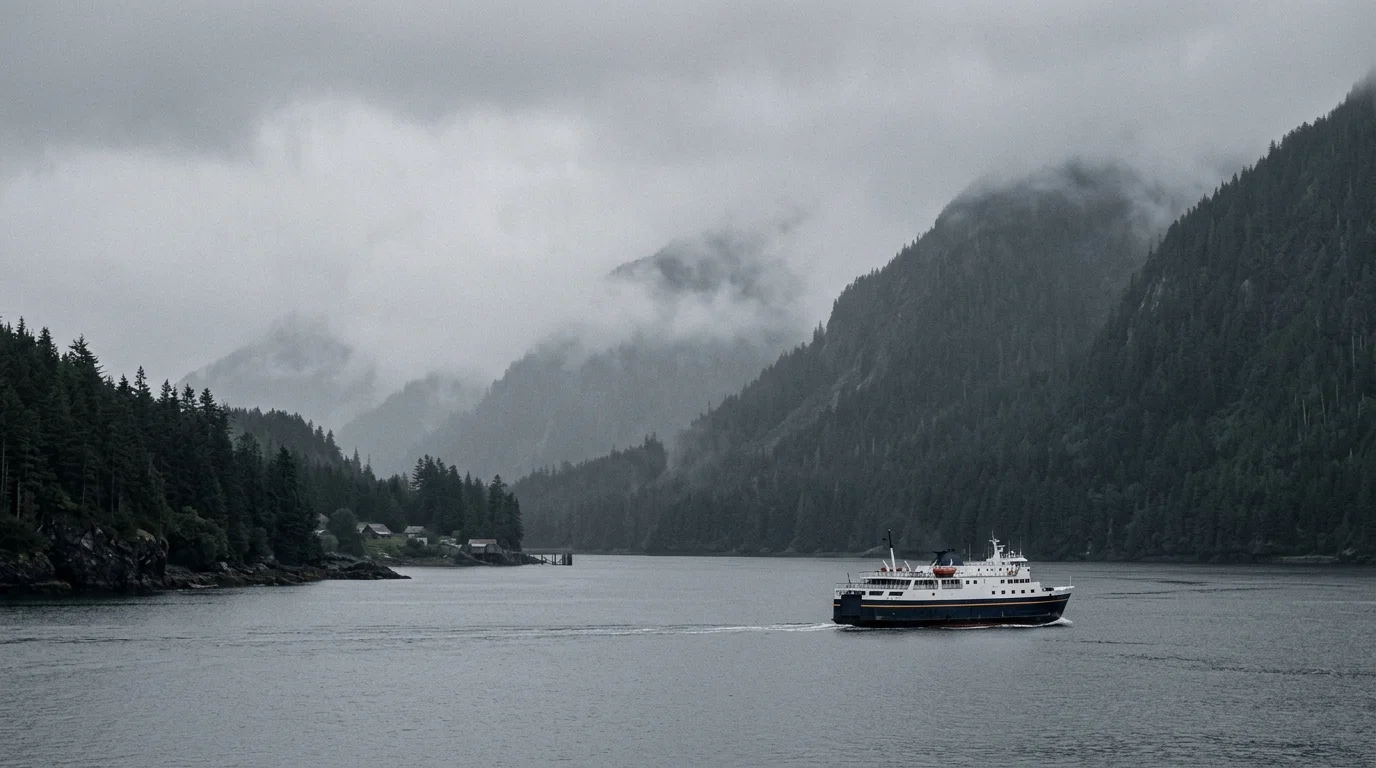
The ferry system serves 35 communities across 3,500 miles of coastline. For dozens of towns in Southeast Alaska, the Kodiak archipelago, and the Aleutian chain, the Marine Highway is not a transit amenity, it is the only connection to the road system. The stakes of a funding gap are not inconvenience; they are isolation.
Source: NationGraph.
The reason the gap exists traces directly to a policy freeze. The FTA's Rural Ferry, Passenger Ferry, and Electric Ferry programs, all created under the 2021 Bipartisan Infrastructure Law, with Alaska's Sen. Lisa Murkowski among their chief architects, went entirely unawarded for FY2025 under the Trump administration. No NOFO was posted, no grants were solicited, and the Alaska Marine Highway System watched a $77.9 million hole open in its operating budget. State officials had already written the expected federal grant into the 2026 spending plan.
Murkowski lobbied Transportation Secretary Sean Duffy directly. Alaska DOT Commissioner Ryan Anderson traveled to Washington. On April 7, 2026, the FTA posted a joint FY2025 and FY2026 notice of funding opportunity covering roughly $657 million in combined ferry program funds, the thaw that produced the 161% grant surge now visible in the data. As the Anchorage Daily News reported, the reopening may avert a full shutdown, but it does not solve the immediate cash problem.
The timeline is the issue. A competitive federal grant process takes months. The AMHS needs funds before the height of summer tourist season, the system's highest-revenue, highest-ridership period, and the window when a service interruption would be most damaging to the remote communities that depend on it. The Alaska House Finance Committee has already written $49.5 million in stopgap backstop funding into next year's operating budget to bridge the gap, but that money carries its own political uncertainty and signals just how exposed the state has become to a federal grant program it cannot control.
The broader portfolio offers some reassurance. Alaska holds a $149 million Rural Ferry Program grant that began in January 2024 and is already 83% disbursed, plus more than a dozen formula grants for rural and tribal transit running through 2027 and 2029. The new $26 million sits atop roughly $200 million in committed but not-yet-fully-spent awards. The infrastructure is not collapsing. But operating costs, fuel, crew, maintenance, port fees, are a different category from capital investment, and the Alaska Beacon documented in February just how quickly a frozen grant program could translate into a literal shutdown.
Looking further out, there is a structural question that the grant thaw does not answer. The Rural Ferry Program expires when the current surface transportation authorization runs out at the end of FY2026. Murkowski has publicly warned that reauthorization negotiations could rewrite the program's competitive rules in ways that erode Alaska's position. Historically, the state has received more than five-sixths of all rural ferry program distributions nationwide, a share that reflects Alaska's unique geography but that other states and their congressional delegations are likely to contest when the program is redesigned.
For now, the signal to watch is the September award calendar. If the FTA moves quickly on the joint NOFO and the operating grant lands before the end of the fiscal year, the Marine Highway survives the summer on backstop funding and closes the gap in the fall. If the process slips, the $49.5 million state cushion gets tested in real time, and a reauthorization debate begins with the program already in financial crisis.