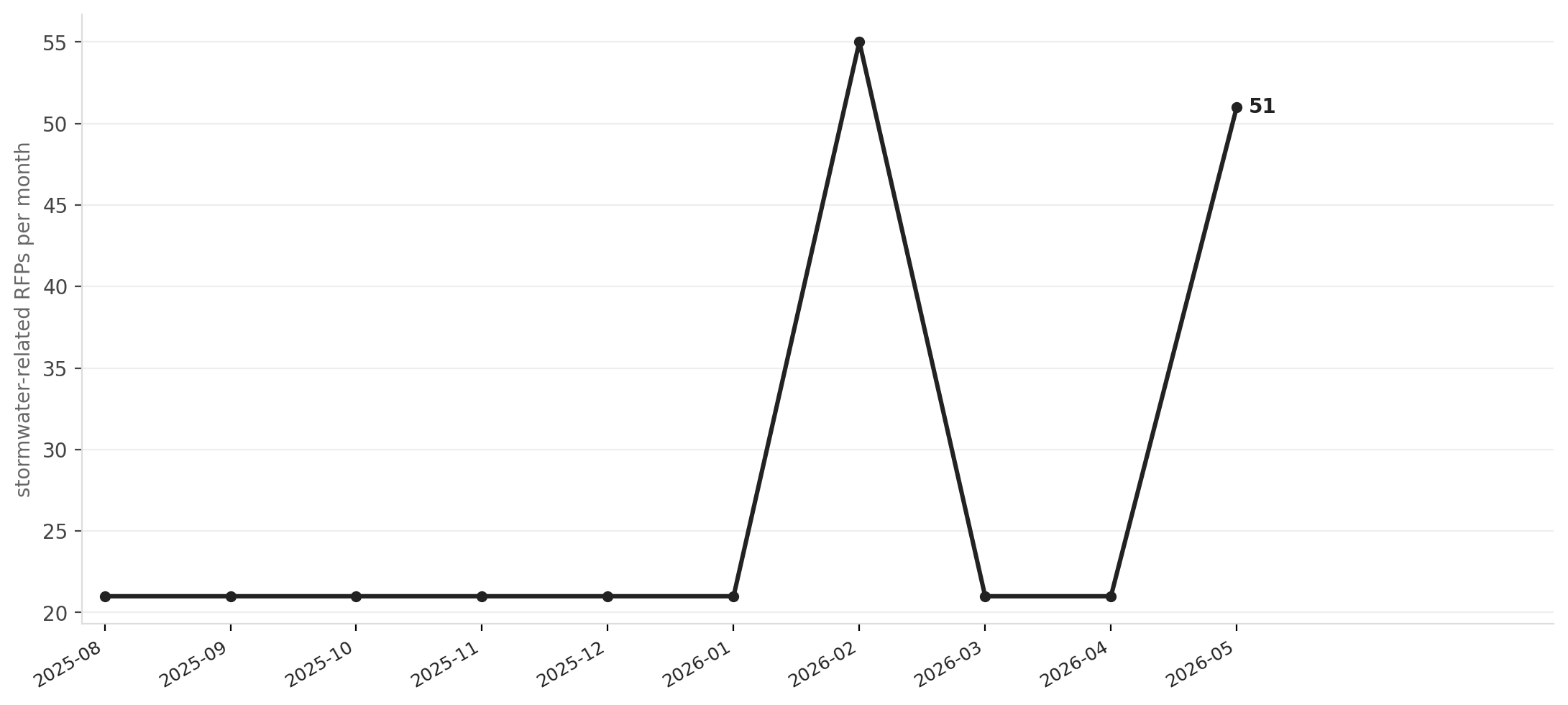
Illinois municipalities issued 51 stormwater management RFPs in the 30 days ending mid-May 2026, more than double the trailing 12-month average of roughly 21 per month. The surge is not random. Two hard deadlines are now converging: annual compliance reports under the reissued state MS4 permit are due June 1, 2026, and updated Stormwater Management Programs must be adopted by July 31. Hundreds of suburbs are, simultaneously, hiring engineers and opening procurement for drainage infrastructure they have not yet touched.
The Illinois EPA reissued its General NPDES Stormwater Permit for Municipal Separate Storm Sewer Systems (ILR40) on July 8, 2025, with an effective date of August 1 and an expiration of July 31, 2030. The agency described the reissuance as carrying "significant changes" to program requirements. That gave covered municipalities roughly eleven months to understand the new rules, update their stormwater programs, hire consultants, and open procurement before the first report landed on regulators' desks. The RFP volume suggests most of that work compressed into the final months.
The monthly time series shows two distinct spikes since the permit took effect: February 2026, when 55 RFPs were issued, and the current May spike, which hit 49 with days still to close. Both arrived well after the August effective date, consistent with the lag between a permit reissuance and the moment a municipality's budget cycle and staff capacity actually allow procurement to begin.
Source: NationGraph.
Northbrook, in Cook County, leads all municipalities with 20 stormwater RFPs in the current window alone. Glen Carbon in Madison County issued 8, Moline in Rock Island County issued 5, and DuPage County municipalities including Lisle and Naperville account for another cluster. The geography is not accidental. Chicago's collar counties, Cook, DuPage, Kane, and McHenry, hold the densest concentration of MS4-permitted municipalities in the state, and they are the ones driving the bulk of the procurement surge.
What amplifies the market signal in Illinois specifically is a governance structure that pushes compliance costs to each municipality individually. Under 55 ILCS 5/5-1062, only 16 of Illinois' 102 counties hold state-granted stormwater authority, and oversight of stormwater quantity rests with local governments rather than the state. That means a single permit reissuance by the Illinois EPA ripples out to hundreds of independent MS4 permittees, each of which must separately hire engineers, update local ordinances, and open competitive procurement. A state with centralized permitting and centralized procurement would generate one or two large contracts. Illinois generates dozens of small ones.
Federal grant dollars are not the driver here. The Illinois EPA currently holds approximately $5.2 million in active EPA Sewer Overflow and Stormwater Reuse Municipal grants, but recorded outlays are near zero. The money exists; it is not what is moving this market. Compliance pressure is.
There is one notable exception at the regional scale. Lake County's Stormwater Management Commission secured a second $30 million DCEO regional stormwater grant covering 16 projects, all with a completion deadline of October 31, 2026. That grant is layering additional procurement urgency onto a county that was already mobilizing under the new permit requirements.
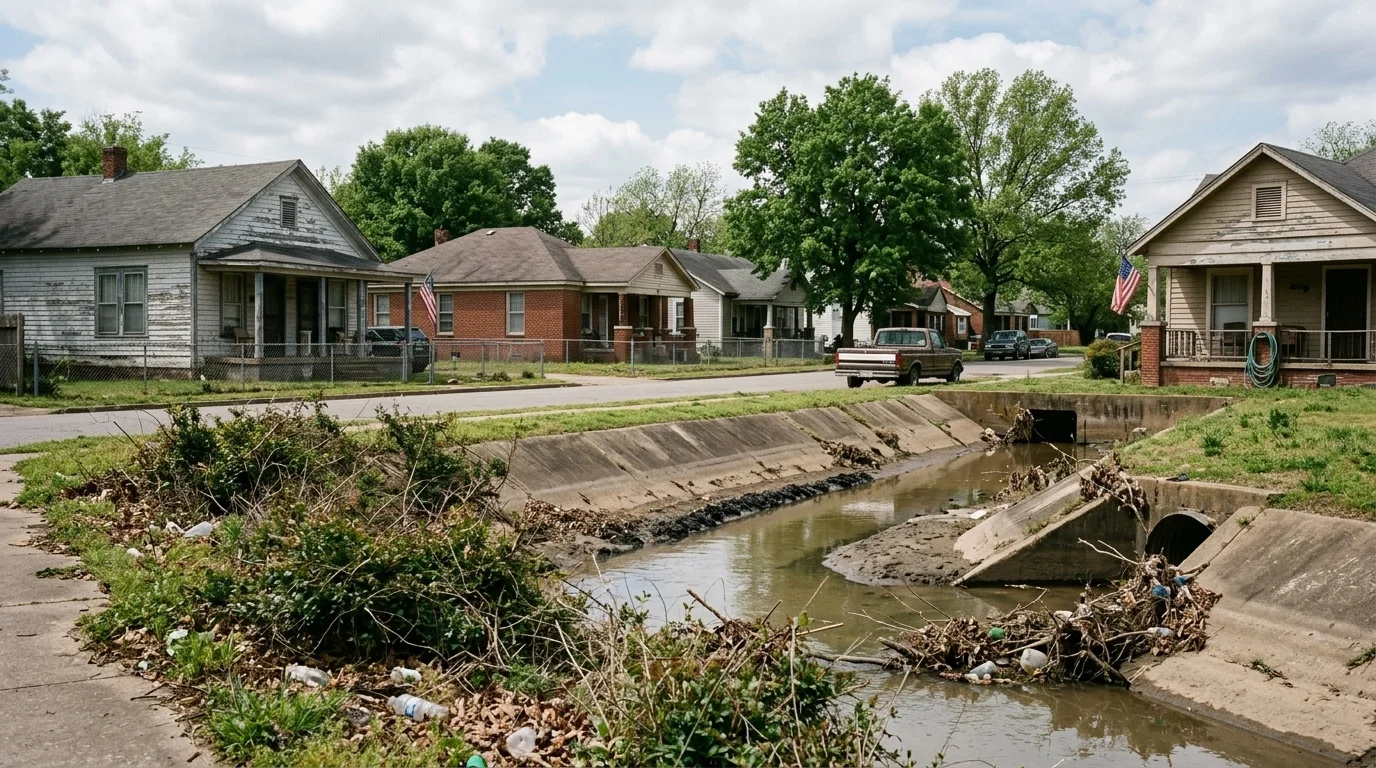
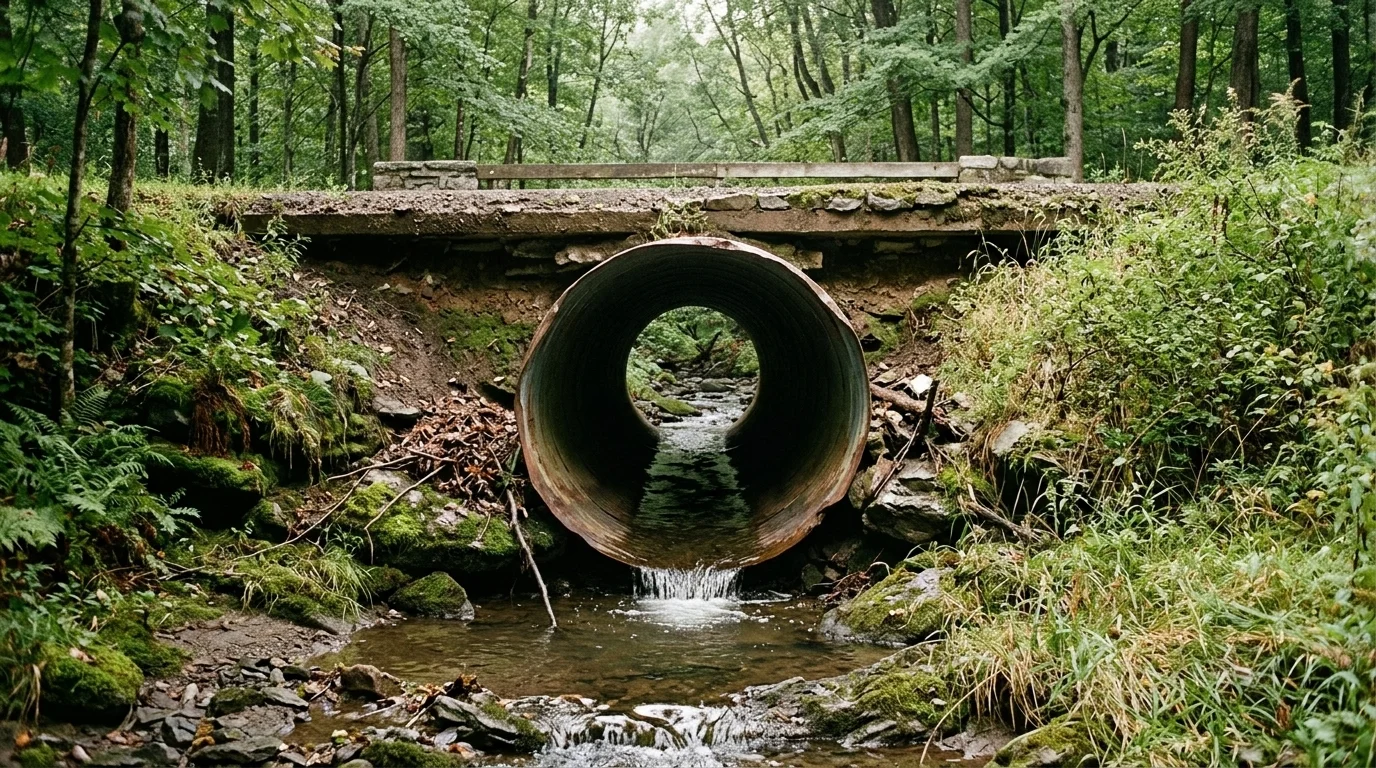
For residents in the affected suburbs, the most immediate effect is a period of elevated construction activity in drainage corridors, retention basins, and road culverts, as municipalities execute the contracts now being bid. Longer term, the updated Stormwater Management Programs required by July 31 will likely translate into new local ordinances governing impervious surface limits, runoff calculations for development permits, and maintenance schedules for existing infrastructure. Those rule changes affect anyone pulling a building permit or developing land in a covered municipality.
The question that will matter most in the coming months is whether municipal procurement offices, which in many collar-county suburbs are small operations, can actually close these contracts and mobilize construction before the July 31 program deadline. Engineering and environmental consulting firms are absorbing a concentrated burst of demand from municipalities that did not, in most cases, plan for this reissuance in their 2025 capital budgets. Delays in contract award push construction timelines into 2027, which creates exposure under a permit that runs through 2030 but sets interim milestones now.
The next signal to watch is the June 1 annual report filing: how many of the municipalities currently issuing RFPs will also be filing on time, and how many will be seeking extensions from the Illinois EPA on a permit that has been in effect for less than a year.