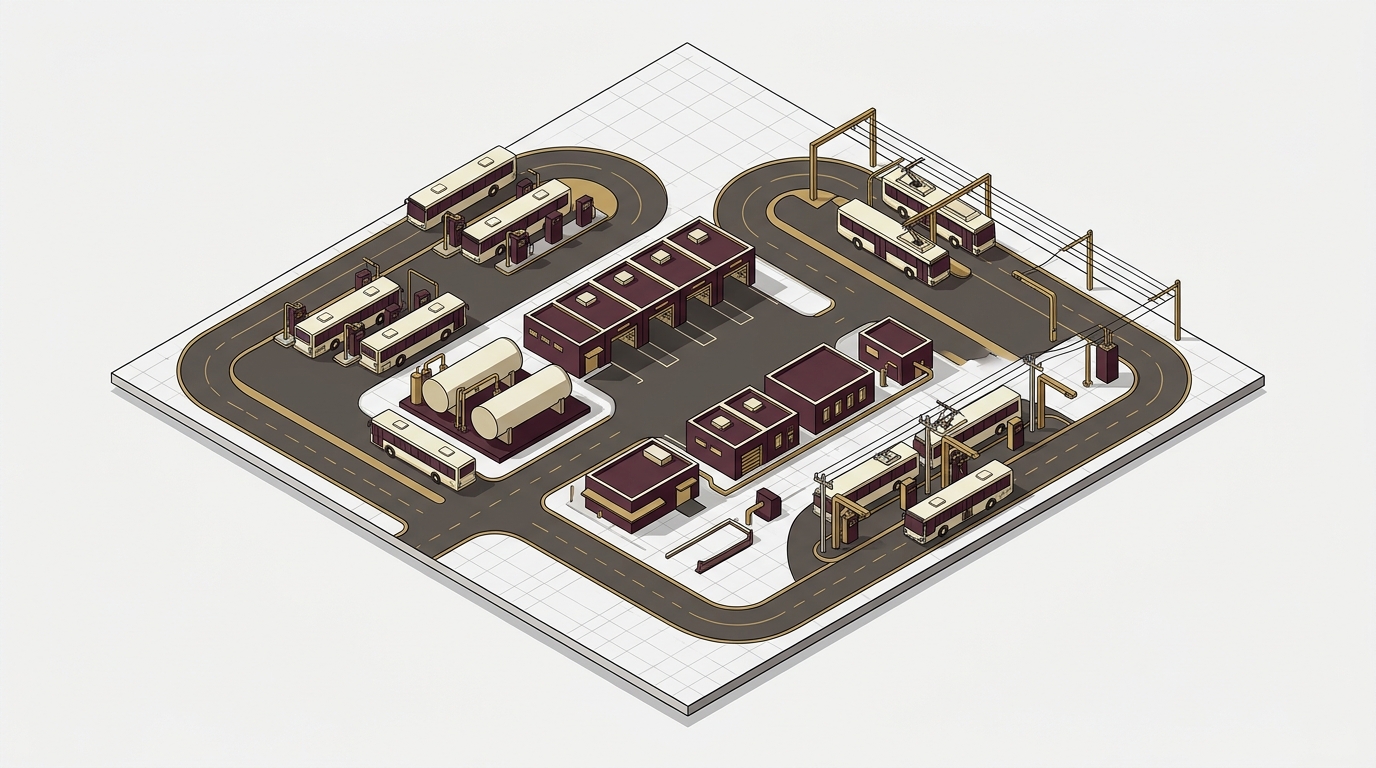
Columbus, Ohio's public transit agency is spending an estimated $30 million or more on 60 new natural gas-powered buses, a decision that keeps the region's sole transit backbone running on fossil fuels for another decade even as other cities accelerate toward electric fleets.
The Central Ohio Transit Authority (COTA), which serves roughly 2.1 million people in the Columbus metro area, is seeking bids for 60 compressed natural gas (CNG) heavy-duty coaches to replace aging buses reaching the end of their useful life. At roughly $500,000 to $550,000 per vehicle, the total procurement likely lands between $30 and $33 million.
The choice of CNG over battery-electric buses reflects a calculation familiar to many mid-sized transit agencies: COTA has already invested heavily in CNG fueling infrastructure at its McKinley Avenue facility, and converting to electric would require expensive new charging depots and grid upgrades on top of the higher vehicle cost. Electric buses run $800,000 to over $1 million each, roughly double the price of a comparable CNG coach, and range limitations remain a practical concern for an agency serving Columbus's sprawling suburban geography.
About a quarter of all U.S. transit buses already run on natural gas, according to the American Public Transportation Association, and CNG has a two-decade track record of reliability in heavy-duty service. Ohio has imposed no zero-emission bus mandate, giving COTA flexibility that agencies in states like California no longer have.
Still, the purchase comes at a moment of real tension in the transit industry. The federal government has pushed hard for zero-emission fleets through competitive grant programs, and environmental groups have increasingly pressured agencies to stop buying fossil-fuel vehicles. A 60-bus CNG order means those coaches will likely be in service through the late 2030s.
For Columbus specifically, the stakes are unusually high. Unlike Cleveland and Cincinnati, which have rail transit, Columbus is the largest U.S. city without rail, making its bus fleet the only public transit option for most residents. Fleet decisions carry more weight here than in cities with multiple transit modes.
Franklin County voters approved a landmark 0.5% sales tax increase for COTA in November 2024, signaling public appetite for transit investment and raising expectations for modernization. The agency is also planning additional bus rapid transit corridors under its broader LinkUS initiative. Population pressure is only expected to grow, with Intel's $20 billion chip fabrication plant under development in nearby Licking County poised to drive regional demand.
COTA is currently accepting bids on the [procurement](javascript:ViewDetail('5D2573EDF40ED71EEC73C176D0B76B745EBC179864B97A95')). The new buses, once delivered, will replace units from the early-to-mid 2010s that have hit the federally defined 12-year useful life for heavy-duty coaches.