Mena, Arkansas has lived with a railroad bisecting its downtown for generations. Now the small Ouachita Mountain city of roughly 5,600 people is getting $2.7 million in federal infrastructure money to work around it, connecting its signature tourism asset to its commercial core by foot and by bike for the first time.
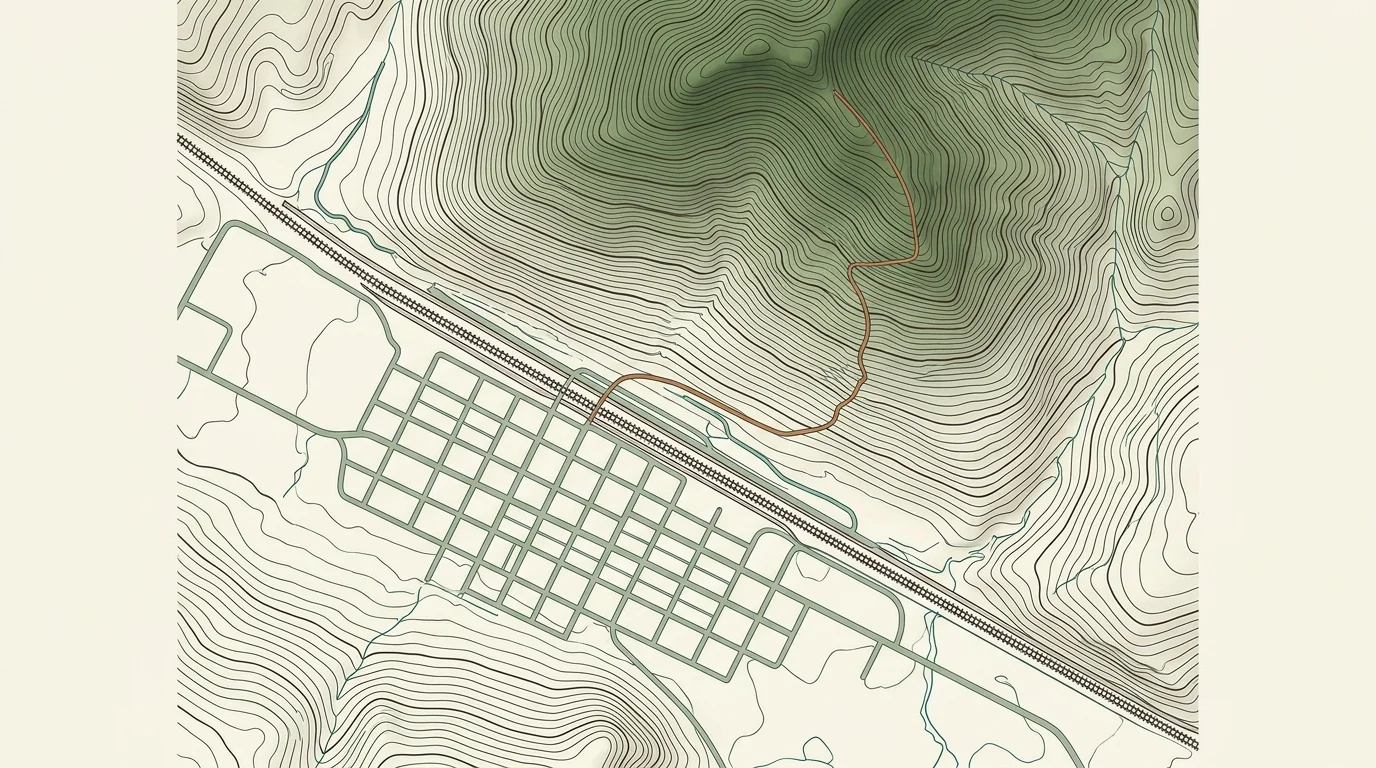
The federal RAISE grant, awarded through the Department of Transportation's National Infrastructure Investments program, targets a problem that has long frustrated both residents and visitors: the CPKC (formerly Kansas City Southern) rail line that cuts through Mena makes safe pedestrian and bicycle travel across town difficult, effectively severing downtown from Queen Wilhelmina State Park, the region's premier outdoor tourism draw perched atop Rich Mountain along the Talimena National Scenic Byway about 13 miles out.
But the grant does more than fund a trail connection. Mena will also use the money to produce an Active Transportation Plan, a Master Street Plan, an ADA Transition Plan, and a Complete Streets Policy. For a rural city with limited planning staff and budgets, those documents are transformative on their own. Few small Arkansas cities have ever adopted Complete Streets policies, and many lack the basic planning frameworks that larger cities take for granted. The grant essentially hands Mena a full modern transportation planning infrastructure alongside the physical project, a deliberate approach the RAISE program uses to build long-term capacity in communities that otherwise can't afford it. Arkansas is separately working to expand trail networks beyond its better-known cycling hub in northwest Arkansas, and a connected Mena could eventually slot into that broader vision.
The stakes are real for Polk County's economy. The county, with a median household income well below state and national averages, has increasingly looked to outdoor recreation tourism as an economic lifeline, following the model that Bentonville pioneered with mountain biking. Right now, visitors to Queen Wilhelmina State Park arrive almost exclusively by car. A safe, direct active transportation connection to downtown could change that calculus, drawing hikers, cyclists, and leaf-peepers into Mena's shops and restaurants rather than past them.
The RAISE program, originally created under the 2009 Recovery Act and funded at $1.5 billion annually through 2026 by the Infrastructure Investment and Jobs Act, has awarded more than $15 billion to local governments and communities over 16 rounds. With this grant posted in April 2026, Mena is among the final beneficiaries of that IIJA funding cycle. Design and construction documentation will come first, meaning shovels won't go in the ground immediately, but the planning work will set the stage for what the city builds next.