Seventy-nine Massachusetts municipalities issued a housing-related RFP for the first time in more than a year, all within the same 30-day window. That is not a gradual uptick. It is a compression event, and two converging deadlines explain nearly all of it.
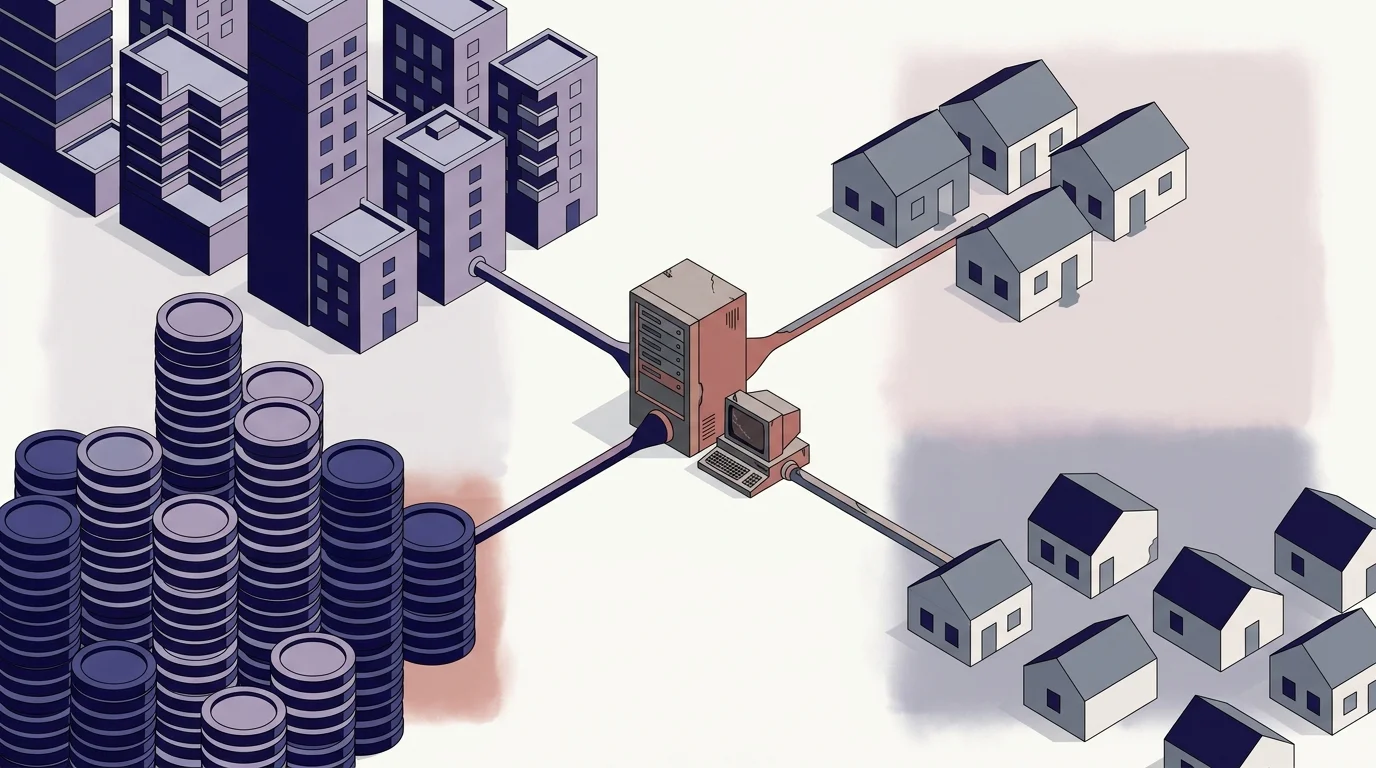
The MBTA Communities Act required 177 municipalities to adopt multifamily-by-right zoning near transit stations, with most commuter-rail towns facing a December 31, 2024 deadline. Governor Healey's Affordable Homes Act, signed in August 2024 and the largest housing bond bill in state history at $5.16 billion, then layered a financial incentive on top of the legal one: its competitive grant programs explicitly favor communities that have complied with the zoning law. For towns that spent four years arguing about density, the calculus shifted. The grant money they need to fund public housing rehabilitation, affordable units, and infrastructure is now on the other side of the compliance wall.
The Attorney General sharpened the point. A July 2025 advisory warned that the 12 remaining non-compliant communities face imminent enforcement suits and the loss of state grant eligibility. Of the 177 towns covered by the law, 165 had complied by end of 2025, about 93 percent. The holdouts are now exposed. But even among compliant towns, the clock is running: Housing Production Plans, the formal planning documents that municipalities must file to demonstrate readiness and unlock EOHLC competitive awards, take months to produce and require outside consultants to write.
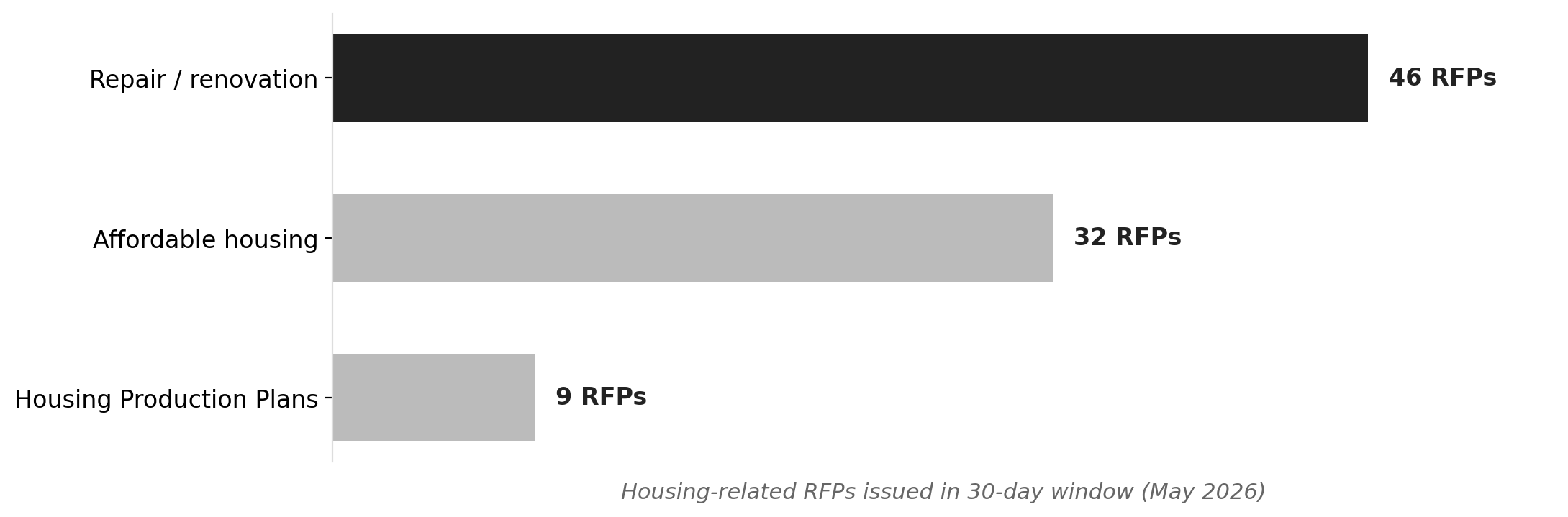
Source: NationGraph.
That explains the specific shape of this month's procurement surge. Of the 79 first-time RFPs, 32 explicitly involve affordable housing development or consulting services and nine are Housing Production Plans. The HPP number is the clearest signal. These are not maintenance contracts or routine capital projects. They are compliance documents, and towns are soliciting them in batches because they cannot access certain grant categories without them.
The most active municipalities in the 30-day window include Amherst, which issued 20 RFPs including four simultaneous affordable housing development solicitations, along with Everett (12 RFPs), Gloucester (11), and Reading (11). The geographic spread matters as much as the volume. Amherst is a college-town market with development pressure from UMass. Everett and Gloucester are dense communities with substantial public housing rehabilitation needs. Reading is a commuter-rail suburb that fits precisely the profile of the town the MBTA Communities Act was designed to push toward denser zoning.
What is most telling is the clustering. Falmouth, Wellesley, Weston, Stoneham, and Reading each issued both a Housing Production Plan solicitation and affordable housing consultant RFPs within the same 30-day window. That is not coincidence. It reflects a coordinated sprint by municipal staff who have worked out, simultaneously, that the HPP and the consultant relationship are prerequisites for the grant applications they intend to file before the next competitive cycle closes.
The Affordable Homes Act's scale makes the urgency legible. The $5.16 billion package includes $2 billion for public housing rehabilitation and $800 million for affordable unit production, and the Massachusetts Budget and Policy Center has noted that $2.28 billion has already been budgeted for FY2025-2029. Housing Secretary Ed Augustus put 7,000 new units already in the pipeline under the MBTA Communities Act alone. The state's own February 2025 estimate holds that 222,000 additional units are needed within the next decade to stabilize costs. The procurement wave is municipalities trying to position themselves for a share of a very large and time-limited pool of capital.
For residents in these towns, the practical near-term effect is a wave of consultant contracts, public hearings on updated Housing Production Plans, and, in some cases, the first substantive zoning change discussions in years. Whether those processes result in permitted units depends on what happens after the RFP closes: consultant hired, plan drafted, zoning board vote scheduled. The procurement activity is necessary but not sufficient.
The next signal to watch is the EOHLC's competitive grant award announcements, expected later in 2025 and into 2026. Towns that filed Housing Production Plans and completed their MBTA zoning amendments in this window will appear on those award lists. Towns that did not will not. At that point, the financial distance between compliant and non-compliant municipalities will be legible in a single spreadsheet, and the remaining 12 holdouts will face a harder conversation with their residents about what the delay cost.