Federal school safety grants to Maryland have jumped from $204,688 to $8.1 million in the last 90 days, a 3,858% increase that has nothing to do with metal detectors or security cameras. Every dollar traces back to a single December 2025 federal court order that forced the Trump administration to hand back money it had already tried to cancel.
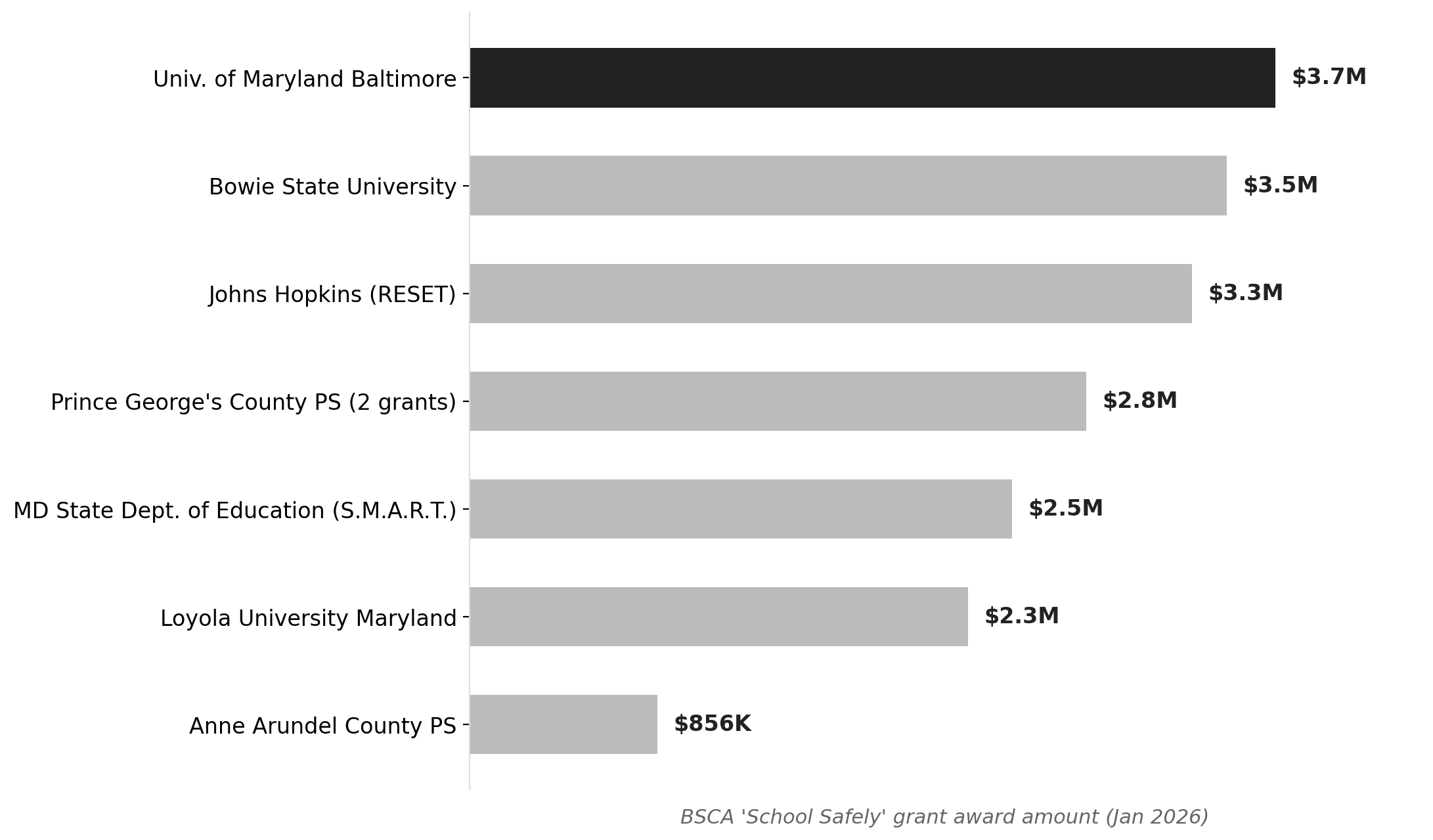
The full picture is $19.2 million, spread across eight grants from the Department of Education's School Safely National Activities program, all carrying a January 1, 2026 start date and all tied to the Bipartisan Safer Communities Act's school mental health workforce programs. The University of Maryland Baltimore received $3.67 million to expand school-based mental health services. Bowie State University received $3.45 million to build a school counseling pipeline. Johns Hopkins University received $3.29 million for its RESET program. The Maryland State Department of Education received $2.47 million for S.M.A.R.T., a school psychologist training initiative. Prince George's County Public Schools holds two grants totaling $2.81 million, covering both community violence prevention and counselor talent acquisition.
Every one of these grants was among the more than $1 billion in BSCA awards the Trump administration abruptly canceled on April 29, 2025, claiming recipients had violated administration priorities around diversity, equity and inclusion programs. As Education Week reported at the time, the cancellations hit without warning and left institutions mid-program.
A 16-state attorney general coalition, led by New York AG Letitia James, sued the Department of Education in July 2025 and won a permanent reinstatement order from the Western District of Washington in December 2025. The synchronized January 1 start dates on all eight Maryland grants are the direct administrative result of that ruling, institutions receiving money that had been declared dead eight months earlier.
The BSCA, passed with bipartisan support in 2022 after the Uvalde shooting, appropriated $500 million each to two programs: the Mental Health Service Professional Demonstration Grant, which funds university-to-district training pipelines, and the School-Based Mental Health Services Grant, which funds direct placement of counselors and psychologists. The combined national goal was placing 14,000 new mental health professionals in schools over five years. Maryland's concentration of research universities, including Johns Hopkins, University of Maryland, Loyola Maryland and Bowie State, made it a natural fit for the higher-education partnership model the MHSP program requires. Among neighboring states, Maryland ranks third in total BSCA School Safely grant volume at $19.2 million, behind Virginia at $41 million and New Jersey at $29 million.
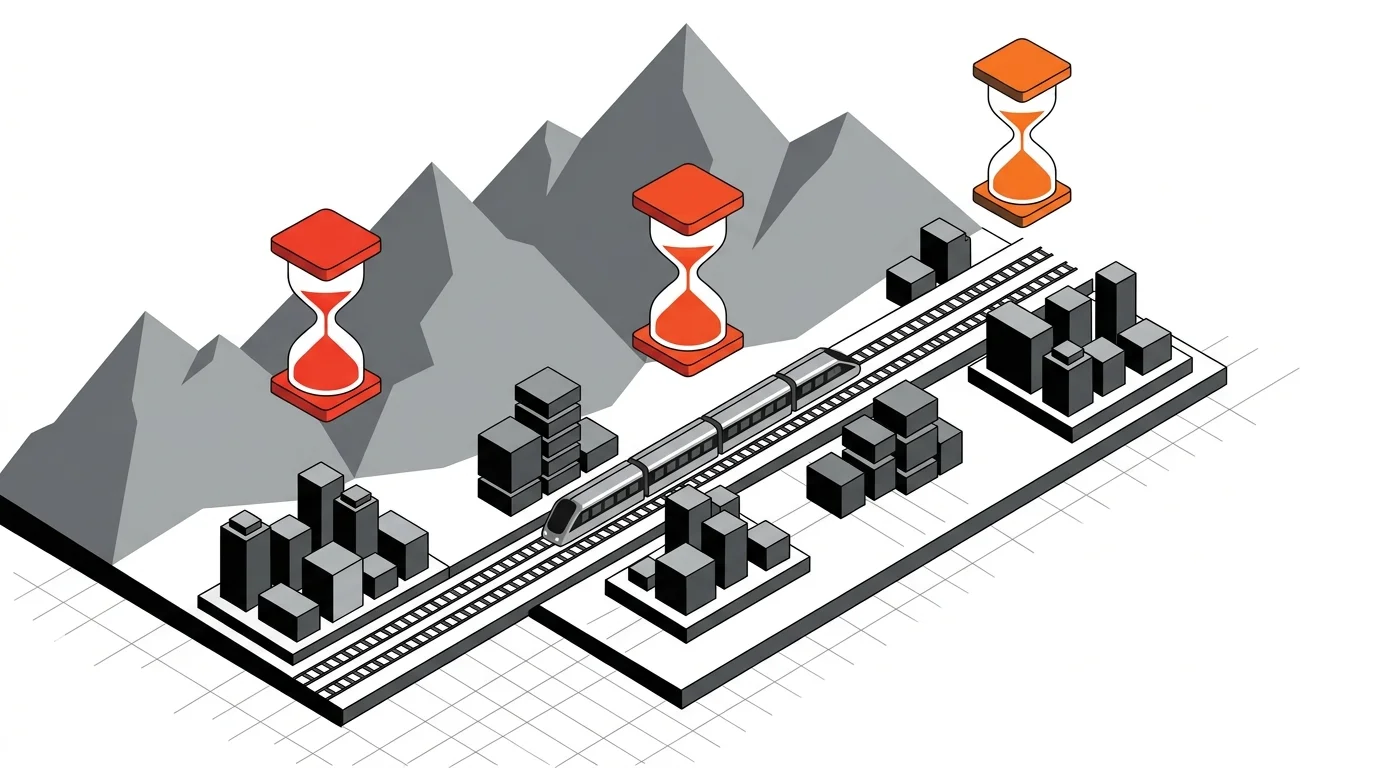
The money is real, but its shelf life is not settled. All eight Maryland grants run only through December 31, 2026. In March 2026, the Department of Education moved to limit new award periods to six months rather than a full year, a maneuver California AG Rob Bonta characterized as a back-channel cancellation. Bonta filed a court enforcement motion asking the Western District of Washington to block the restriction. That motion remains pending.
The practical consequence for Maryland recipients is a compressed runway. Programs designed to train and place school counselors over multiple academic years are now operating under a single-year authorization, with no guarantee the funding survives the enforcement fight. Before the April 2025 cancellation, programs running under these grants had documented a reported 50% reduction in suicide risk at high-need schools and an 80% drop in student mental health wait times, according to assessments cited in the Sandy Hook Promise's review of the BSCA programs. Whether those results can be replicated in an eight-to-twelve-month window is an open methodological question the grantees will have to answer.
Congressional pressure has not resolved the uncertainty. Rep. Brian Fitzpatrick led a bipartisan coalition urging Secretary Linda McMahon not to redirect the funds, but the administration's six-month restriction attempt came after that letter was sent.
For Maryland school districts and universities now drawing down these funds, the immediate question is what a program can accomplish before December 31. For Prince George's County Public Schools, one of the largest majority-Black school districts in the country and a historically cited focus of federal equity-driven mental health initiatives, the two-grant portfolio represents a meaningful near-term resource and a genuine planning risk.
The next signal to watch is the outcome of California's enforcement motion. If the court upholds the full one-year award period, Maryland's grantees have until the end of 2026 to show results. If the six-month restriction stands, some programs will face wind-down decisions before the school year ends.