Massachusetts municipalities have issued 57 solar-related procurement actions in the past 30 days, more than two and a half times the 12-month monthly average of roughly 22. The surge is not driven by cheaper panels or a sudden change in electricity rates. It is driven by a clock: a federally imposed construction-start deadline of July 4, 2026, after which towns that have not broken physical ground on a solar project lose access to a federal cash refund worth up to 40% of the installation cost.
The mechanism is the IRA's Elective Pay provision, established under Section 6417, which allows tax-exempt entities like cities and school districts to receive the Investment Tax Credit as a direct IRS refund rather than a tax offset. A 30% base credit, boosted to 40% with domestic content adders, can represent hundreds of thousands of dollars on a single school rooftop installation. The One Big, Beautiful Bill Act, enacted in July 2025, set July 4, 2026 as the hard construction-start cutoff for solar and wind projects to retain that credit. Then IRS Notice 2025-42 closed the planning loophole: municipalities cannot satisfy the standard with engineering studies, permit applications, or equipment orders. Actual physical work, excavation, foundation pours, mounting structure installation, must be underway. As the National League of Cities warned municipalities in August 2025, communities are encouraged to make as much progress as possible on solar projects before the deadline.
The procurement data reflects exactly that warning being acted on. Wellesley leads all Massachusetts municipalities with 9 RFPs in the window, followed by Andover with 7 and Falmouth with 6. The procurement types span rooftop solar on school buildings and municipal facilities, ground-mounted PV land leases, and one particularly revealing action: Wellesley issued an RFP specifically for "Tax Advisory Services for ITC Elective Pay Filing." Towns are not just buying solar equipment; they are acquiring the legal and financial expertise to monetize the federal credit before it expires. That advisory RFP is a signal of how seriously local finance officers are treating the deadline.
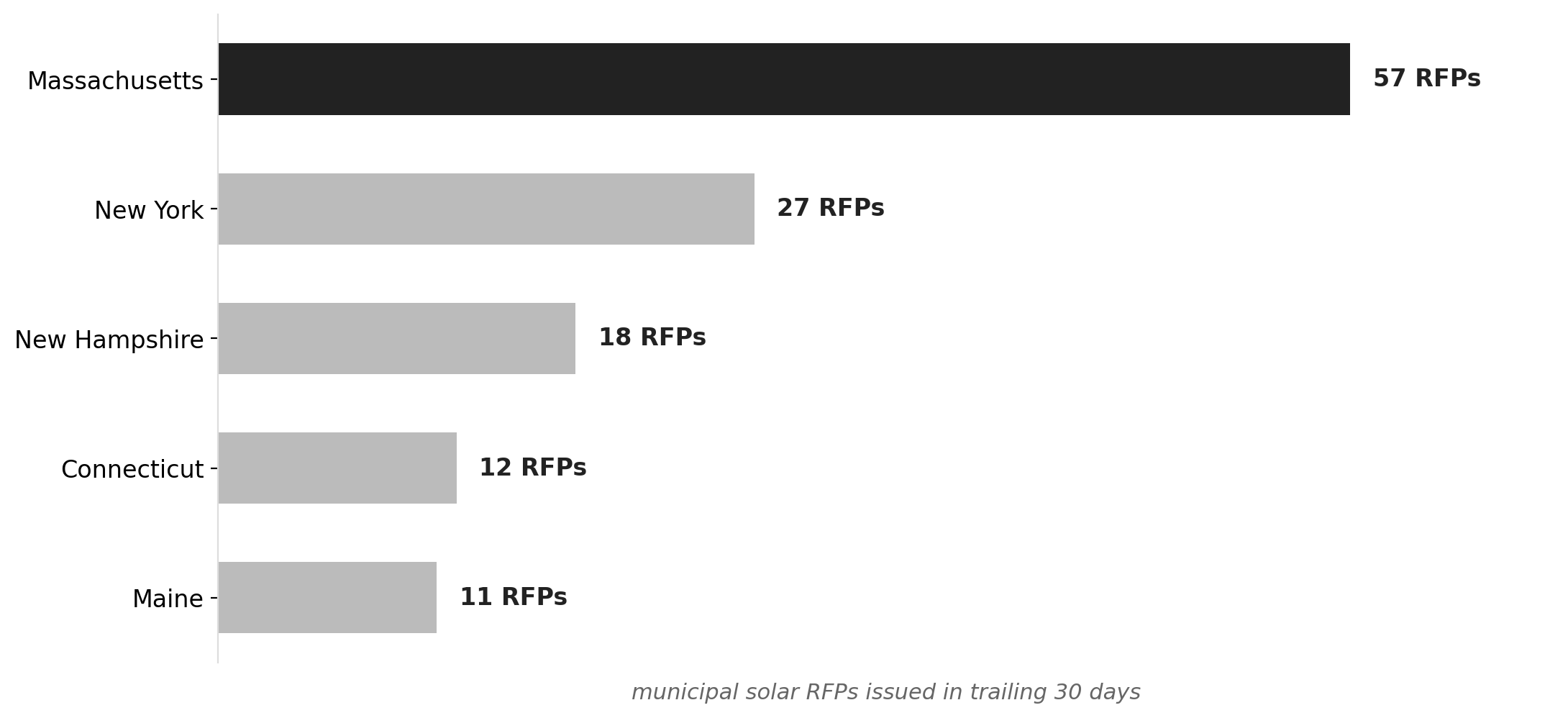
Source: NationGraph.
Massachusetts' 57 RFPs in 30 days is more than double the next-closest Northeast state. New York issued 27 in the same window, New Hampshire 18, Connecticut 12, Maine 11. That gap points to a Massachusetts-specific policy environment amplifying the federal urgency. The state's SMART 3.0 program reset its capacity cap at 600 megawatts on January 1, 2026, creating a parallel enrollment window that aligned neatly with the federal ITC construction-start deadline. The Healey-Driscoll administration finalized streamlined energy siting and permitting regulations in March 2026, removing a historic barrier that had delayed solar siting by years in some municipalities. The result is a double trigger: federal incentive expiration and a newly cleared state permitting pathway both pointing at the same six-week window.
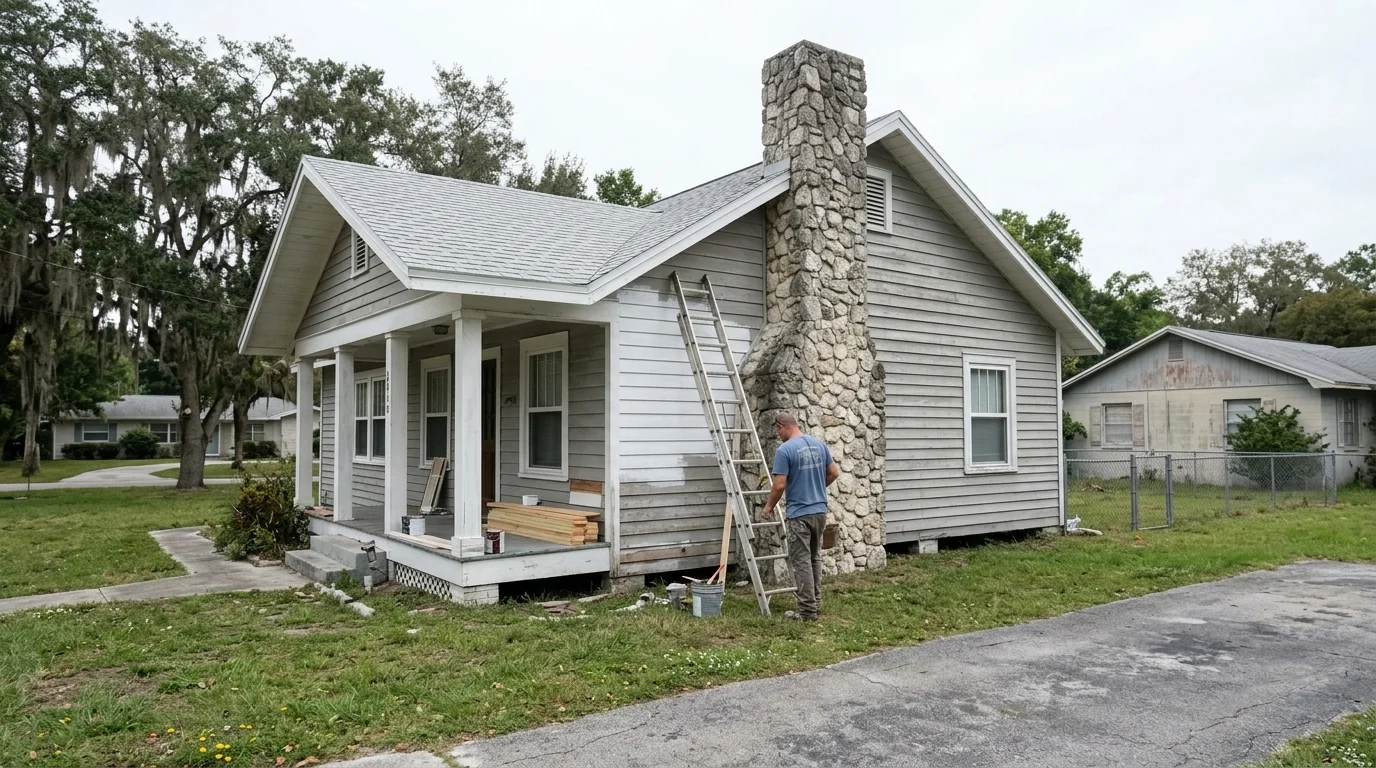
Massachusetts' electricity rates, running around $0.29 per kilowatt-hour, are among the highest in the continental United States. That underlying economics has always made solar financially attractive for municipalities carrying large utility bills across school campuses and public works facilities. But the ITC Elective Pay cash refund is a different kind of incentive: it is upfront capital, not a long-term bill reduction. For a town financing a $2 million rooftop solar project, a 40% direct-pay refund reduces the net outlay to $1.2 million on day one. That changes what towns can afford without bonding, and it largely explains why procurement offices in smaller suburban municipalities, Pepperell, Nantucket, Andover, are moving as fast as larger cities.
What changes for a Massachusetts resident after July 4 depends on whether their town moves in time. Towns that break ground before the deadline and file correctly under Section 6417 lock in a cash reimbursement that will offset local project costs for years. Towns that miss it will still face the same high electricity bills and the same SMART 3.0 incentives, but they will finance solar at full cost, and payback timelines will lengthen accordingly.
The next signal to watch is physical. An RFP is an intention; a notice to proceed is a commitment; a construction start is the legal event that matters. Municipalities that issued RFPs in April and May have roughly four to six weeks to select a contractor, execute a contract, and have crews on site with equipment in the ground. Towns that are still in evaluation by late June are running out of runway. The July 4 deadline does not move.