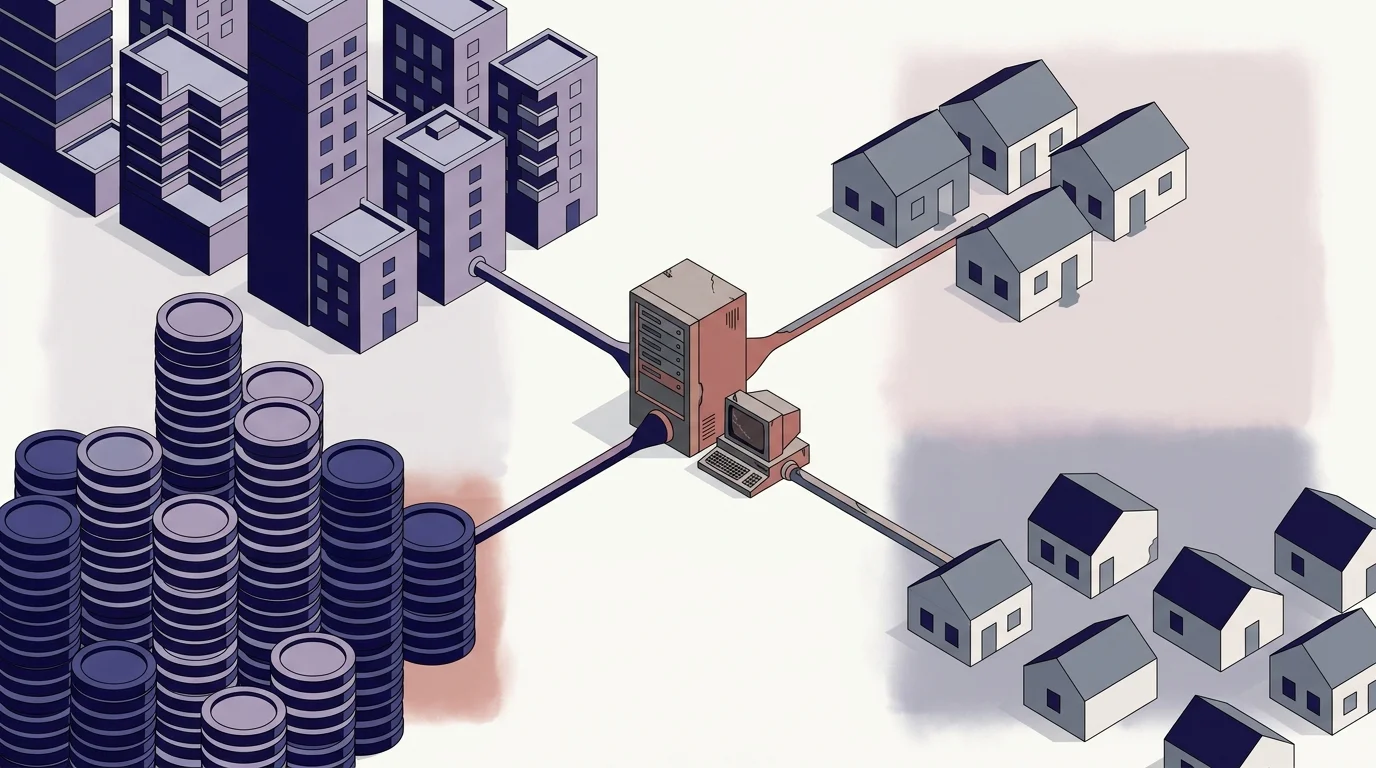
One hundred and twenty-two housing procurement records filed in Montana in the last 30 days looks, at first glance, like a construction boom. Strip out the duplicates and the real story is more consequential than any single apartment complex: the Montana Board of Housing has posted an active RFP for a full software overhaul, and the agency has been re-ingesting that solicitation daily since April 7, 2026. The most important housing procurement in Montana right now is not a building. It is a database.
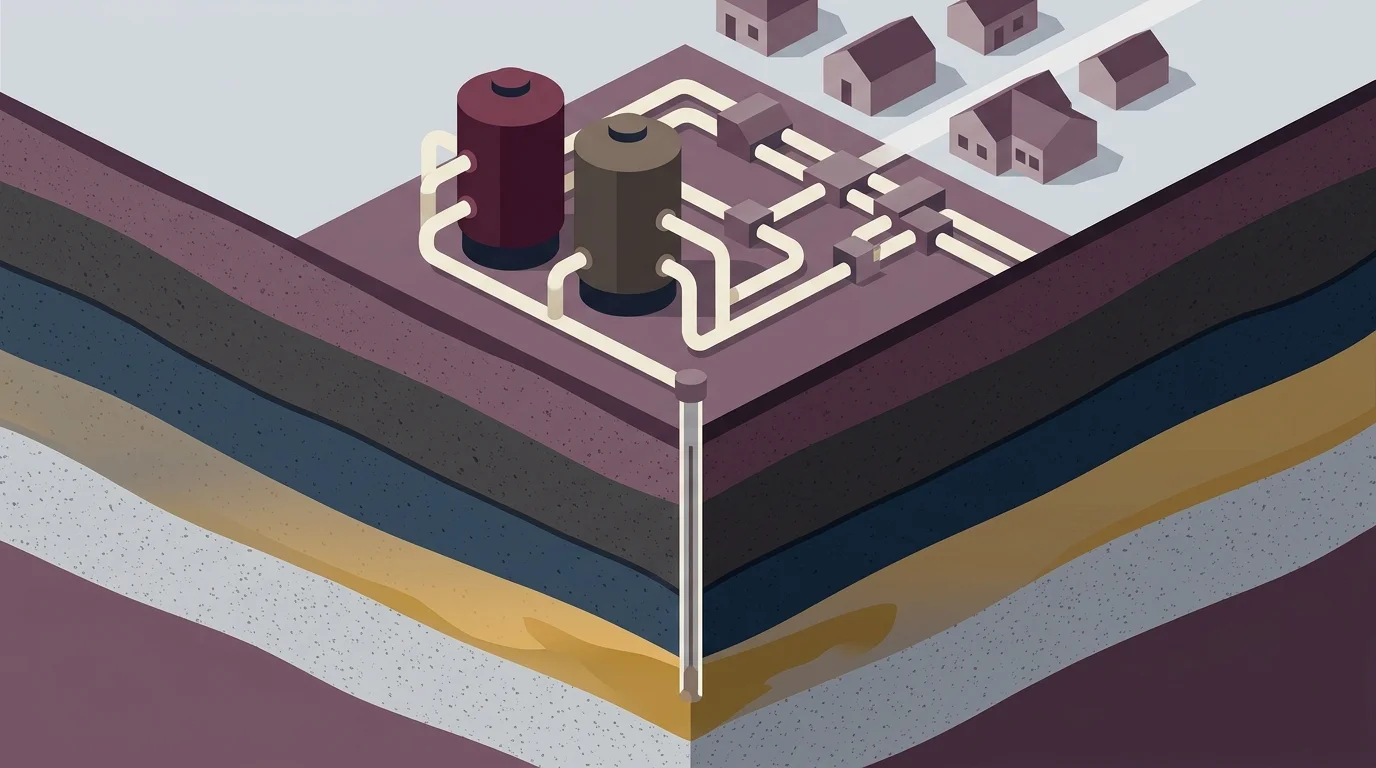
The urgency is not accidental. Gov. Greg Gianforte signed House Bill 924 on June 19, 2025, creating the Montana Growth and Opportunity Housing Fund, the first time in Montana's history that affordable housing received a dedicated, ongoing state appropriation. The fund opened with roughly $31.2 million (a $10 million capital development transfer plus more than $21 million from the general fund due by May 2027) and carries a legal pathway to $500 million by 2035, drawing 20 percent of the state's volatile revenue each year starting in July 2027. The GO Housing Fund's inaugural competitive application round opened in February 2026. The Montana Board of Housing, which administers mortgages, tax credits, and construction loans for affordable multifamily projects statewide, is now expected to process a capital pipeline it was never architecturally built to handle.
The gap was visible before HB 924 existed. A 2023 Legislative Audit Division performance review found that the MBOH runs a 15-module off-the-shelf software package that poses information security and operational risks. The agency's own FY2026 Annual Plan lists replacing that system through competitive procurement as a key measure for the fiscal year, a direct acknowledgment that the software bottleneck could choke off new capital before it reaches developers. If applications can't be processed efficiently, construction loans don't close, tax credit allocations don't move, and the political achievement of HB 924 stalls at the administrative level.
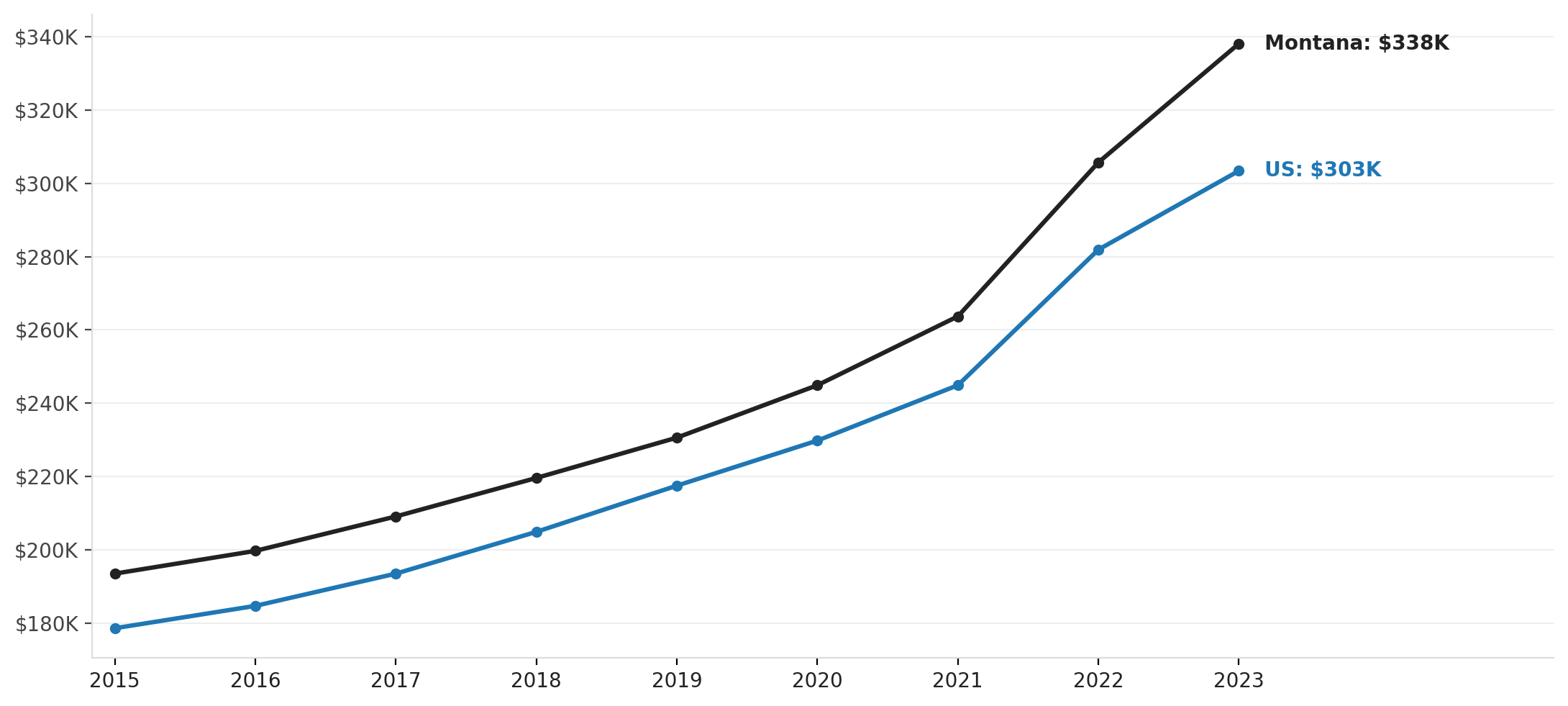
Source: U.S. Census Bureau, American Community Survey.
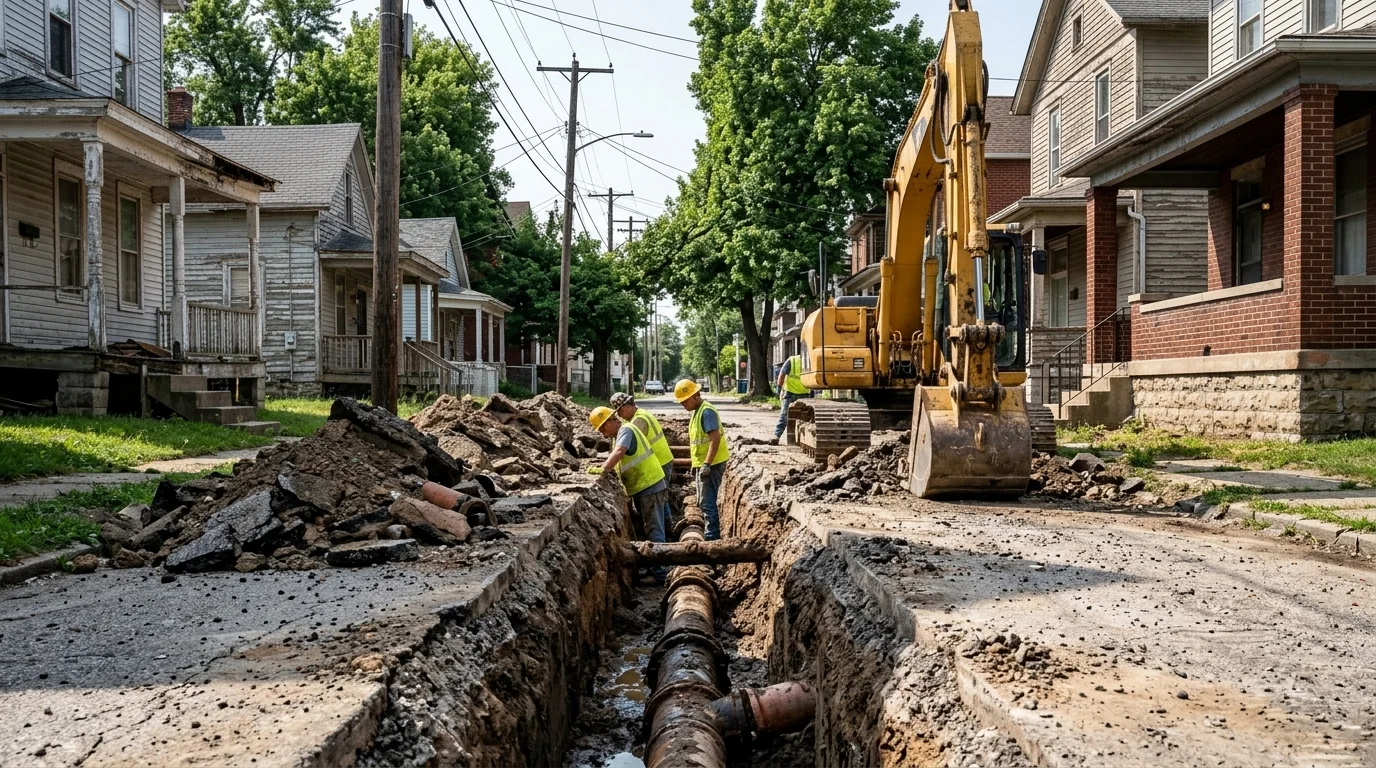
The on-the-ground housing activity is real and growing in parallel. Billings has active RFPs out for affordable modular housing development on Steffanich Drive and rehabilitation work across several residential properties. Whitefish issued a community housing development and financial planning RFQ. West Yellowstone commissioned a workforce housing needs assessment through the Northern Rocky Mountain Economic Development District. These are the deals that would flow through an upgraded MBOH system, and the kinds of projects a $500 million fund is designed to accelerate.
The broader policy architecture matters here. The 2025 legislature also passed Senate Bill 243, raising building height limits to 60 feet in any municipality over 5,000 residents, and SB 252 expanding manufactured-housing protections. As Reason Foundation noted, these measures represent a second wave of what housing reformers have called the "Montana Miracle", the supply-side zoning overhaul begun in 2023 and upheld by the Montana Supreme Court in 2024. The combination of liberalized land use and new state capital is designed to work together. Neither does much without an agency that can move money quickly.
The federal layer adds more pressure. Montana's housing grant portfolio totals $170 million in newly started federal grants over the last 18 months, including a $7 million HUD PRO Housing Competition grant to the Department of Commerce and $13.9 million in Section 8 Housing Choice Vouchers. That puts Montana roughly on par with Idaho ($176 million) and well ahead of Wyoming ($80 million) for a state its size, a signal that federal program officers see Montana as an active partner, not a passive recipient.
The need is not in question. Montana's median listing price hit $639,000 as of May 2025, roughly double its level a decade ago. The state faces an estimated shortfall of 17,000 affordable rental units and 14,000 additional housing units overall, driven in part by a population gain of roughly 45,000 residents since 2020 and a vacancy rate that dropped more than four percentage points over the same period, nearly twice the national decline.
The software RFP responses are due this spring. If the MBOH awards a contract and begins implementation before the GO Housing Fund's second competitive round, the agency will have closed the administrative gap that auditors flagged three years ago. If the procurement drags, the new fund's ambitions run headlong into a system the legislature itself has already deemed inadequate. Watch for the contract award and for how quickly the first GO Housing Fund loan commitments move from application to closing, that timeline will be the clearest early measure of whether Montana's housing modernization is real or still waiting on a vendor.