Iowa is receiving $11.5 million in federal funding to help its public water systems remove PFAS, the synthetic "forever chemicals" linked to cancer, thyroid disease, and developmental harm in children, from drinking water supplies.
The grant, awarded through the EPA's Drinking Water State Revolving Fund, flows from the 2021 Bipartisan Infrastructure Law, which set aside $9 billion specifically for PFAS remediation over five years. Iowa's share will be distributed as low-interest or no-interest financing to eligible water systems across the state, covering the cost of planning, designing, and building treatment infrastructure. Under the program's terms, communities don't have to repay the funds, a recognition that local water systems didn't cause the contamination in the first place.
PFAS, short for per- and polyfluoroalkyl substances, are a class of roughly 15,000 synthetic chemicals used since the 1940s in nonstick cookware, firefighting foam, food packaging, and industrial processes. Because they don't break down in the environment or in the human body, they accumulate over time and have been found in drinking water supplies across the country. The EPA set its first-ever enforceable limits on six PFAS compounds in April 2024, capping the two most common, PFOA and PFOS, at 4 parts per trillion. Water systems have until 2029 to comply.
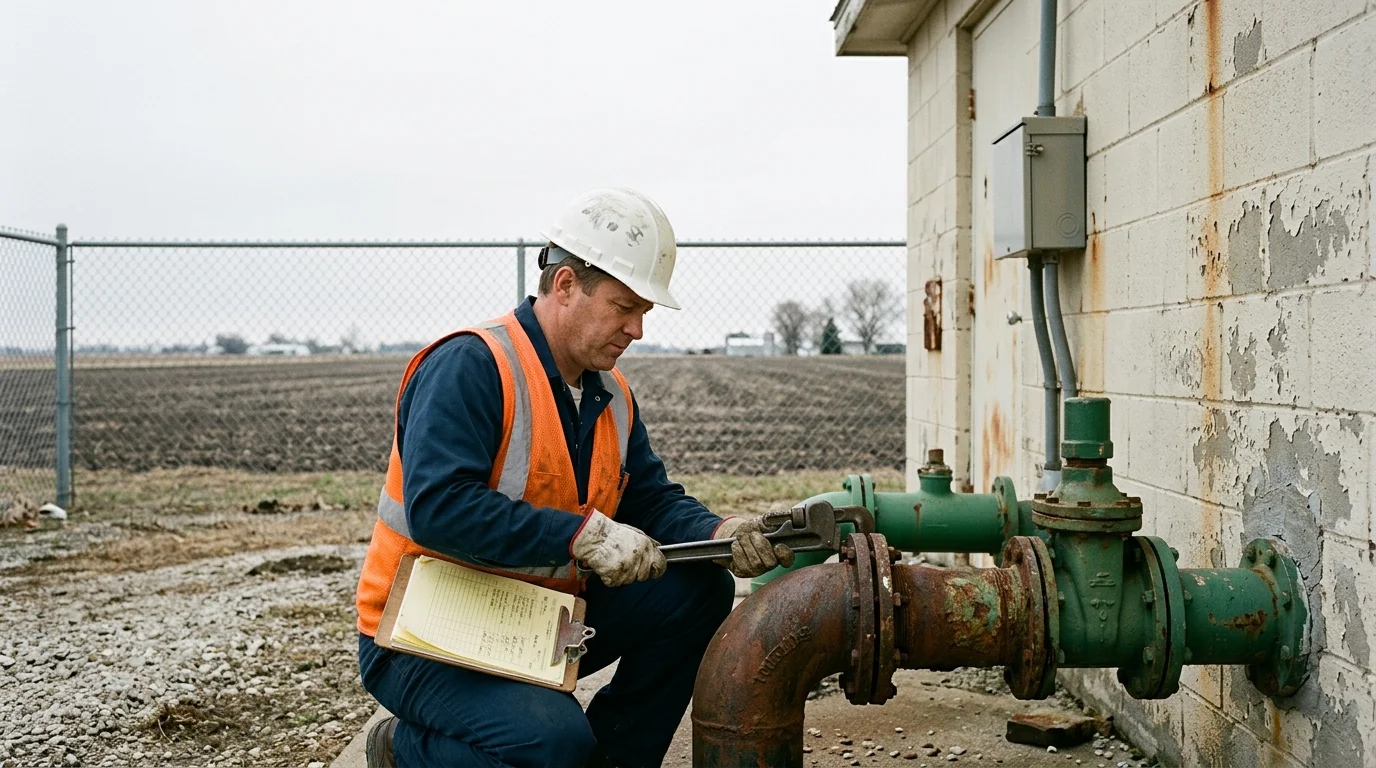
For Iowa, that deadline creates particular urgency. About 80% of the state's 3.2 million residents rely on groundwater for drinking water, and groundwater PFAS contamination is more difficult and costly to treat than surface water. The state has roughly 1,900 public water systems, many of them small and rural, serving a few hundred to a few thousand people. Those systems face stiff per-capita costs for treatment technologies like granular activated carbon filters, which can run into the hundreds of thousands or even millions of dollars to install and operate. Similar funding challenges have played out in other states: Indiana is grappling with how far $2.1 million goes toward replacing lead pipes, and smaller communities like Newberry, South Carolina are using federal dollars to tackle PFAS directly.
Known PFAS hotspots in Iowa include areas near military bases, where firefighting foam containing the chemicals was used for decades, and sites near the Iowa Army Ammunition Plant in Middletown and Camp Dodge outside Des Moines. State sampling conducted between 2023 and 2024 under a federal monitoring rule found detectable PFAS at numerous public systems. Iowa has not passed state-level PFAS regulation, making the federal standard and federal money the primary tools available.
Iowa will distribute the funds to local water systems through the state revolving fund program. Some money can also go toward technical assistance for small systems and source water protection. Whether $11.5 million, the fifth and likely final allocation Iowa will receive under this specific IIJA program, will be enough to bring all affected systems into compliance before 2029 remains an open question.