Washington state has collected $13.4 million in federal electric-vehicle grants over the past 90 days, a 3,154% increase over the $411,795 committed in the same window a year ago. The surge is almost entirely the result of a single federal court ruling. The contradiction that followed it may define how much of that money Washington actually gets to keep.
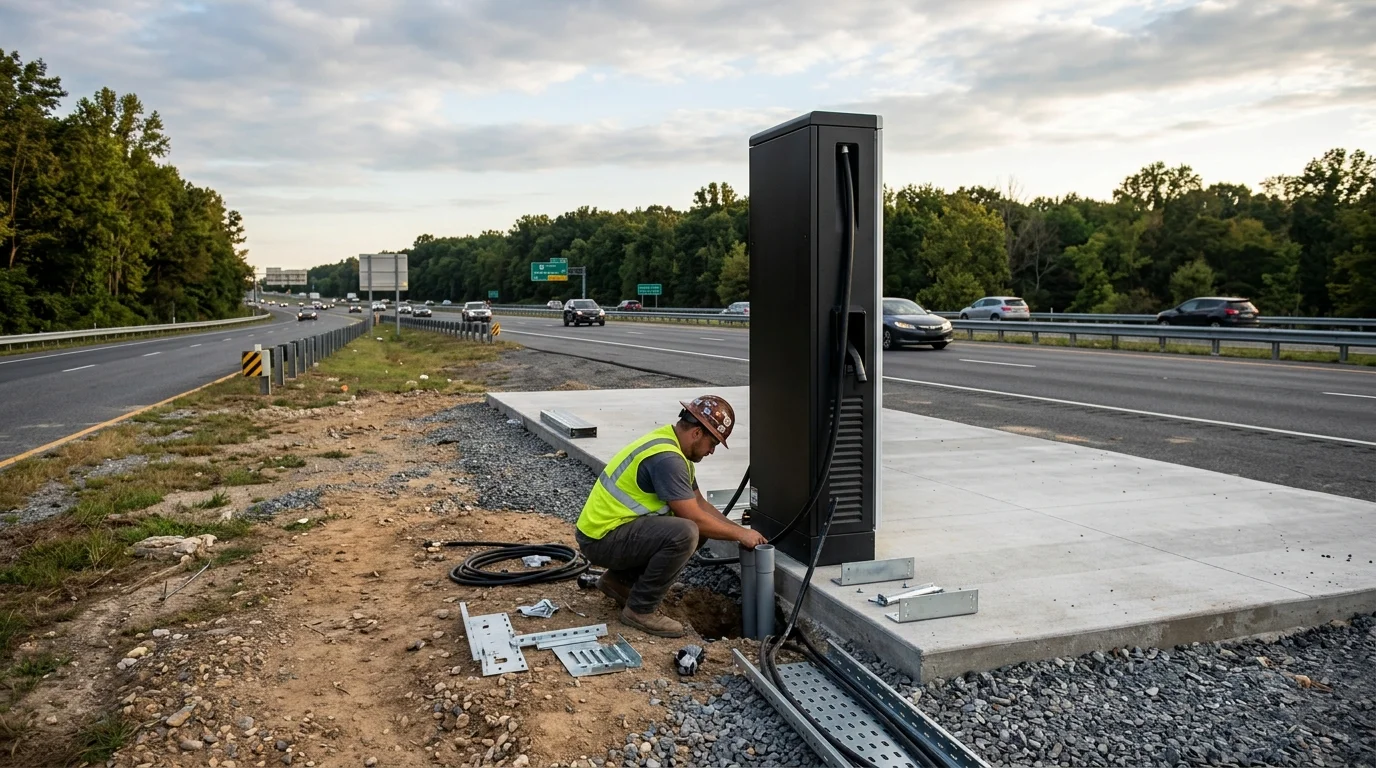
On January 26, 2026, a federal court found that the Trump administration's 2025 freeze of National Electric Vehicle Infrastructure program funds was unlawful. Washington had been a plaintiff in the multi-state lawsuit that produced the ruling. Three days later, WSDOT announced $12.16 million in NEVI Round 1 awards, funding 14 new DC fast-charging stations along I-90, US 97, US 195, and US 395. Secretary of Transportation Julie Meredith called the awards a way to fill "key gaps in the state's highway EV charging network." The gap between the court order and the check was 72 hours.
The two awards driving the 90-day surge are a $9.4 million RAISE Discretionary Grant to the Port of Bremerton in April 2026, for marina and breakwater infrastructure that supports the Kitsap Transit foot-ferry fleet, and a $4 million Low/No Emissions bus program grant to WSDOT in March 2026. Together they account for essentially all of the quarterly total. Washington now leads every Western peer state in new 90-day EV grant flow, outpacing Nevada at $8.8 million and Oregon at $2 million, inside an active portfolio that has grown past $93 million across 15 grants, anchored by more than $60 million in NEVI formula funds running through 2039.
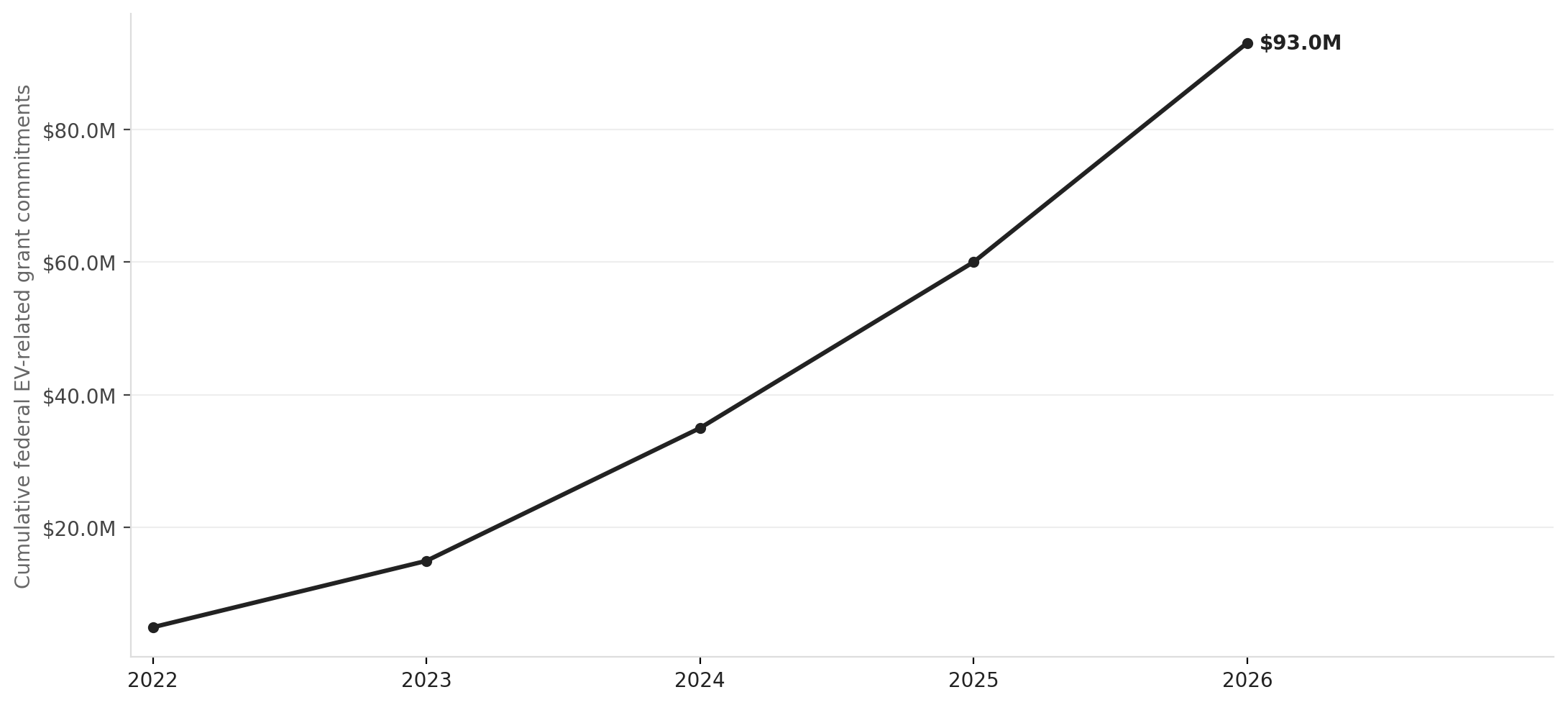
Source: NationGraph.
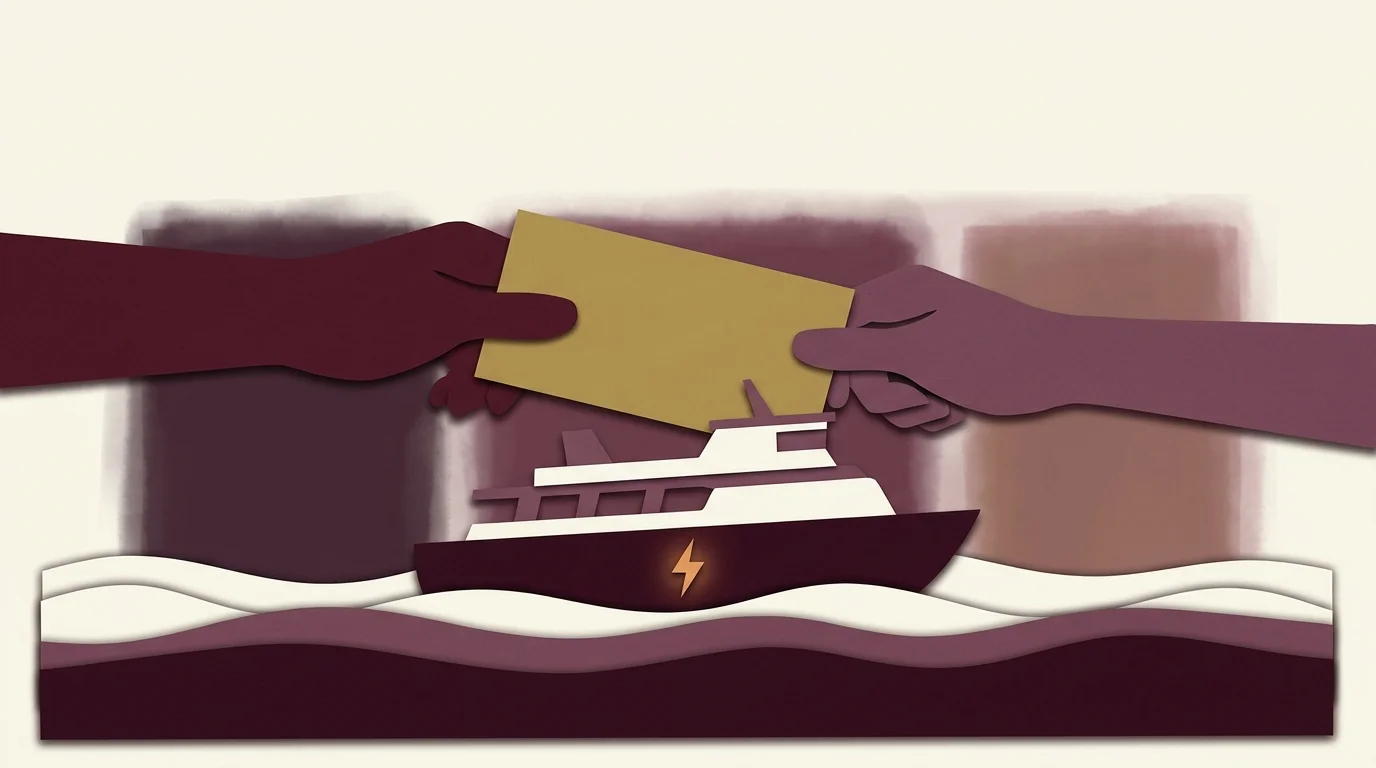
The Bremerton award is where the contradiction sharpens. The Port of Bremerton grant supports the waterfront infrastructure that Kitsap Transit's electric ferry relies on. Kitsap Transit separately holds a pre-awarded $7.7 million Federal Transit Administration grant for a zero-emission passenger vessel. According to reporting by the Kitsap Daily News, the FTA notified the agency that the grant is now at risk unless the vessel design is changed from all-electric to hybrid or diesel. Kitsap Transit's executive director said the threat applies to "all fully electric projects across the country."
That is the shape of the bind. The federal government unlocked NEVI money after losing in court, then routed new discretionary dollars to the exact waterfront where an electrification project sits, while simultaneously conditioning a separate grant on that project becoming less electric. Washington fought to free the formula funds. The administration is now pulling on the discretionary levers.
The stakes are particular to Washington in ways they are not for most states. Washington runs the largest ferry system in the United States, burning roughly 19 million gallons of diesel annually to carry nearly 20 million passengers. The state's ferry system electrification program carries a price tag of approximately $3.98 billion. The Puget Sound corridor, where Bremerton, Port Orchard, Seattle, and Bainbridge Island connect, is both the core of the system and the front line of the federal funding fight. Washington has also adopted California's Advanced Clean Cars II rules, requiring 100% zero-emission new passenger vehicle sales by 2035. The state has written electrification into its regulatory architecture at the same moment federal policy is moving the other direction.
The NEVI program's national trajectory illustrates how fast the environment shifted. As ACT News has documented, states spent much of 2025 watching approved plans sit unfunded after the administration froze disbursements in the first weeks of the year. Washington's willingness to litigate put it ahead of states that waited. The court ruling restored the formula funds. It did not restore the posture of a federal government willing to let states build fully electric fleets.
For residents in the Puget Sound corridor, the most immediate signal to watch is what Kitsap Transit decides about its ferry design. If the agency converts to hybrid or diesel to protect the $7.7 million grant, the Port of Bremerton's $9.4 million in breakwater infrastructure will support a vessel that runs on fossil fuels, at least in part, for decades. If the agency holds to the all-electric design and loses the grant, Washington will need to find replacement funding inside a state budget already stretched by the broader fleet electrification program.
The next concrete deadline is the FTA's response to whatever design decision Kitsap Transit files. After that, the durability of the January court ruling itself remains an open question: the administration could appeal, restrict future NEVI plan approvals, or route discretionary awards away from states that litigated against it. Washington won the first round. The terms of the next one are not yet set.