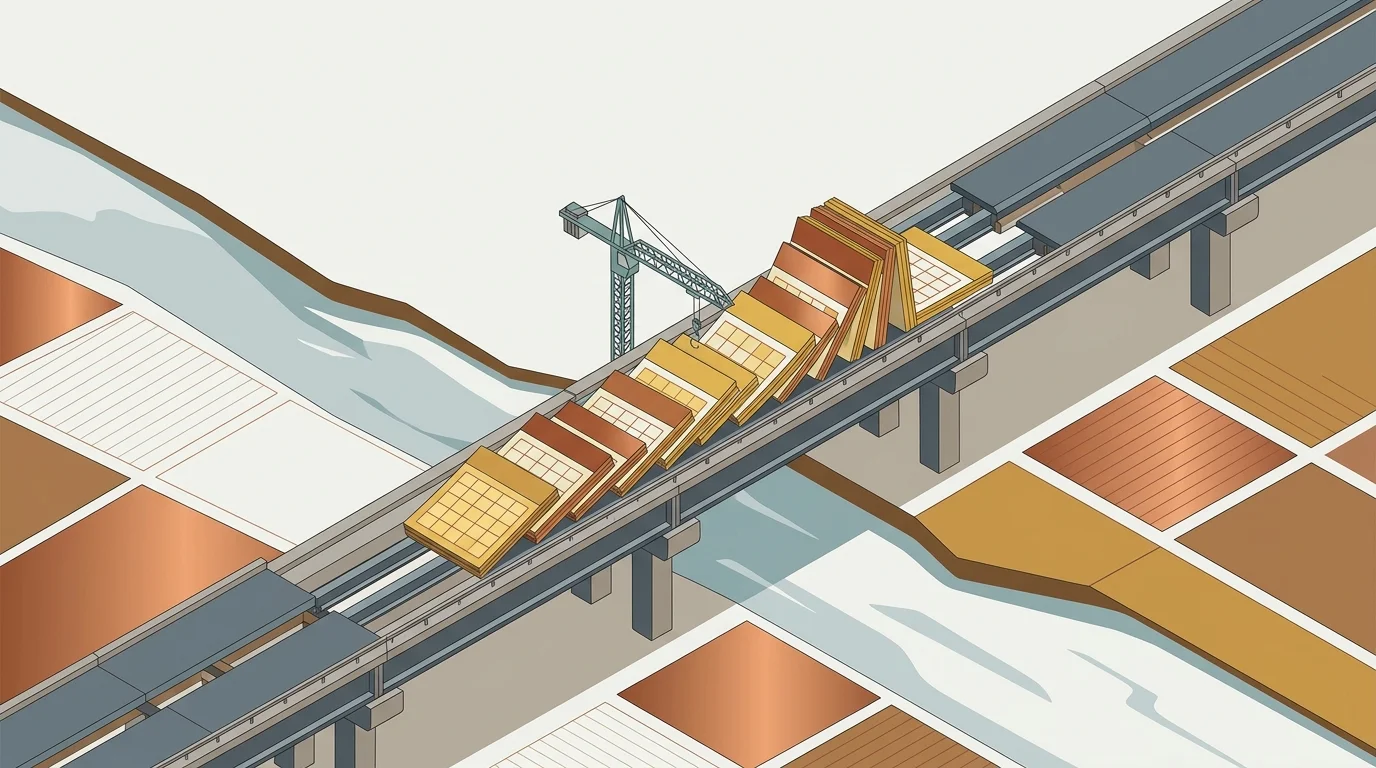
Suwannee County is spending $8.6 million in federal money to replace a 44,000-pound-rated bridge on County Road 268 that carries traffic over the Little River in rural north-central Florida. The county's entire annual budget could not self-fund a project of this scale. But the money is guaranteed, the timeline is aggressive, and the reason is simple: the federal program paying for it expires September 30, 2026.
The Infrastructure Investment and Jobs Act's Bridge Formula Program created the first dedicated federal bridge funding in a decade and explicitly allows 100% federal funding for off-system bridges, county-owned structures that were previously ineligible for most federal highway money. Florida received $263.4 million total through fiscal year 2026, and the state has already committed $193.4 million of it to 66 projects as of last June. With five months until expiration and Congressional reauthorization uncertain, rural counties like Suwannee are obligating funds now rather than waiting to see if the program survives.
The replacement of Bridge No. 500045 illustrates why the program matters. The county chose full replacement over repair, signaling deterioration beyond cost-effective rehabilitation. Suwannee County has 44,000 residents, no state income tax base, and aging infrastructure built during the Interstate Highway boom 50 to 75 years ago. Before the IIJA, counties like this one carried a $53 billion national backlog of off-system bridge repairs they could not afford and could not access federal highway dollars to fix.
Source: NationGraph.
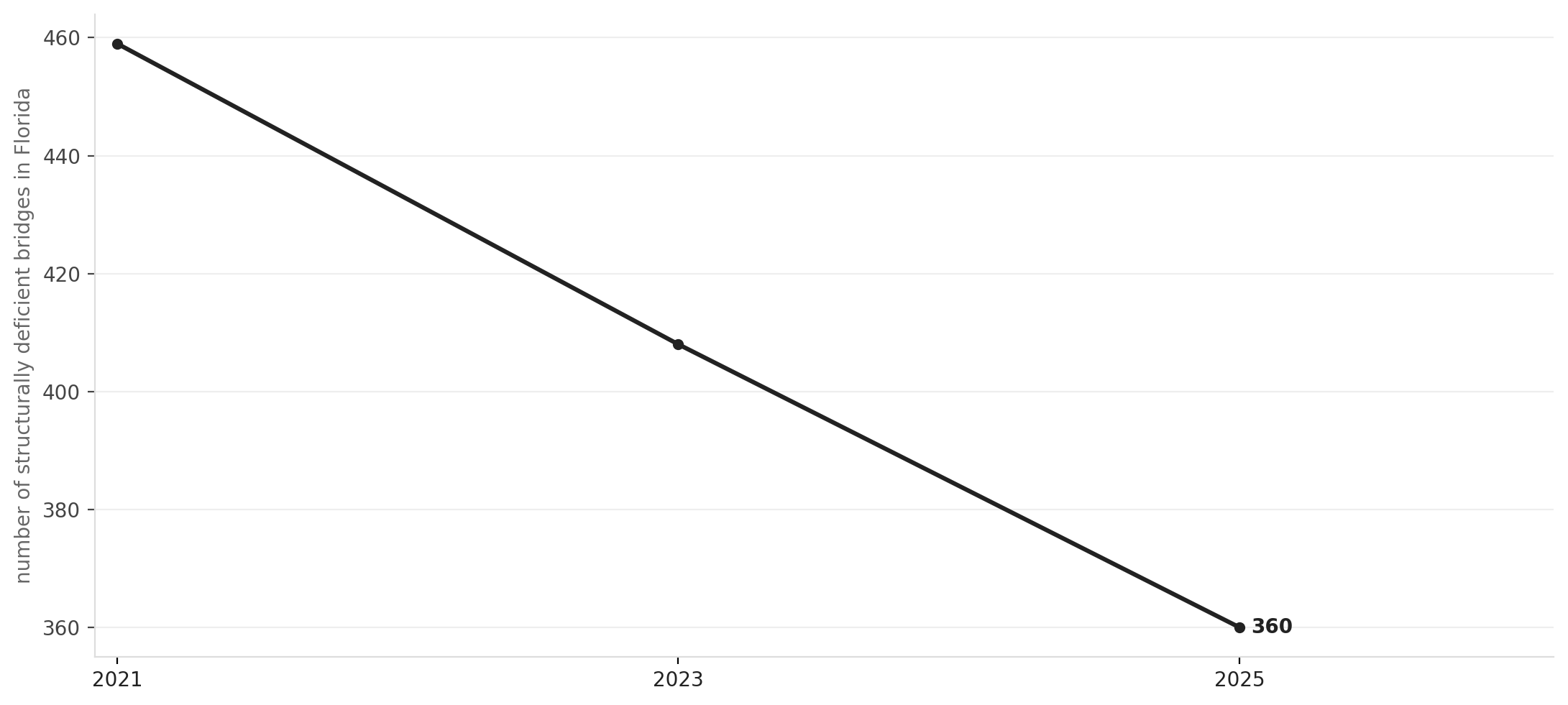
Florida has 360 structurally deficient bridges, down from 459 in 2021, and outperforms national averages on bridge condition. But that statewide success masks rural disparities. Four out of five bridges in poor condition nationally are in rural areas, where counties built extensive networks during the mid-20th century and now lack the tax revenue to maintain them. Florida relied on federal funding for 36% of state highway and bridge capital improvements over the last decade, and rural counties depend on that share far more than metropolitan areas do.
The IIJA's Bridge Formula Program represents the largest dedicated federal bridge investment since the 1950s Interstate Highway System, allocating $27.5 billion over five years. The program's unusual feature, 100% federal funding for off-system bridges with no local match required, created a once-in-70-years window for counties to replace spans they have patched and weight-restricted for decades. Suwannee County is one of dozens of Florida jurisdictions moving projects through design and construction on a compressed schedule because the certainty ends in September.
Congressional reauthorization talks have begun, but no bill has been introduced. Even if a successor program passes, there is no guarantee it will retain the 100% federal match provision for off-system bridges. The Infrastructure Investment and Jobs Act was a historically large package passed during a rare moment of bipartisan momentum. The next transportation authorization will be negotiated in a different fiscal and political environment.
For rural counties, the calculus is straightforward. The bridges are deteriorating, the money is available now, and the program expires in five months. Suwannee County is not gambling on reauthorization. The Little River bridge replacement will be fully obligated and under contract before September 30.
Florida's rural bridge inventory was built for a different era of traffic and design standards. The spans reaching the end of their service lives now were engineered in the 1950s and 1960s, when truck weights were lower and design loads were smaller. Replacing them to modern standards requires money rural counties do not generate on their own. The Bridge Formula Program created a temporary solution to a permanent structural problem.
What happens after September depends on whether Congress extends the program, and if so, on what terms. Until then, counties with aging off-system bridges and access to federal formula funds are moving as quickly as procurement rules allow. The clock is running, and Suwannee County is not waiting.