Virginia's local governments have issued broadband RFPs at roughly four times their normal monthly rate this spring, a procurement surge that reflects something more specific than general enthusiasm: the state's $1.48 billion BEAD allocation is finally moving from federal approval into county-level contracts, and the clock is running.
The headline number deserves a qualifier. Of the 25 broadband RFPs logged in Virginia over the past 30 days, 20 carry due dates before 2023, meaning they are archival records recently ingested into procurement databases rather than live solicitations. The genuine surge is narrower but real: RFP volume spiked to 34 in July 2025 and 21 in February 2026, tracking almost exactly with BEAD milestone events. Carroll County's Pipers Gap Fiber Project, a May 2026 solicitation for 8.2 miles of new fiber serving 402 households, is the kind of active procurement the broader signal points toward.
The milestone that set this in motion came in November 2025, when NTIA announced approval of Virginia's BEAD Final Proposal, one of the first states to clear that hurdle. Virginia had submitted its revised proposal on August 29, 2025, the first state to do so under the updated framework. The approved plan routes $613 million to 24 ISPs to reach roughly 90,000 unserved locations, with about 79 percent of connections delivered via fiber. Virginia's DHCD Office of Broadband has been finalizing subaward template contracts since August 2025, and those contracts are now beginning to reach localities.

Source: NationGraph.
The procurement burst also reflects a rule change. NTIA's June 2025 BEAD Restructuring Policy Notice introduced a technology-neutral framework that expanded which providers could bid on federally funded projects. That shift reshuffled the competitive field and prompted some localities to reissue or restructure solicitations they had already drafted, adding volume to an already compressed window.
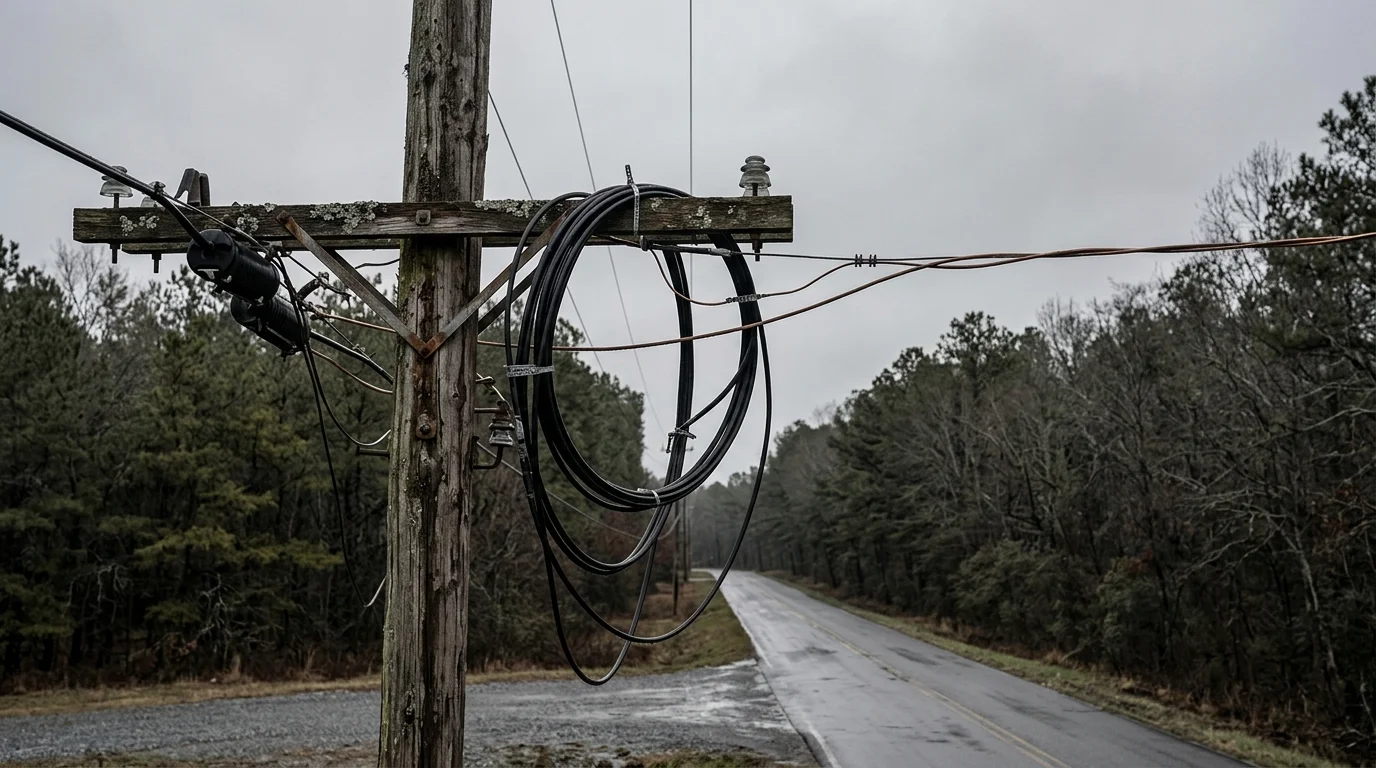
The urgency is real, but so is the friction. A Virginia JLARC review of broadband deployment found that BEAD construction is not expected to begin until mid-2026 and is unlikely to be completed before 2030, and that assessment came with specific warnings about the bottlenecks that slowed earlier federal broadband rounds. Pole-attachment backlogs, VDOT permitting requirements for right-of-way access, and limited ISP construction capacity in rural areas all contributed to delays in the predecessor Virginia Telecommunications Initiative. The same counties now appearing in live BEAD-era RFPs, Carroll, Rockingham, Gloucester, Spotsylvania, and Augusta, are the ones JLARC identified as having the most remaining unserved locations. They are also among the least equipped to absorb a fast-moving federal procurement cycle.
Carroll County illustrates the dynamic. The Pipers Gap Fiber Project is a modest but concrete commitment: 8.2 miles of new infrastructure, 402 serviceable addresses, a live RFP in the current window. It is exactly the kind of project BEAD was designed to fund. It is also exactly the kind of project that requires VDOT coordination, utility pole negotiations, and contractor availability in a county with limited municipal procurement staff. The gap between issuing an RFP and breaking ground is where federal timelines and local capacity collide.
On the federal side, Virginia's position remains strong. Its $1.48 billion allocation is among the largest in the $42.45 billion national program, and its early Final Proposal approval gives it a head start on states still navigating NTIA review. The NTIA BEAD progress dashboard shows first construction nationally expected in summer 2026, a window Virginia is theoretically positioned to hit.
The active federal grant portfolio in Virginia already includes smaller-scale activity: Tribal Broadband Connectivity Program awards to the Chickahominy, Nansemond, and Pamunkey tribes totaling roughly $1.74 million. No large new NTIA or BEAD disbursements have appeared in the grants table yet, which is consistent with subaward contracts still being executed rather than funds already flowing to construction.
What changes for a resident of rural southwest Virginia or the Shenandoah Valley is less about what's been announced and more about what happens in the next 18 months. The subaward contracts between DHCD and the 24 participating ISPs set performance benchmarks and construction schedules. If an ISP falls behind, localities have a narrow window to swap providers or renegotiate terms before federal deadlines foreclose that flexibility. The RFP surge visible now is the leading edge of that process.
The signal to watch is whether July 2026 broadband RFP volume holds at the elevated levels seen in mid-2025, or drops back toward the 6-per-month baseline. A sustained high rate would indicate contracts are executing and localities are moving to construction. A drop would suggest the procurement window closed before the infrastructure to support it was in place.