Eight PFAS-related RFPs have been issued by Montana public entities in the last 30 days. All eight come from the same address: Kalispell City Hall, population 26,000, in Flathead County. That single fact captures something larger than one city's plumbing problem.
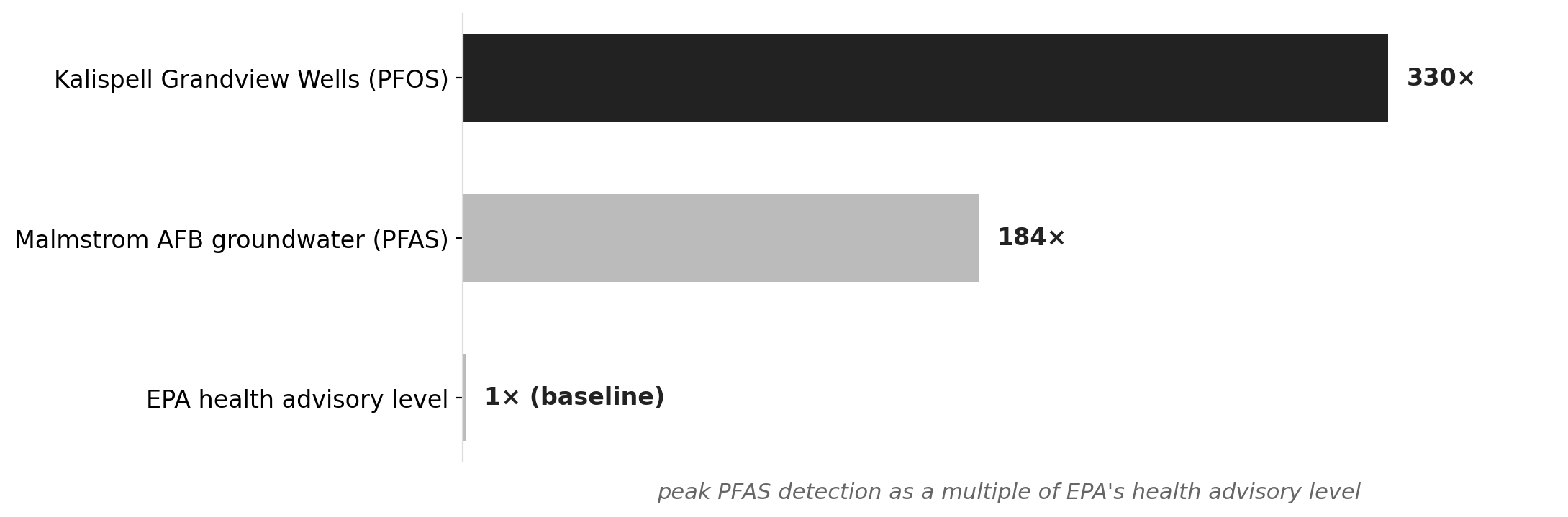
Kalispell's Grandview Wells first turned up PFOS at concentrations reaching 330 times EPA health advisory levels when results were published in February 2024, making it Montana's only public water system to exceed federal thresholds in EPA's nationwide UCMR5 survey. The city installed a temporary ion-exchange treatment system at Grandview in October 2024, and it works: downstream samples since then have shown no detectable PFAS. But a treatment unit is not a water supply, and Kalispell has been methodically building the case for a permanent fix ever since.
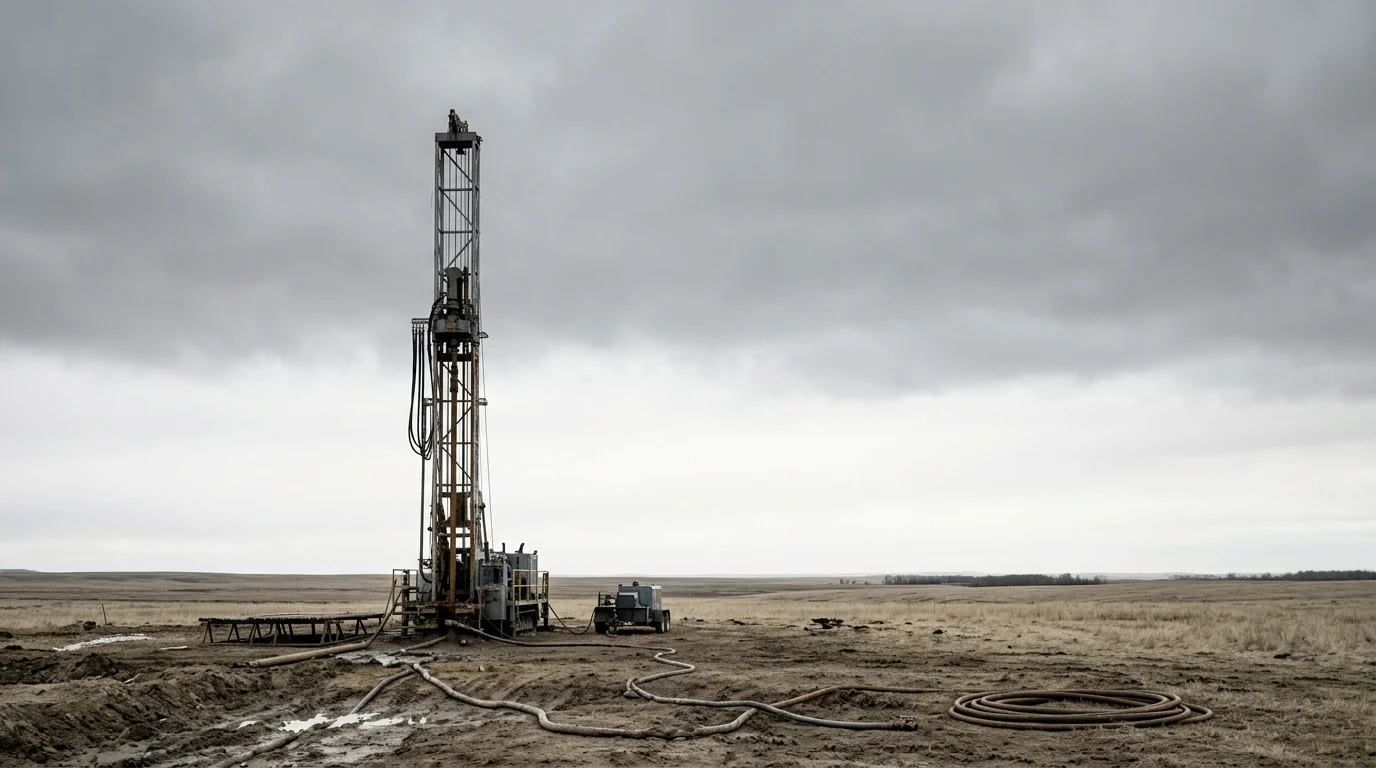
That case closed in January 2026, when Montana DEQ issued a Finding of No Significant Impact clearing the city's $17.95 million project to drill six new wells at two sites, Noffsinger Springs and Dry Bridge Park. The DEQ's environmental review cleared contractor hiring for late February and March. When contractor selection stalled, Kalispell re-issued and updated the solicitation in May 2026. That re-issuance accounts for the spike in RFP volume that makes Montana look, briefly, like a state in the middle of a PFAS remediation boom. It is not a boom. It is one project, in one city, moving through procurement.
Source: NationGraph.
The money behind that project is real and, for now, secure. Montana DEQ holds a $28.4 million EPA WIIN Emerging Contaminants grant active through 2030, of which only $1.6 million has been disbursed. A separate $7.6 million Drinking Water State Revolving Fund grant, active through 2032, rounds out the federal commitment. Together, those two instruments cover the Kalispell project in full. Kalispell's Public Works Director has said the work will not require a water rate increase. Project completion is targeted for 2028.
The paradox is that Kalispell is racing to lock in a contractor for work driven by federal standards the federal government is now moving to weaken. The EPA's April 2024 National Primary Drinking Water Regulation set enforceable Maximum Contaminant Levels for PFOS and PFOA at 4 parts per trillion, the limits Kalispell's wells exceed and the legal trigger that made WIIN Emerging Contaminants dollars available for this kind of project. On May 18, 2026, EPA proposed rescinding four of the six Biden-era PFAS standards and extending the PFOS and PFOA compliance deadline from 2029 to 2031. Grants already obligated are expected to survive the rollback intact, but the regulatory urgency that drove Kalispell's original application would be diminished under the new framework.
The city's procurement sprint makes strategic sense in that context. The faster it moves from RFP to signed contract to construction, the less exposure it has to a future in which federal priorities have shifted and the next round of funding looks different.
Elsewhere in Montana, the picture is slower and murkier. Malmstrom Air Force Base in Great Falls detected PFAS in groundwater at 184 times EPA screening limits, contamination traced to decades of AFFF firefighting foam use. Its CERCLA remedial investigation timeline was extended five additional years, with a feasibility report due to DEQ in spring 2026. That is a federal installation on a federal cleanup clock, insulated from what Kalispell is doing but also years from any comparable remediation activity.
The scope of Montana's PFAS exposure became harder to minimize in April 2026, when DEQ, DPHHS, and Fish, Wildlife and Parks jointly issued 21 new or updated fish consumption advisories based on 2023-2024 sampling that found PFAS in fish tissue at 12 of 14 sites tested. Those advisories cover 11 Montana waterbodies. The advisories do not generate RFPs. They do not come with funding. They extend the known footprint of contamination well beyond the municipal water systems DEQ has been surveilling.
Montana's baseline makes Kalispell's situation more striking, not less. DEQ's initial PFAS surveys of major public water systems in 2013-2015 found no detections. The state has vast geography, 94 percent rural reliance on private wells that fall outside federal monitoring requirements, and now a growing body of fish-tissue data showing PFAS moving through aquatic systems across the state. The known contamination is almost certainly not the full picture.
What to watch next: whether Kalispell's May 2026 contractor solicitation closes with a signed contract before EPA finalizes its proposed rollback, and whether Montana DEQ accelerates drawdown of the remaining $26.8 million in WIIN grant funds before the federal funding architecture changes. The six new wells are supposed to be online by 2028. The regulatory landscape they were designed for may look substantially different by then.