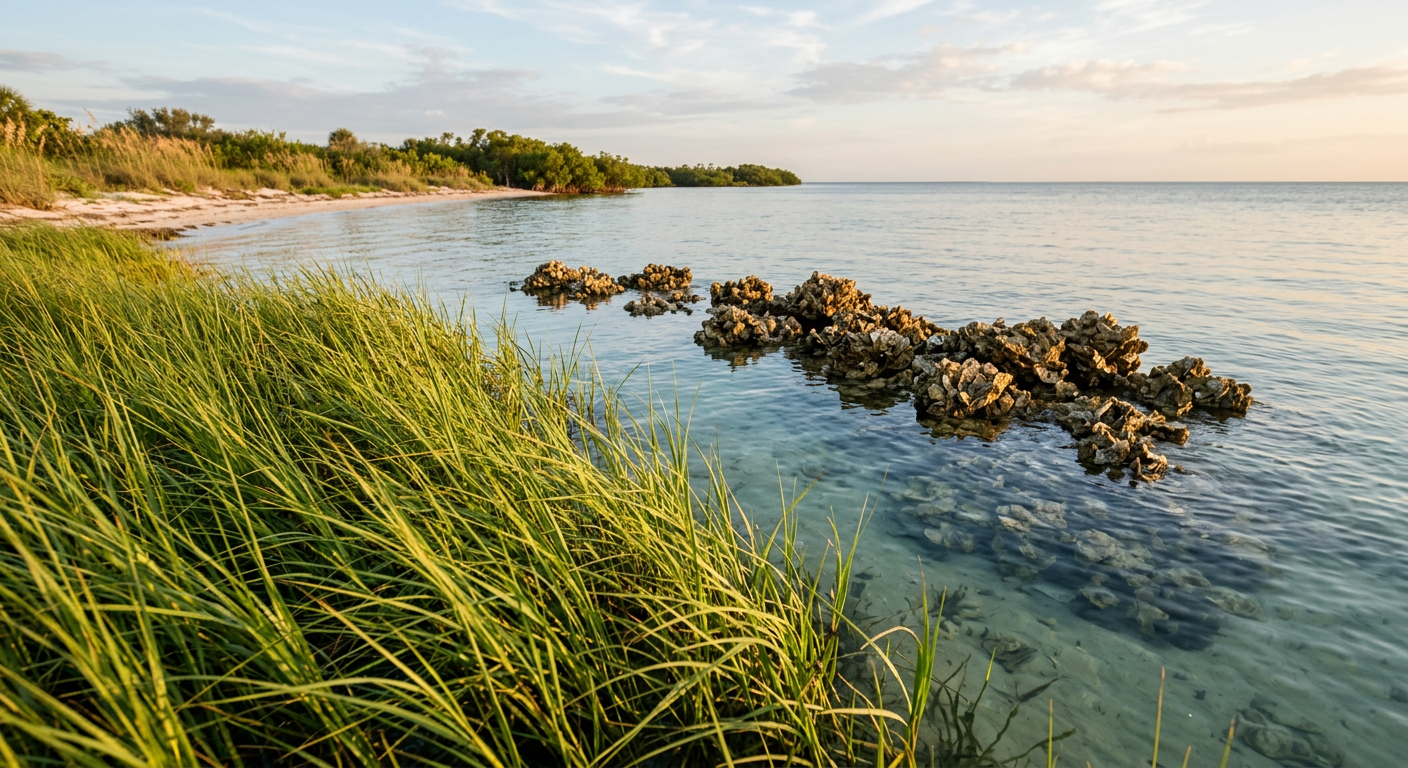
Manatee County, Florida is building a nature-based shoreline at Bishop Point, replacing the concrete seawall approach that dominated coastal engineering for decades with oyster reefs and marsh grasses designed to absorb wave energy and rebuild eroding land.
The project comes as the county faces accelerating coastal threats. Sea levels in Tampa Bay have risen over 8 inches since 1950 and are projected to climb another 17 to 39 inches by 2070, according to NOAA. The county's 365 miles of shoreline already floods regularly during high tides, even without storms, particularly on Anna Maria Island and in Bradenton Beach.
Living shorelines mark a philosophical shift from the hard armoring that has defined Florida development since World War II. Traditional seawalls often speed up erosion on neighboring properties and destroy fish habitat. The new approach uses native vegetation and natural materials to stabilize coasts while maintaining ecological function. Florida formalized this strategy in 2018 with the Resilient Florida Grant Program, backed by a $640 million initial appropriation that prioritizes nature-based solutions.
Manatee County sits in particularly vulnerable territory. The county's $91 billion in taxable property value is concentrated along the coast, and Port Manatee handles over $80 billion in annual cargo. The area also serves as winter habitat for hundreds of manatees and nursery grounds for commercial fisheries. Florida loses approximately 1,350 acres of coastal wetlands every year.
The county received $2.4 million in state resilience grants in 2023 for vulnerability assessments. This Bishop Point project likely draws on similar state funding streams created specifically for climate adaptation.
The county is now seeking contractors for the work, with bids opening in the coming weeks.