Federal grants for wildfire response in Nevada hit $75.7 million in the last 90 days, a 105-fold increase over the same window last year. Four grants totaling $75.5 million landed in Clark County municipalities in February 2026 alone, the largest single-month commitment in the state's wildfire prevention history.
The surge follows the Department of Interior's June 2025 approval of SNPLMA Round 19, a $417 million package generated from Las Vegas Valley land sales and earmarked for Nevada conservation and wildfire work. The grants are now flowing into the same metro area whose suburban expansion created the funding mechanism in the first place.
North Las Vegas received $21.2 million, Clark County $19.3 million, and Henderson $18.6 million and $16.5 million in separate awards. The money will fund hazardous fuels reduction, defensible space expansion, and wildland-urban interface hardening in the Spring Mountains west of Las Vegas, federal land ringed by one of the fastest-growing metro areas in the country.

Source: NationGraph
The timing is no accident. Six months before these grants arrived, the Davis Fire tore through 5,824 acres near Reno, destroyed 14 structures, and threatened 36,000 more in a single September weekend. The fire exposed critical gaps in defensible space around Nevada's rapidly expanding wildland-urban interface, the Carson Range around Reno and Lake Tahoe, and the Spring Mountains corridor where Las Vegas sprawl meets Bureau of Land Management holdings.
SNPLMA is a 1998 federal law unique to Nevada. It allows BLM to sell public land around Las Vegas and reinvest 85 percent of proceeds into Nevada conservation, parks, and wildfire prevention. The program has generated more than $4 billion since its creation, all of it staying in-state. Round 19 is the largest in years, and wildfire work is the dominant line item.
Nevada received nearly double California's wildfire grant total in the same 90-day window despite California's larger fire footprint. The difference is SNPLMA: Nevada captures land-sale revenue that other states send to the Treasury. As Las Vegas continues to sell federal parcels for housing development, the resulting funds flow directly back into fireproofing the communities those sales create.
The state's active wildfire grant portfolio now sits at $260 million across 134 grants. February's four Clark County awards account for nearly 30 percent of that total. Additional FEMA SAFER grants in March brought $3.76 million to Las Vegas and $781,000 to Central Lyon County for fire staffing, another signal that federal agencies are prioritizing Nevada's wildland-urban interface ahead of the next fire season.
Clark County holds 75 percent of Nevada's population but sits adjacent to some of the driest, most flammable public land in the lower 48. The Spring Mountains, which frame the valley's western edge, are a high-severity fire zone where decades of fuel accumulation and explosive residential growth have created a combustible perimeter. The February grants target exactly that boundary.
What the Davis Fire demonstrated in Reno is now driving policy 450 miles south. Nevada's sixth-ever 'particularly dangerous situation' red flag warning went up that September weekend, and the fire jumped containment lines faster than evacuation orders could reach residents. The near-miss clarified the stakes: suburban expansion into federal wildland doesn't stop at city limits, and neither do fires.
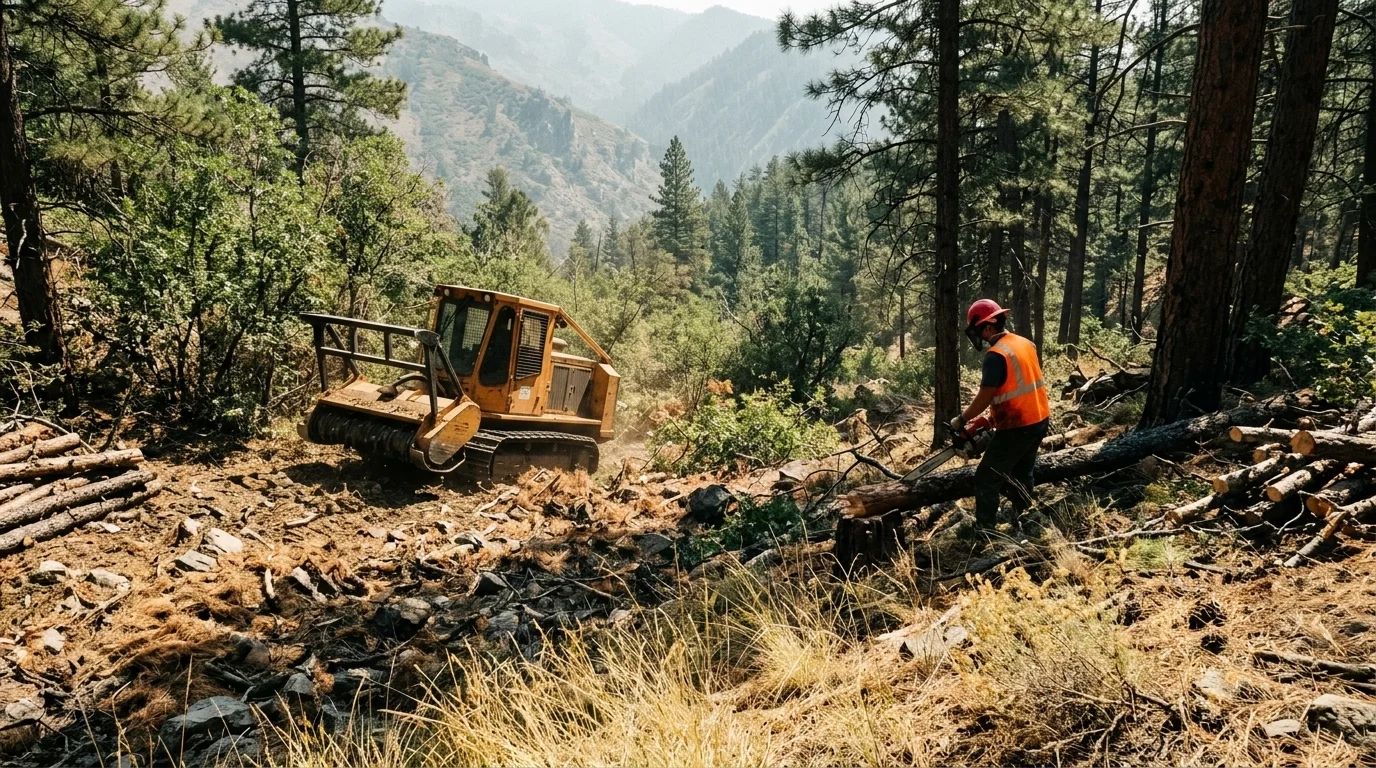
The next test is execution. SNPLMA funds carry strict timelines and reporting requirements. Clark County and its municipalities have 24 months to deploy the $75.5 million on fuels reduction, firebreaks, and defensible space buffers. The Spring Mountains project alone will clear vegetation across thousands of acres in the wildland-urban interface, creating fuel breaks between federal land and residential subdivisions.
Round 20 nominations opened in April 2026. If land sales continue at current pace, another surge is likely by mid-2027. For now, Nevada is in the middle of the largest wildfire prevention build-out in its history, funded by the same sprawl it's trying to protect.