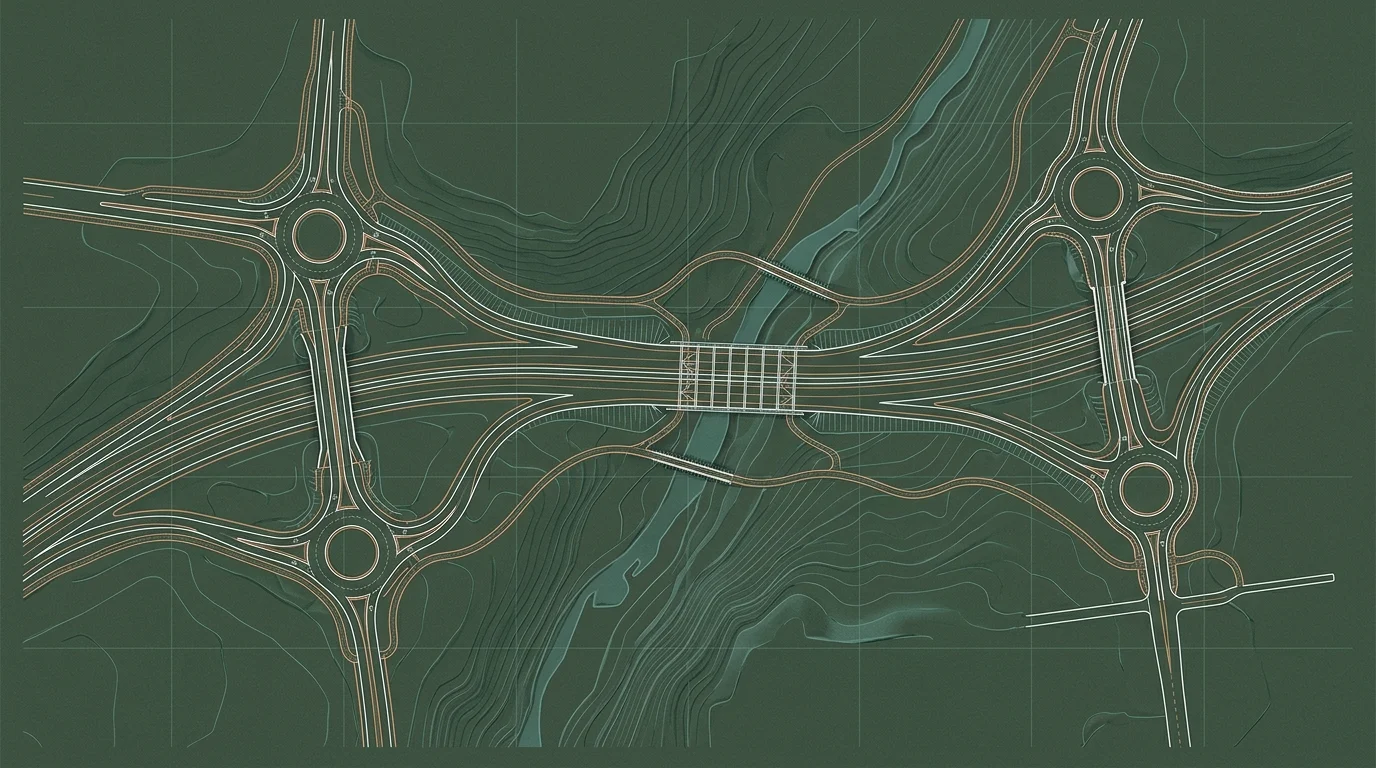
A congested stretch of Highway 210 near Brainerd, Minnesota is moving closer to a comprehensive overhaul that local residents and businesses have sought for years, with $610,000 in federal carbon reduction funding helping to finance the project.
The reconstruction covers a segment of MN 210 in the Brainerd-Baxter area of Crow Wing County, a corridor that has struggled to keep up with two decades of suburban commercial growth and steady population gains. The project includes full road reconstruction, new roundabouts, ADA-compliant pedestrian infrastructure, trail connections, upgraded lighting, and the replacement of two aging bridges with a single new structure.
The money comes from the federal Carbon Reduction Program, created by the 2021 Bipartisan Infrastructure Law, which dedicates roughly $6.4 billion nationally over five years specifically to cutting greenhouse gas emissions from roads and highways. Minnesota's share runs about $87 to $90 million over the program's five-year life.
The $610,000 federal contribution is a small slice of what will be a much larger project. Bridge replacements and full corridor reconstruction typically run into the tens of millions of dollars, and the CRP funds are specifically tied to the emissions-reducing elements: primarily the roundabouts and trail infrastructure.
The emissions logic behind roundabouts is straightforward. By eliminating stop lights, roundabouts reduce the idling, hard braking, and rapid acceleration that burn extra fuel. Research from the Insurance Institute for Highway Safety and various state transportation departments has found roundabouts can cut fuel consumption at intersections by 30 to 40 percent compared to signalized intersections. Minnesota has been among the most aggressive states in adopting them, building hundreds across the state since the early 2000s.
Still, the project illustrates a broader pattern in how Carbon Reduction Program dollars are being spent nationally. Many states, Minnesota included, are directing CRP funds toward conventional road projects that address safety and congestion priorities that existed long before any climate framing. The Brainerd-area Highway 210 corridor fits that description: local planning efforts to address its bottlenecks predate the federal program by years, and community support for the project has centered on traffic relief and economic development rather than carbon policy.
Crow Wing County, politically more conservative than the Twin Cities metro, has seen its population grow to around 67,000, driven by retirees, tourism, and Twin Cities spillover. Highway 210 is a main commercial artery for that growth, and the reconstruction has been a long-standing local ask.
Minnesota has state-level policy alignment with the federal program: the legislature passed a 2023 climate framework targeting net-zero emissions by 2050, and Governor Tim Walz has prioritized clean energy investment. But whether CRP grants are driving emissions reductions that wouldn't otherwise happen, or simply attaching a climate label to projects states would have built anyway, remains an open question as the program continues distributing funds through 2026.