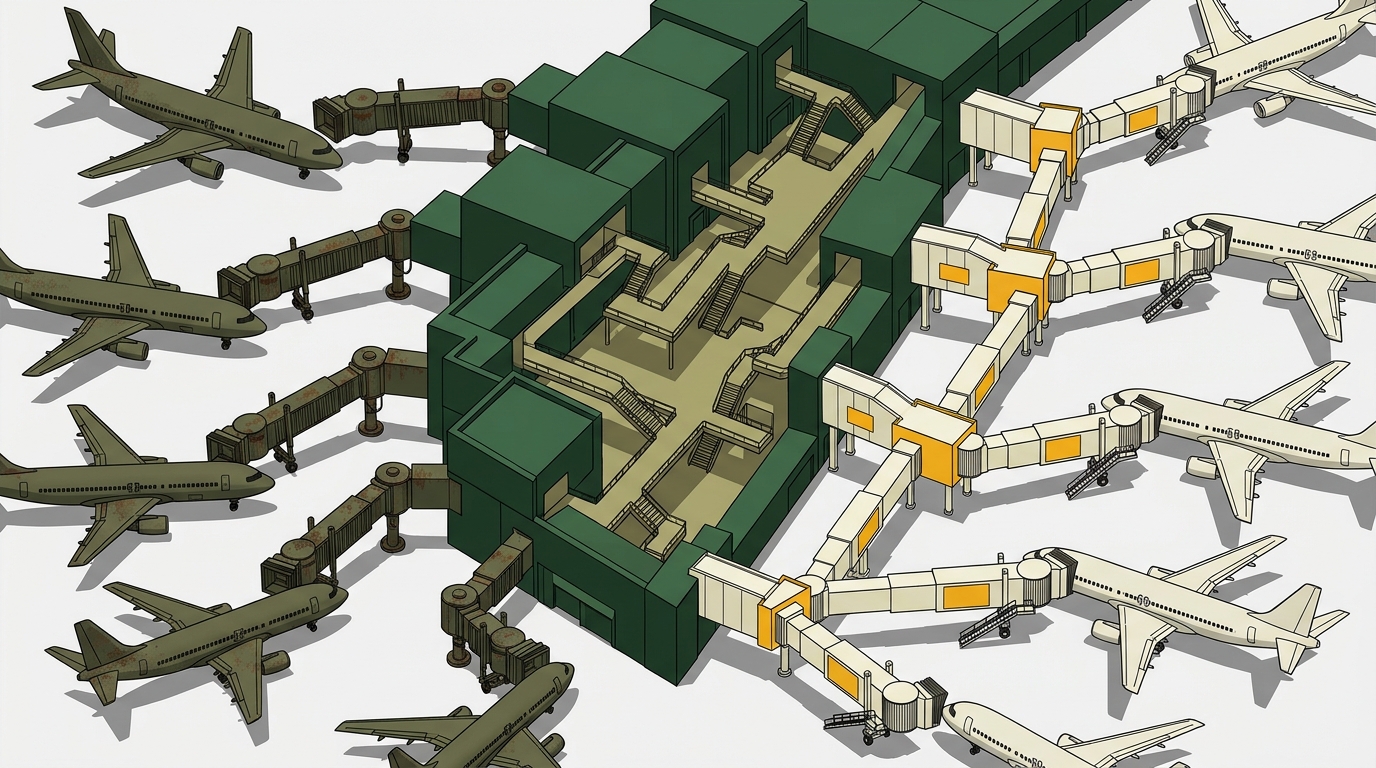
Tampa International Airport, one of the fastest-growing major airports in the country, is getting $10 million in federal funding to replace four more of its aging passenger boarding bridges, the structures that connect terminal gates directly to aircraft.
The grant from the Department of Transportation, posted March 11, is the second phase of a broader effort to replace all 13 boarding bridges at the Tampa-area facility. The existing bridges have fallen out of conformity with current safety and accessibility standards, according to the grant documentation. Four new bridges will be installed in this phase, with the remaining replacements expected to follow.
Tampa International, operated by the Hillsborough County Aviation Authority, serves a metro area of roughly 3.2 million people and handled around 23 to 24 million passengers in recent years. The region is among the fastest-growing in the United States, putting sustained pressure on airport capacity and infrastructure. Boarding bridges that were built decades ago create maintenance problems, accessibility barriers for passengers with disabilities, and operational slowdowns that ripple through a busy flight schedule.
The funding comes through the FAA's Airport Terminal Program, created under the 2021 Bipartisan Infrastructure Law, which set aside approximately $5 billion over five years specifically for terminal improvements. That represented a significant shift in federal airport policy: prior to the program, federal grants were largely limited to runways and taxiways, leaving terminals to be funded through local airport authorities, airlines, and passenger fees. The American Society of Civil Engineers has given U.S. aviation infrastructure a D+ grade, reflecting how much ground many airports have to make up.
Tampa International has been in a sustained modernization phase for over a decade, completing a $971 million expansion in 2018 that included a people-mover system and a consolidated rental car center. The boarding bridge replacement fits into that same generational overhaul. Similar federal terminal grants have helped airports like Eugene, Oregon start long-deferred expansions and Fargo keep pace with a rapidly growing city.
The Airport Terminal Program has faced political scrutiny in recent years, with some Republican members of Congress questioning how grants are selected. Its future funding under the current administration remains an open question as broader federal infrastructure spending is reviewed.