Hector International Airport in Fargo, North Dakota is in the middle of its biggest expansion in years, and a new $4.3 million federal grant is keeping construction moving as the region's passenger demand continues to climb.
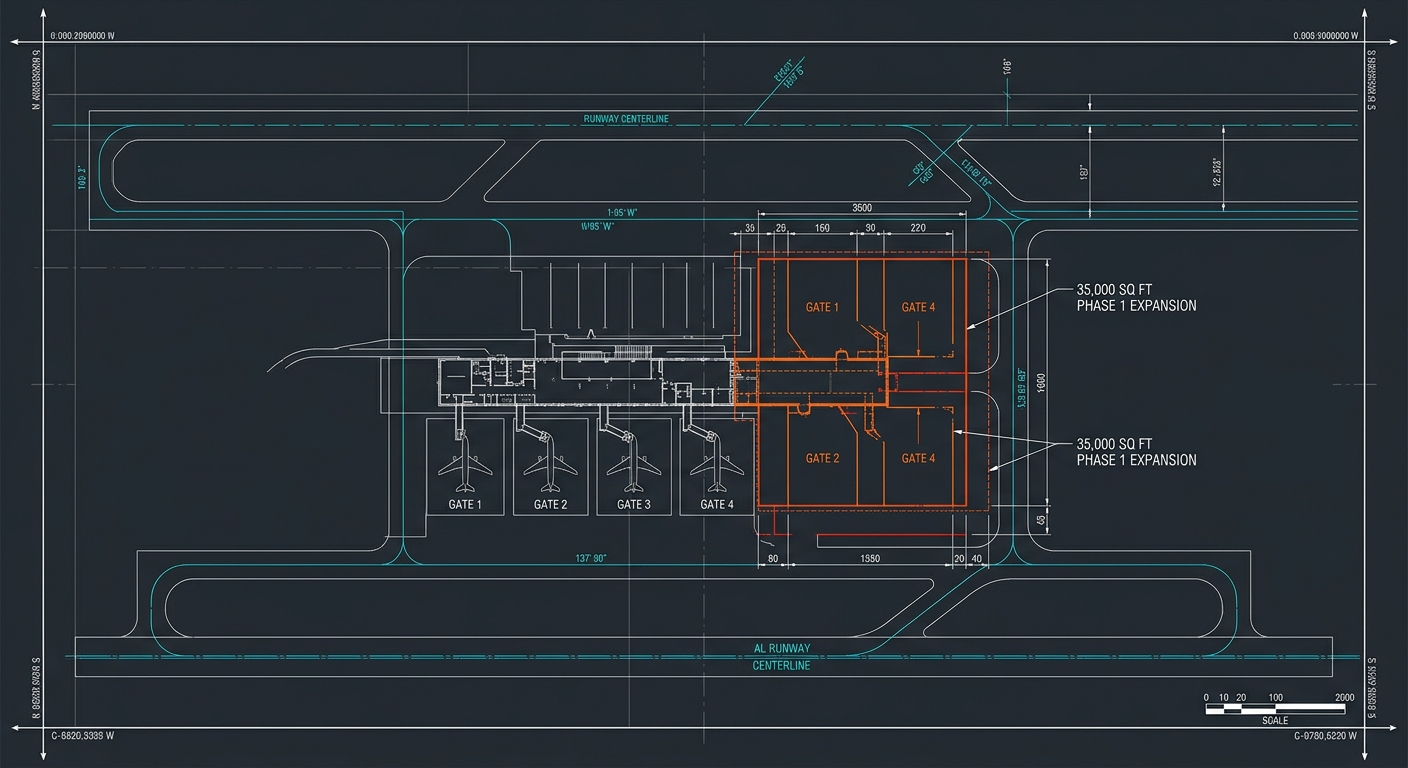
The grant funds Phase 7 of a multi-phase overhaul that will ultimately add 35,245 square feet and four new gates to the existing terminal. Phase 7 covers 2,933 square feet of construction, a modest but necessary slice of a project the Fargo Airport Authority has been advancing for several years. The money comes through the FAA's Airport Terminal Program, created under the 2021 Bipartisan Infrastructure Law, which set aside $5 billion nationally to address a backlog of aging and undersized terminals.
The expansion reflects a decade of rapid growth in the Fargo-Moorhead metro, which has added roughly 25 percent more residents since 2010, driven by healthcare, technology, agriculture, and North Dakota State University. That growth has pushed air travel demand well beyond what the terminal was designed to handle. With Minneapolis-St. Paul more than 230 miles south, Hector International is the primary airport for a wide swath of eastern North Dakota and western Minnesota, and visible congestion during peak travel periods has made the expansion a visible priority for the region.
Before the Bipartisan Infrastructure Law, airports like Fargo's had almost no access to federal terminal funding and had to rely on passenger facility charges, local bonds, and state dollars for this kind of work. The ATP program changed that, though it also introduced the incremental, multi-phase funding model that means large projects unfold over years as appropriations are allocated grant by grant.
Whether future phases continue on schedule will depend on federal funding decisions in coming budget cycles, a question hanging over airport projects nationwide as Congress weighs infrastructure spending priorities.