A Chickasaw community is moving to build a constructed wetland designed to capture fertilizer and manure runoff before it reaches local waterways, joining a growing number of rural governments and tribal nations that have turned to edge-of-field water treatment as decades of voluntary farm pollution controls continue to fall short.
The project, posted July 16 on the community's procurement portal, does not specify the exact jurisdiction, but the record points to either the Chickasaw Nation in south-central Oklahoma or a Chickasaw County government in Iowa or Mississippi. All three sit in heavily farmed watersheds where nitrogen and phosphorus runoff has been a documented problem for decades. The agency and funding source were not identified in the record.
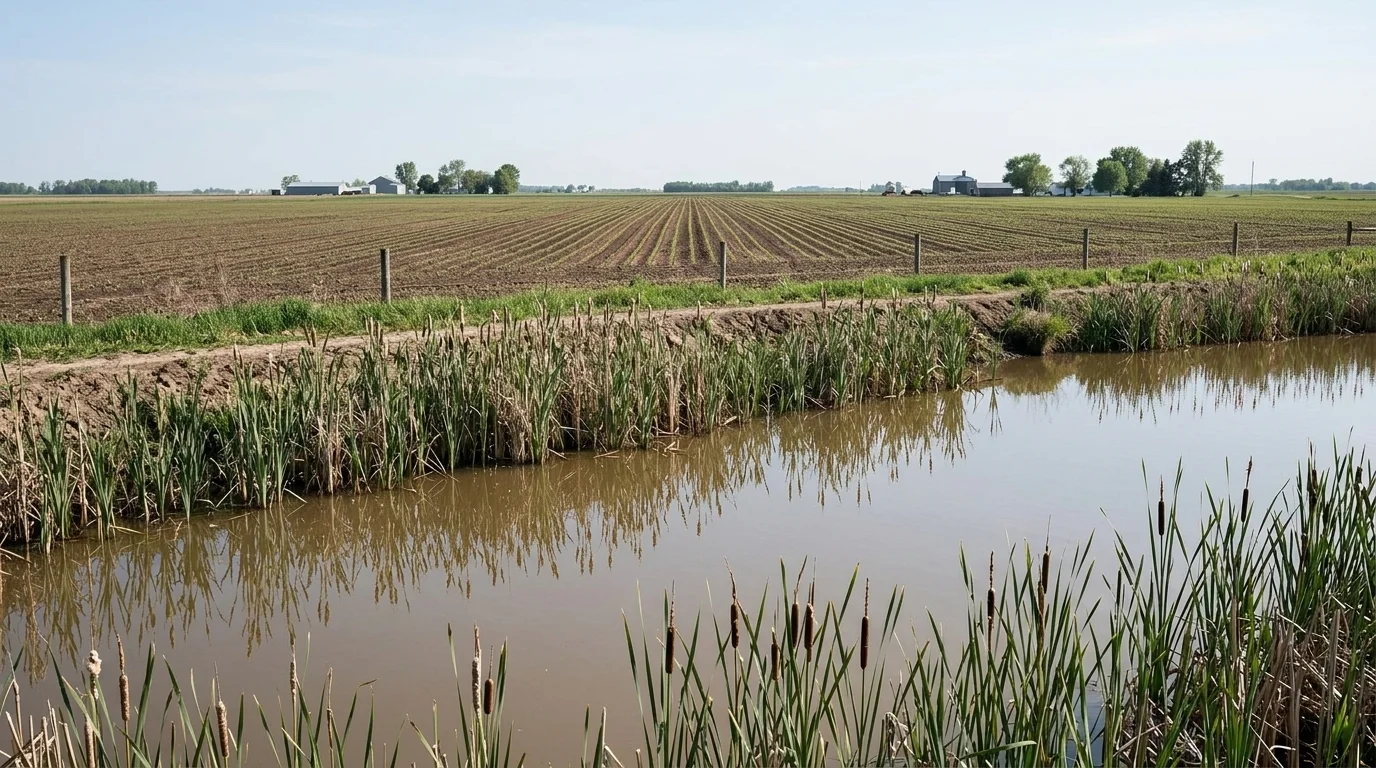
Constructed wetlands work by routing tile drainage or surface runoff through shallow, vegetated basins where natural biological processes strip out nitrates before the water flows downstream. Studies have found they can remove 40 to 90 percent of nitrate from agricultural drainage, making them among the highest-performing tools available. A project of this scale typically covers between half an acre and five acres and costs anywhere from $50,000 to $500,000 depending on how much land it drains.
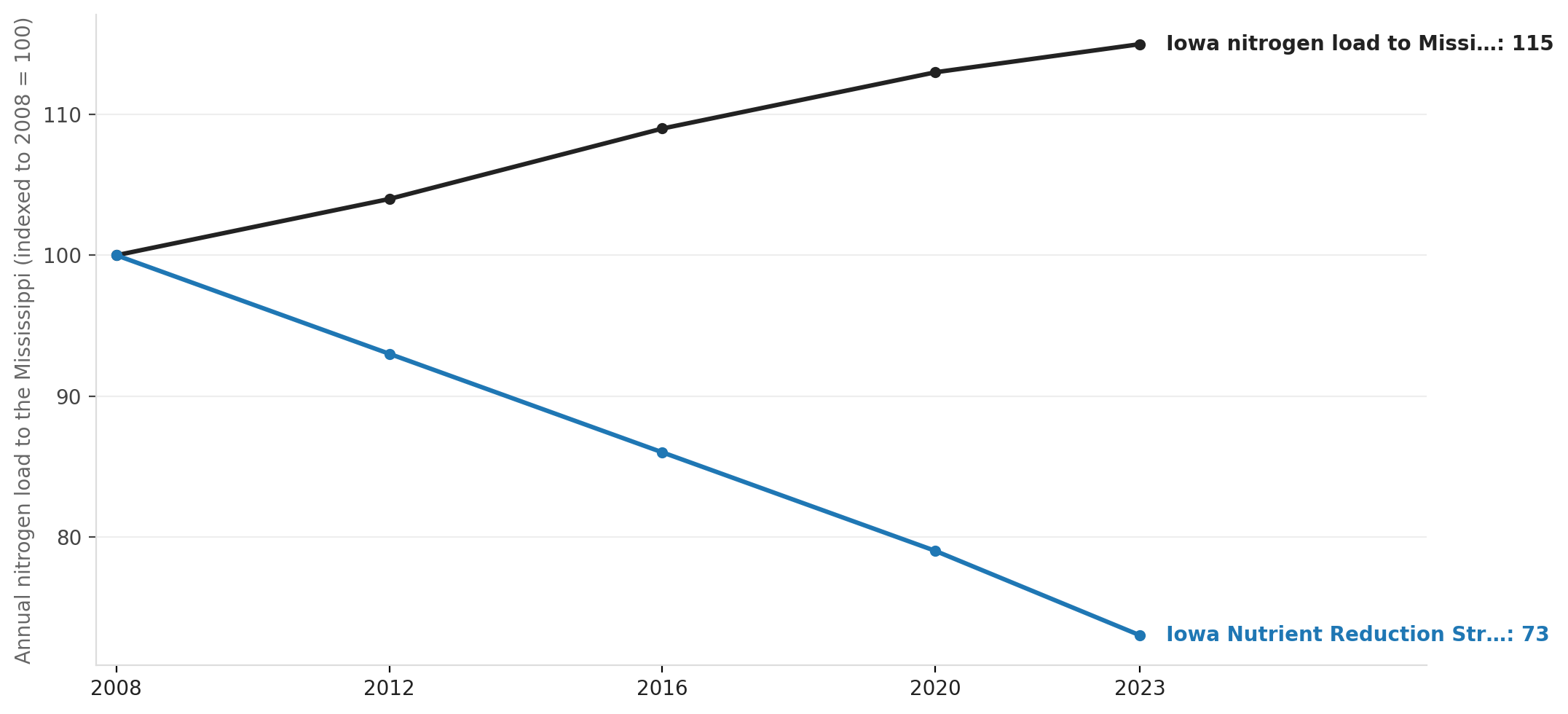
Source: NationGraph.
The stakes vary depending on which Chickasaw community is behind the project. If it is Chickasaw County, Iowa, the wetland would be part of Iowa's Nutrient Reduction Strategy, a decade-old voluntary framework that critics say has moved far too slowly: the state still loses roughly 15 percent more nitrogen to the Mississippi River each year than it did in 2008, when federal regulators set reduction targets tied to the dead zone in the Gulf of Mexico. If the project is in Oklahoma, it would reflect the Chickasaw Nation's expanding role in managing water quality across its territory in south-central Oklahoma, where the tribe has been active in protecting the Blue River and the Arbuckle-Simpson aquifer.
Federal funding for projects like this has grown significantly in recent years through USDA conservation programs and the 2021 infrastructure law, which directed new money to nonpoint source pollution cleanup under the Clean Water Act. The broader challenge, advocates say, is building enough of them fast enough to move the needle on regional water quality.
A contractor has not yet been selected, and no construction timeline has been announced.