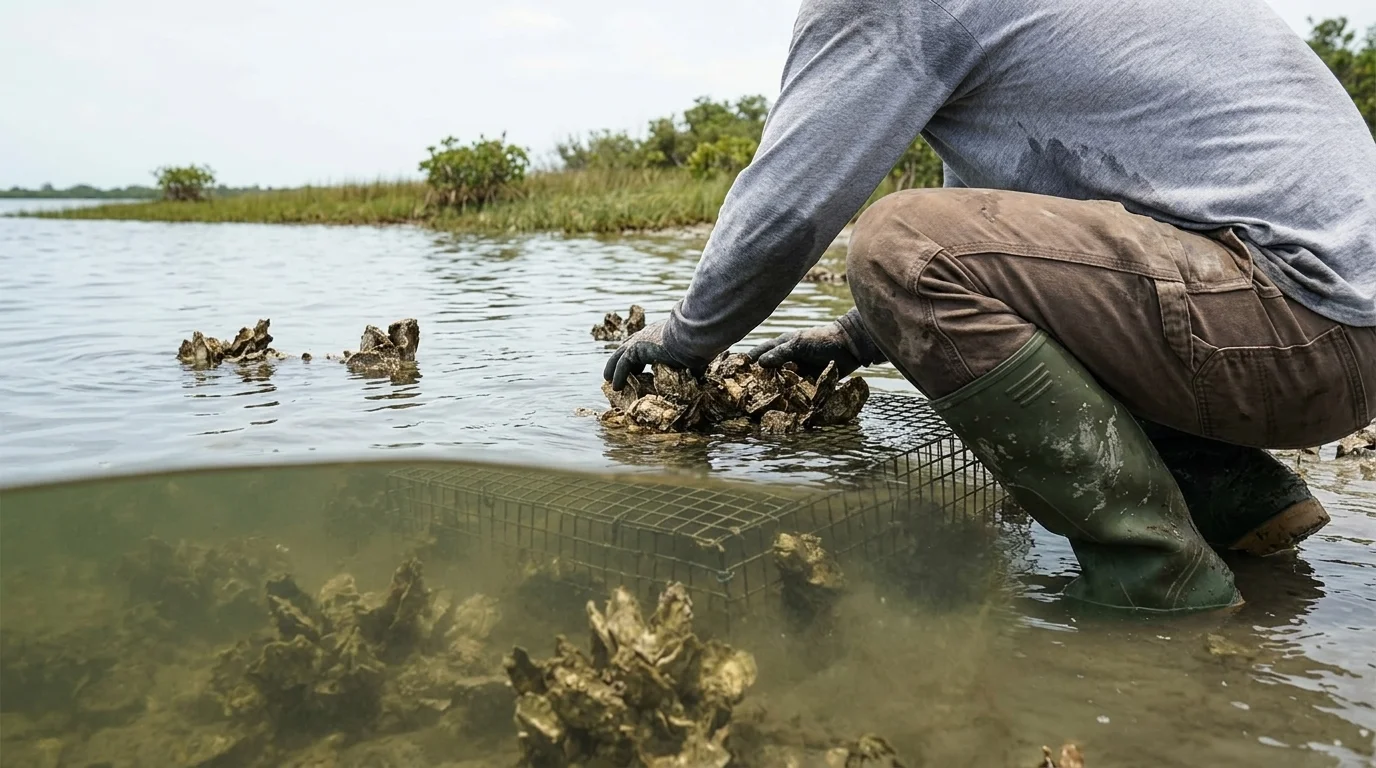
Manatee County, Florida is moving to rebuild its oyster reefs, enlisting one of nature's most efficient water filters to help heal bays that have taken years of abuse from industrial pollution, recurring red tide and back-to-back hurricanes.
The county posted a solicitation for the project on June 23, 2026. The specific sites, acreage and budget have not been made public, but the county's coastline spans Anna Maria Sound, Terra Ceia Bay and the mouth of the Manatee River, all waterways that have struggled with degraded water quality in recent years.
The timing reflects how much has gone wrong along this stretch of Gulf Coast. In 2021, 215 million gallons of polluted wastewater spilled from the abandoned Piney Point phosphate plant into Tampa Bay, triggering a massive red tide bloom and widespread fish kills. Separate red tide events in 2018, 2021 and 2023 hammered local tourism, fishing and marine life. Then came hurricanes Ian, Idalia, Helene and Milton in rapid succession, each battering the shoreline further.
Oyster reefs address several of those problems at once. A single adult oyster filters up to 50 gallons of water per day, pulling out nitrogen and suspended sediment, the same pollutants that feed harmful algae blooms. Reefs also create habitat for fish and crustaceans and function as living breakwaters that absorb wave energy during storms, a quality that has made them central to Florida's broader push for resilient coastlines.
Florida's native oyster reefs have declined by an estimated 85 to 90 percent from historical levels, the result of decades of dredging, freshwater diversion, nutrient pollution, disease and storm damage. State and federal money has flowed into Gulf Coast restoration since the 2010 Deepwater Horizon spill, including through the federal RESTORE Act and natural resource damage settlements. Neighboring Sarasota County completed similar living shoreline and oyster restoration work using RESTORE Act funds in 2023 and 2024.
For Manatee County, which is still managing the court-ordered closure of the Piney Point site within its borders, the project represents a concrete step toward the water-quality accountability that residents and commissioners have publicly demanded since the 2021 disaster. With a population approaching 440,000 and a local economy tied closely to waterfront tourism and fishing, cleaner bays carry economic weight as well as environmental urgency.
The county is in the early stages of contractor selection, and details on project scope and funding are expected to emerge as the process moves forward.