Federal mental health grants flowing into Alaska have hit $5.59 million in the past 90 days, a 172% jump over the same window last year, and nearly all of it traces to a single emergency instrument that the federal government almost never uses.
On June 22, 2026, the Alaska Department of Military and Veterans Affairs received a $5.586 million SAMHSA Emergency Response Grant, the largest mental health disaster award in the state's recent history. A companion $1.623 million FEMA Crisis Counseling grant to the same agency arrived two months earlier, on April 27. Together, the two awards bring Alaska's disaster-triggered behavioral health response to roughly $7.2 million in new federal commitments, layered on top of an existing state portfolio that had no comparable emergency tier before this year.
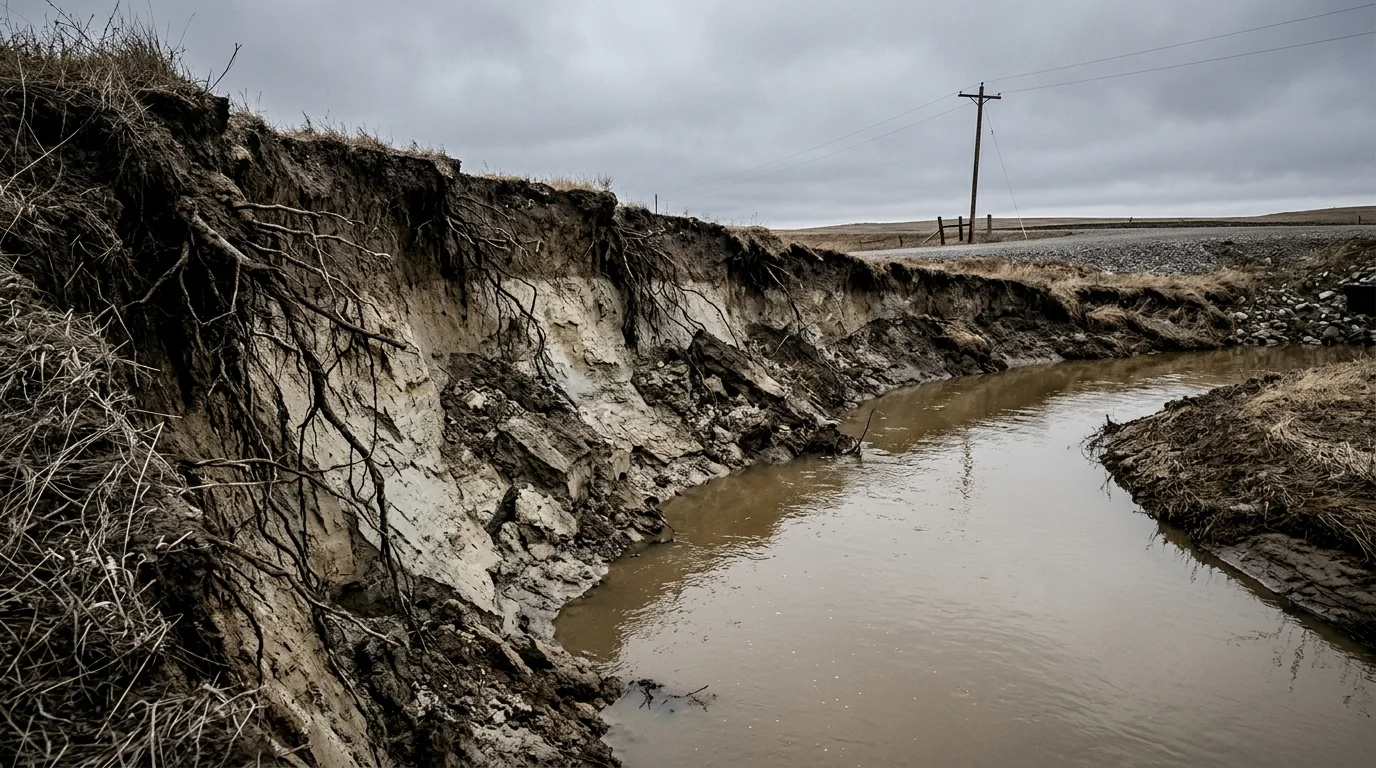
The force behind both awards is a chain of overlapping presidential disaster declarations. FEMA-4893-DR, declared October 22, 2025, covered severe storms, flooding, and the remnants of Typhoon Halong across western Alaska, and was amended multiple times through May 2026 to add affected areas including the Lower Kuskokwim region. A second declaration, FEMA-4904-DR, followed on April 7, 2026, covering the December 6–9, 2025 severe storm in Matanuska-Susitna Borough. A third, FEMA-4912-DR, declared May 29, 2026, specifically addressed the Native Village of Kipnuk during the same Typhoon Halong incident period. Three declarations, two distinct weather events, one state, in under eight months.
Source: NationGraph.
That stacking matters because of how SAMHSA's Emergency Response Grant mechanism works. The SERG program is explicitly a funds-of-last-resort instrument, available only when a disaster overwhelms the existing behavioral health system or creates needs that existing resources cannot address. Each declaration creates a legal predicate. Three declarations, amended repeatedly over a nine-month span, created the conditions SAMHSA requires to act immediately outside its normal grant calendar.
The state agency receiving the money is also notable. The Alaska Department of Military and Veterans Affairs, not the Department of Health, was named the disaster behavioral health lead, a signal that the state is managing this as a civil emergency response, not a routine public health grant cycle. The SERG award runs through March 21, 2027.
The prior-year baseline that makes the 172% jump so striking was itself unremarkable: roughly $2.05 million spread across seven fragmented, non-emergency awards, including a HUD Continuum of Care grant, a children's health insurance award, and a university research contract. None were disaster instruments. The comparison is not between two versions of the same thing; it is between Alaska's ordinary federal mental health footprint and a category of funding that exists for systems in extremis.
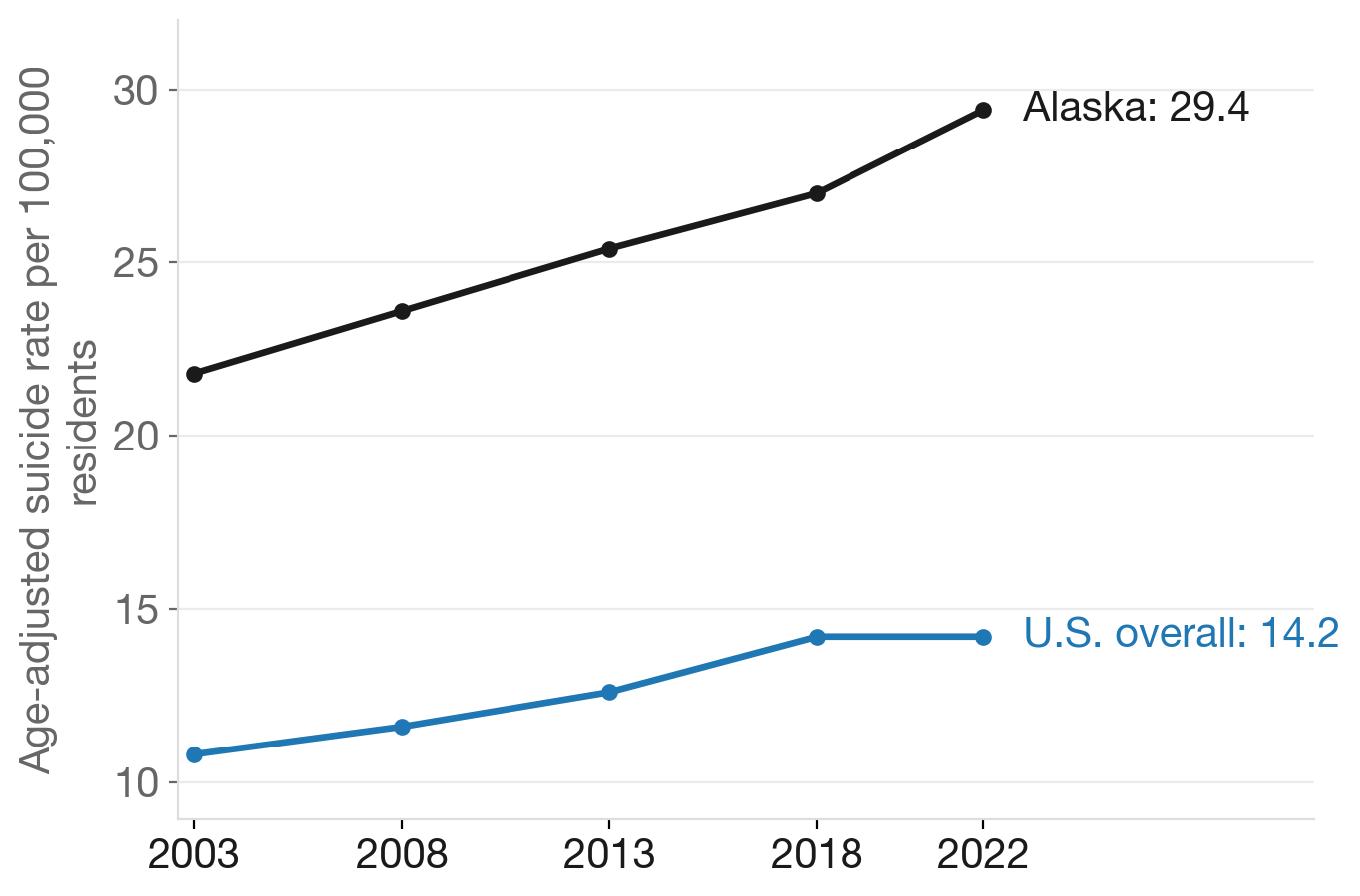
Alaska's pre-existing conditions make that framing precise rather than rhetorical. The state has the highest suicide rate in the United States at 29.4 per 100,000 residents, roughly 94% above the national average, a figure that has climbed more than 32% over the past two decades. American Indian and Alaska Native populations in rural communities face rates of 58.73 per 100,000, the highest of any racial or ethnic group nationally. In many of those communities, residents must travel hundreds of miles to reach a behavioral health provider, and surveys of providers already in the system show 80% report unsustainable workloads.
The two disaster zones now inside active federal recovery designations represent very different parts of Alaska. Matanuska-Susitna Borough is the state's fastest-growing suburban corridor, a commuter belt anchored to Anchorage. The Kuskokwim and Yukon delta region, hit hardest by Typhoon Halong's remnants, is one of the most geographically isolated areas in North America, with a predominantly Alaska Native population and almost no permanent behavioral health infrastructure. Both are now drawing from the same emergency pool.
The SERG and Crisis Counseling grants fund immediate community crisis response, outreach workers, crisis hotlines, short-term counseling, rather than building durable infrastructure. That is by design: the program is meant to stabilize a system in acute distress, not replace long-term investment. Alaska's broader active behavioral health portfolio, which includes a $5.4 million Anchorage School District SAMHSA grant, roughly $10 million in state Department of Health substance abuse awards, and $3.3 million in Tlingit and Haida tribal awards, had no emergency tier before this cycle.
The next signal to watch is whether SAMHSA extends or supplements the SERG award before its March 2027 expiration. The agency has the authority to do so if conditions in the affected areas remain unresolved, and given the pace of amendments to FEMA-4893-DR alone, the formal disaster period in Alaska shows no signs of closing quickly.