New Jersey municipalities issued 196 electric vehicle-related RFPs in the last 90 days, 3.6 times the volume of New York State and 33 times the output of Pennsylvania and Maryland combined. The number is striking on its own. The reason behind it is more telling: much of this procurement is catch-up work on a statutory deadline that already passed.
NJ Statute 48:25-3 required public fleets to adopt EVs by December 31, 2025. That date came and went with many municipalities still on the sidelines. The monthly RFP numbers tell the story precisely: NJ averaged roughly one EV-related procurement posting per month from September 2025 through January 2026. Then the calendar flipped. February brought 41. March hit 69. April closed at 62. The first 18 days of May have already logged 40 more. This is not a blip driven by a single procurement, though Teaneck's repetitive daily re-posting of an EV infrastructure concession notice does inflate the trailing 30-day count. The three-month curve is what matters, and it is sustained across the state.
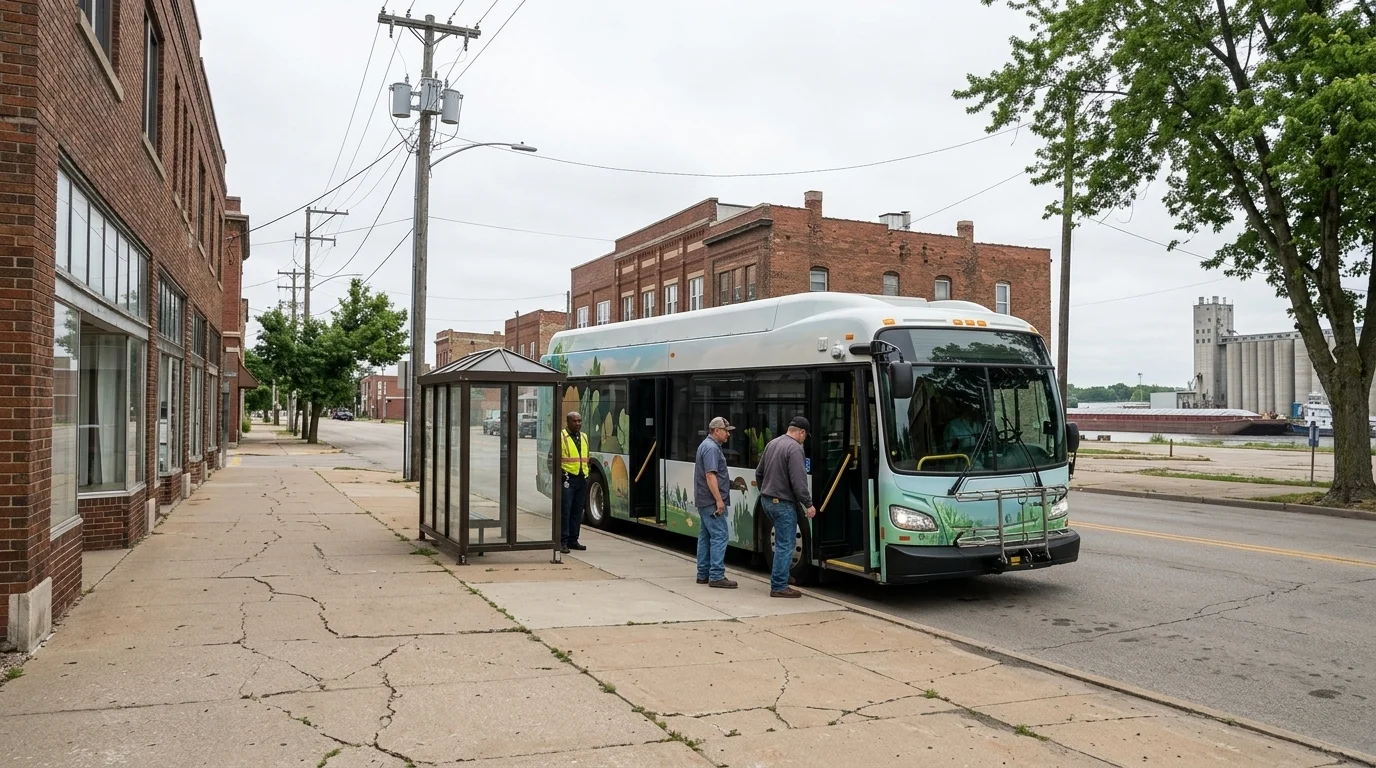
Three forces collided to produce this surge, and they arrived at nearly the same moment. The first is the expired fleet mandate, which municipalities are now procuring against retroactively rather than proactively. The second is NJ Transit's approaching statutory obligation: under N.J.S.A. 27:1B-22, 50% of new bus purchases must be zero-emission by December 31, 2026, a hard target that has already shaped the agency's grant drawdowns. NJ Transit holds an $18.9 million DOT Low or No Emissions bus grant with $16.7 million already disbursed, which indicates active vehicle procurement is underway.

Source: NationGraph.
The third force is money with an expiration date. Governor Murphy's December 17, 2025 ZEV Roadmap packaged $75.5 million in NJ ZIP Phase 3 vouchers for medium and heavy-duty commercial vehicles, $50 million in the new Take Charge charging infrastructure program available in early 2026, $25 million in fixed low-interest ZEV financing, and $16 million directed at NJ Transit electric bus infrastructure in South Jersey. The NJBPU Clean Fleet program distributes grants on a first-come, first-served basis, up to $4,000 per light-duty EV and up to $180,000 per DC fast charger for municipal installations. A town that waits does not get a later round; it simply loses its place in line.
Behind those state funds sits an even larger federal backstop that has barely been tapped. NJDEP holds a $248.9 million EPA Climate Pollution Reduction Grant active through September 2029. Of that total, $5,357 has been outlayed so far. That gap between authorized and spent is not a sign of inaction; it reflects how early the disbursement pipeline is, and it signals that the procurement volume New Jersey is posting today is the leading edge of a much larger capital deployment still to come.
For residents, the visible changes will be gradual but cumulative. Municipal fleets, school buses, and transit vehicles are the first points of contact. Towns that complete their EV infrastructure procurements in 2026 will be installing charging depots and replacing combustion vehicles over the following 12 to 36 months. NJ's Charge Up consumer rebate program, which offers up to $4,000 per vehicle, runs only through June 30, 2026, creating a parallel deadline for private residents who have been watching the program and delaying a purchase decision.
New Governor Mikie Sherrill, inaugurated January 20, 2026, inherited this implementation stack without having authored it. Her administration has signaled continuity on EV commitments, but the statutory mandates do not require her affirmative direction to operate. Municipalities are acting on the existing legal floor rather than waiting for new executive guidance, which is precisely why the procurement wave began in February, weeks after she took office, rather than pausing for a policy review.
The regional comparison sharpens the picture. New York has roughly twice New Jersey's population and a well-developed EV policy apparatus. It produced 54 EV RFPs in the same 90-day window. NJ's 196 reflects a deadline-dense policy environment that no neighboring state has replicated: fleet statute, transit procurement law, Advanced Clean Trucks manufacturer mandates, and utility-backed incentive programs all converging in the same fiscal year.
ChargEVC, the state's EV industry coalition, called the current moment in April 2026 an inflection point, and the procurement numbers support that framing. The question the next 90 days will answer is whether municipalities that started late can convert RFPs into signed contracts before the first-come grant windows close. The Charge Up consumer rebate deadline arrives June 30. NJ Transit's 50% bus mandate lands December 31. Both are fixed.