Nashua, New Hampshire is moving to intercept toxic PFAS chemicals at one of their least visible sources: the liquid slowly seeping through its own municipal landfill.
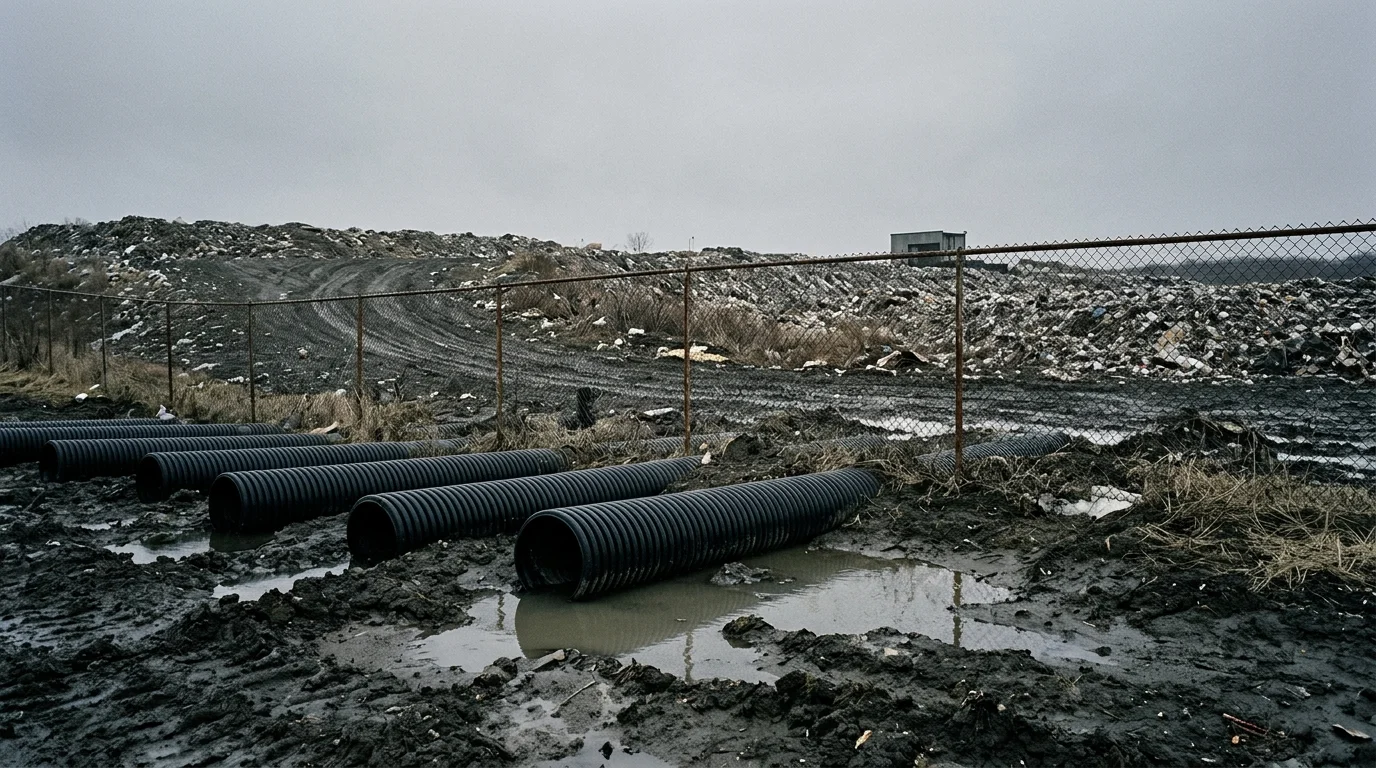
The city's Division of Public Works is hiring contractors to build the infrastructure for a pilot PFAS treatment system at the Four Hills Landfill, one of southern New Hampshire's larger municipal waste facilities. The project, posted to the city's bid portal on June 12, is a pilot-scale effort, meaning Nashua is testing treatment technology before committing to a permanent system. The specific treatment method and total cost have not been disclosed.
The target is leachate: the dark, chemical-laden liquid that forms as rainwater percolates through buried garbage. Municipal landfills have become inadvertent reservoirs for PFAS because decades of consumer products containing the chemicals, cookware coatings, stain-resistant fabrics, food packaging, ended up in the trash. That leachate is typically trucked to wastewater treatment plants that weren't designed to remove PFAS, which then pass through into rivers or end up in biosolids spread on farmland.
Source: NationGraph.
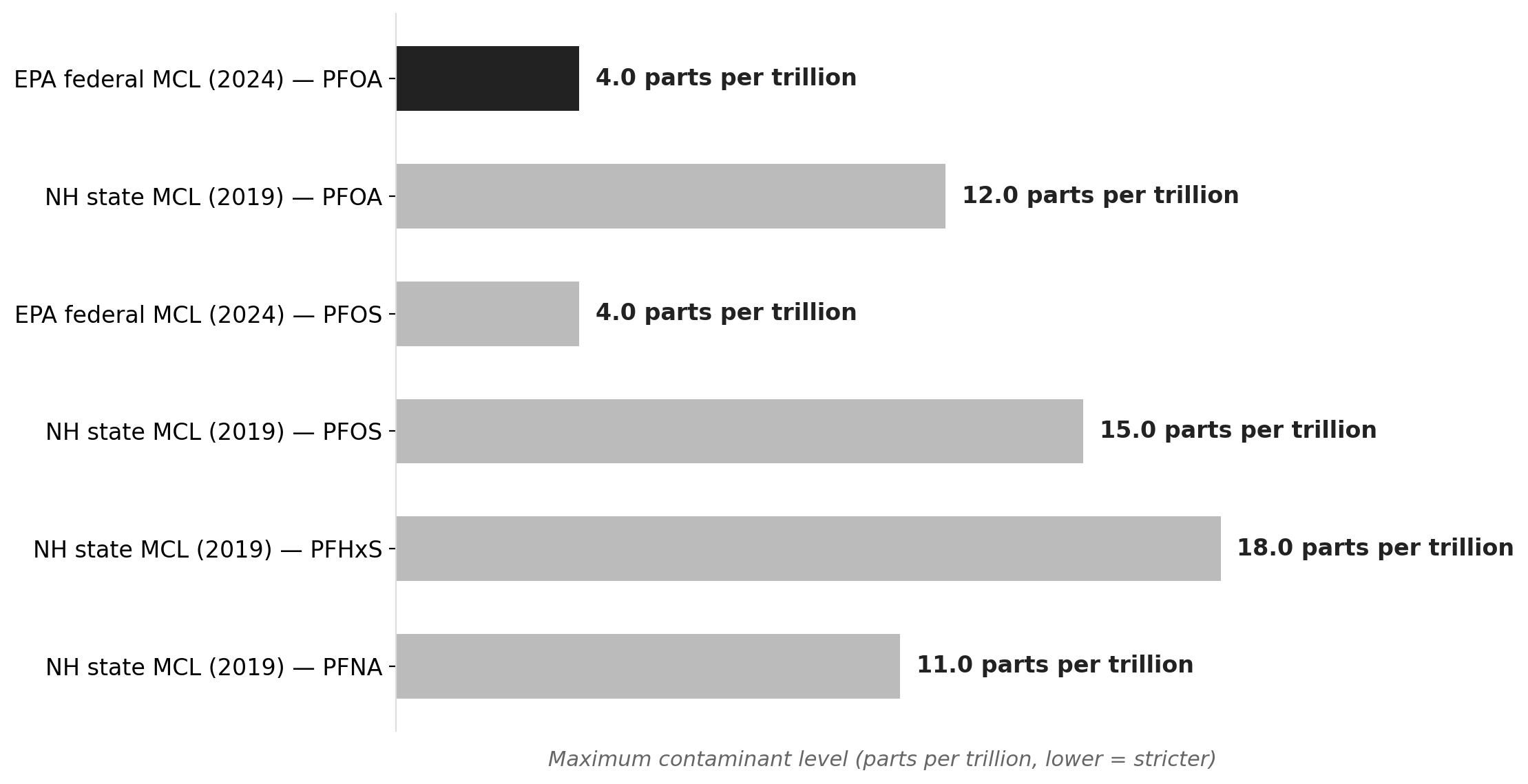
For Nashua's roughly 91,000 residents, forever chemicals are far from an abstract concern. The city sits just downstream on the Merrimack River from Merrimack, ground zero for the Saint-Gobain Performance Plastics contamination scandal that began unfolding in 2016 and exposed tens of thousands of southern New Hampshire residents to PFAS in their drinking water. New Hampshire responded with some of the strictest PFAS limits in the country, adopting enforceable standards for four compounds in 2019, well ahead of the federal government. The EPA didn't finalize national drinking water limits for six PFAS compounds until April 2024, with public water systems required to comply by 2029.
That federal deadline is now driving a wave of municipal PFAS pilot projects nationwide. Treatment technologies under consideration by cities include granular activated carbon filters, ion exchange resins, and reverse osmosis, each with different cost profiles and removal efficiencies. By running a pilot now, Nashua can gather data on what works at its specific landfill before the compliance clock runs out.
The stakes extend beyond city limits. The Merrimack River watershed supplies drinking water to communities downstream into Massachusetts, meaning leachate that goes untreated in Nashua doesn't stay in Nashua. Whether this pilot leads to a full-scale permanent system will depend on what the test results show, a question the city should be able to answer well before the EPA's 2029 deadline arrives.