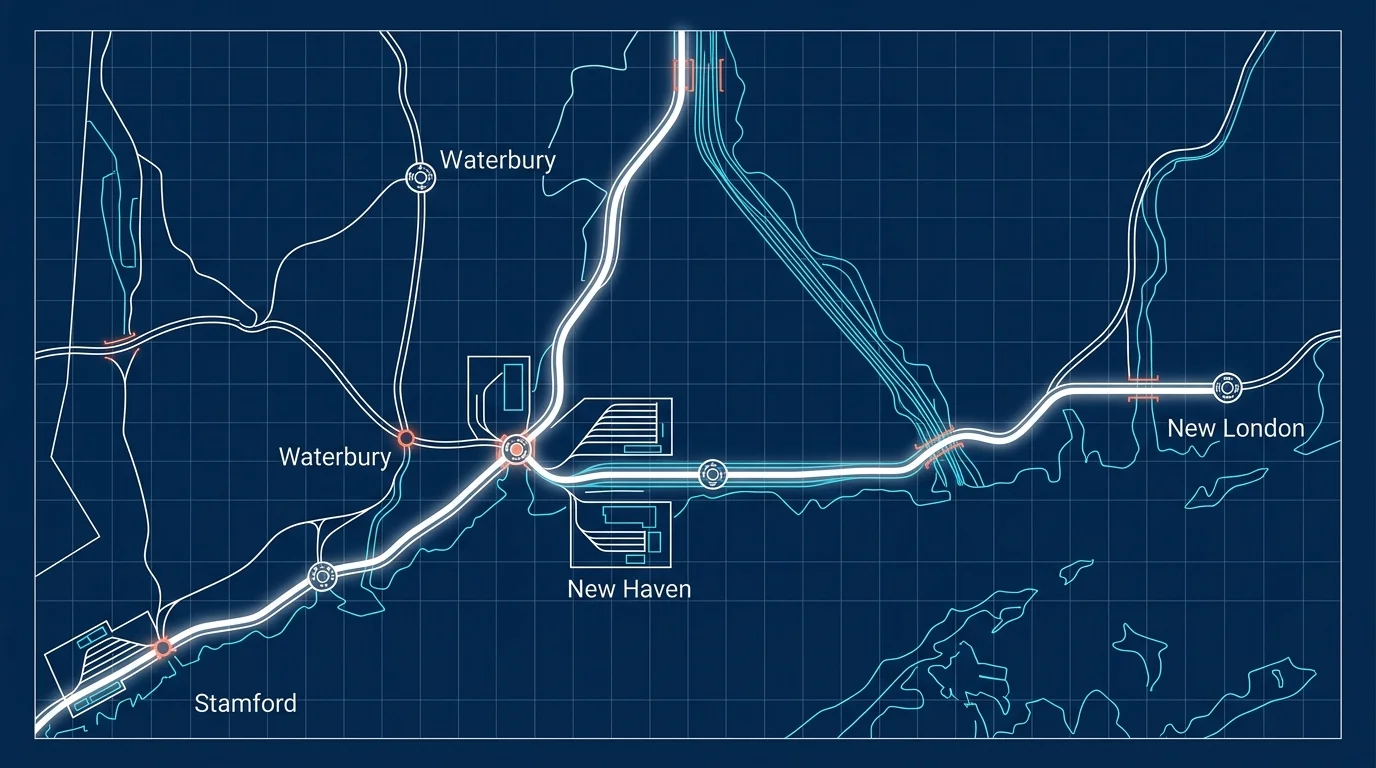
Connecticut received $283.4 million in federal transit funding on March 30, 2026, the state's largest single award in years and a 2251 percent increase over the $12.2 million granted in the same 90-day window last year. The five-year formula grant from the Federal Transit Administration runs through December 2031 and targets deferred rail infrastructure across the state: Waterbury Branch station reconstructions, New Haven rail yard diesel shop upgrades, Stamford maintenance-of-equipment facilities, Walk Bridge replacements, and New Haven Line track programs.
The money flows from the Infrastructure Investment and Jobs Act, which committed $91 billion to transit over five years. The FTA announced $20.6 billion in fiscal year 2026 apportionments nationwide on March 31, following passage of the Full-Year Consolidated Appropriations Act in February. Connecticut DOT, under Commissioner Garrett Eucalitto and Governor Ned Lamont, positioned itself to claim the second-largest state DOT allocation after Washington DC by identifying shovel-ready projects in the state's Customer Experience Action Plan and Greater Hartford Mobility Study.
The timing matters because the funding window is finite. Connecticut operates the busiest rail line in the country, the Northeast Corridor, and has been carrying $15 billion in deferred capital needs on the New Haven Line alone. Nearly 19 percent of the state's transit vehicles are past their useful life. The Infrastructure Act created a narrow opening to fix problems that have compounded since before the 2008 recession, and the state is treating the $283 million as both windfall and deadline.

Source: NationGraph.
Governor Lamont's administration has already begun deploying the grant. Construction is underway to redevelop the Waterbury train station, part of a four-station Waterbury Branch overhaul funded by the Section 5307 award. The New Haven rail yard diesel shop upgrades address maintenance capacity that has constrained service expansion for years. The Stamford maintenance-of-equipment facility and Walk Bridge infrastructure support the state's Metro-North commuter rail operations, which carry the highest ridership in southwestern Fairfield County.
Connecticut's 2026 transit grant total has already hit $287.7 million, 34 percent higher than all of 2025 and nearly triple the $65.2 million received in 2024. The state has pulled in nearly $2 billion in Infrastructure Act rail grants since 2023, including $826 million for the Connecticut River Bridge replacement and $291 million for five Northeast Corridor projects awarded in 2024. The March formula grant alone accounts for more than the state's entire 2024 transit grant total.
The governor's proposed fiscal year 2026-27 budget calls for a 40 percent increase in state transportation bonding and introduces free veteran bus passes and discounted student fares, signaling a push to pair federal capital dollars with expanded service. The state is also pursuing Bus Rapid Transit expansion, microtransit pilots, and a $4 million Reconnecting Communities grant for Hartford riverfront access.
The Infrastructure Act's formula funding structure rewards states that can move projects quickly. Connecticut's advantage lies in the catalog of deferred work already designed and permitted, much of it identified in regional mobility studies conducted over the last decade. The $283 million grant does not create new projects; it accelerates work that has been waiting for funding.
What changes for riders depends on how fast the state can execute. The Waterbury Branch stations, New Haven rail yard, and Stamford facility upgrades are designed to support service expansion through 2031, the end of the grant period. The New Haven Line track programs address bottlenecks that have limited frequency and reliability. The Walk Bridge replacement, part of a broader corridor modernization effort, will remove a 120-year-old swing bridge that has been a single point of failure for Metro-North and Amtrak services.
The next signal to watch is whether Connecticut can spend down the $283 million before the December 2031 deadline. The state has a track record of drawing federal transit dollars, but the scale of this award and the compressed timeline create execution risk. Commissioner Eucalitto's testimony to the state legislature in February emphasized readiness, but the state will need to move procurement, permitting, and construction faster than it has historically managed.
The Infrastructure Act gave Connecticut a five-year window to fix decades of deferred rail work. The clock started in March.