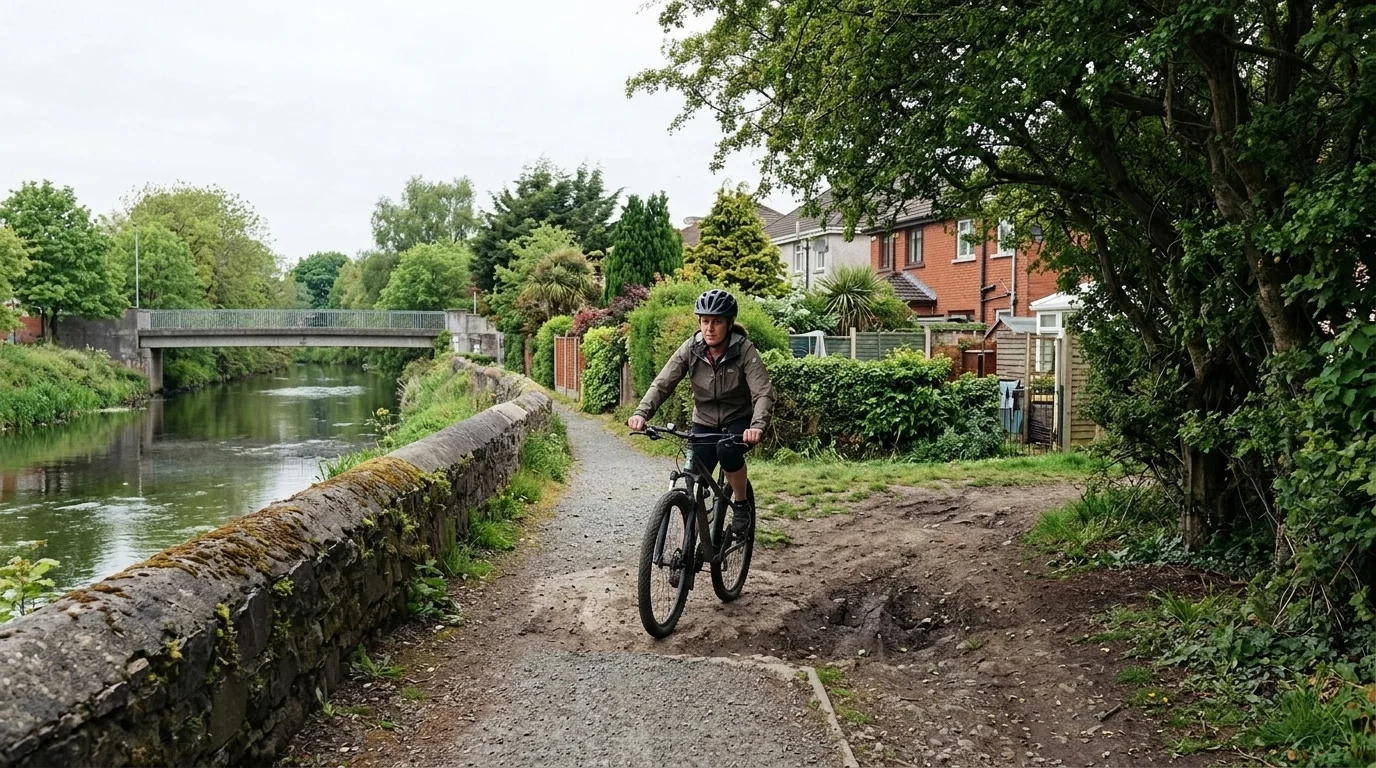
Dublin is moving to fill a long-standing gap in its flagship riverside cycling route, with the city council seeking a contractor to build the Milltown Road segment of the Dodder Greenway, connecting the existing Dodder Walk to Dundrum Road.
The stretch is a critical missing link in a continuous off-road route that planners first proposed in 2013, envisioning a greenway running from the Grand Canal all the way to the Dublin Mountains. While other sections have been completed or are under development, the Milltown-to-Dundrum corridor has lagged, leaving cyclists and pedestrians without a connected path through one of Dublin's most densely commuted southern suburbs.
The tender for the scheme is posted on eTenders, Ireland's public procurement portal. Specific costs and a construction timeline have not been disclosed in the notice.
Source: NationGraph.
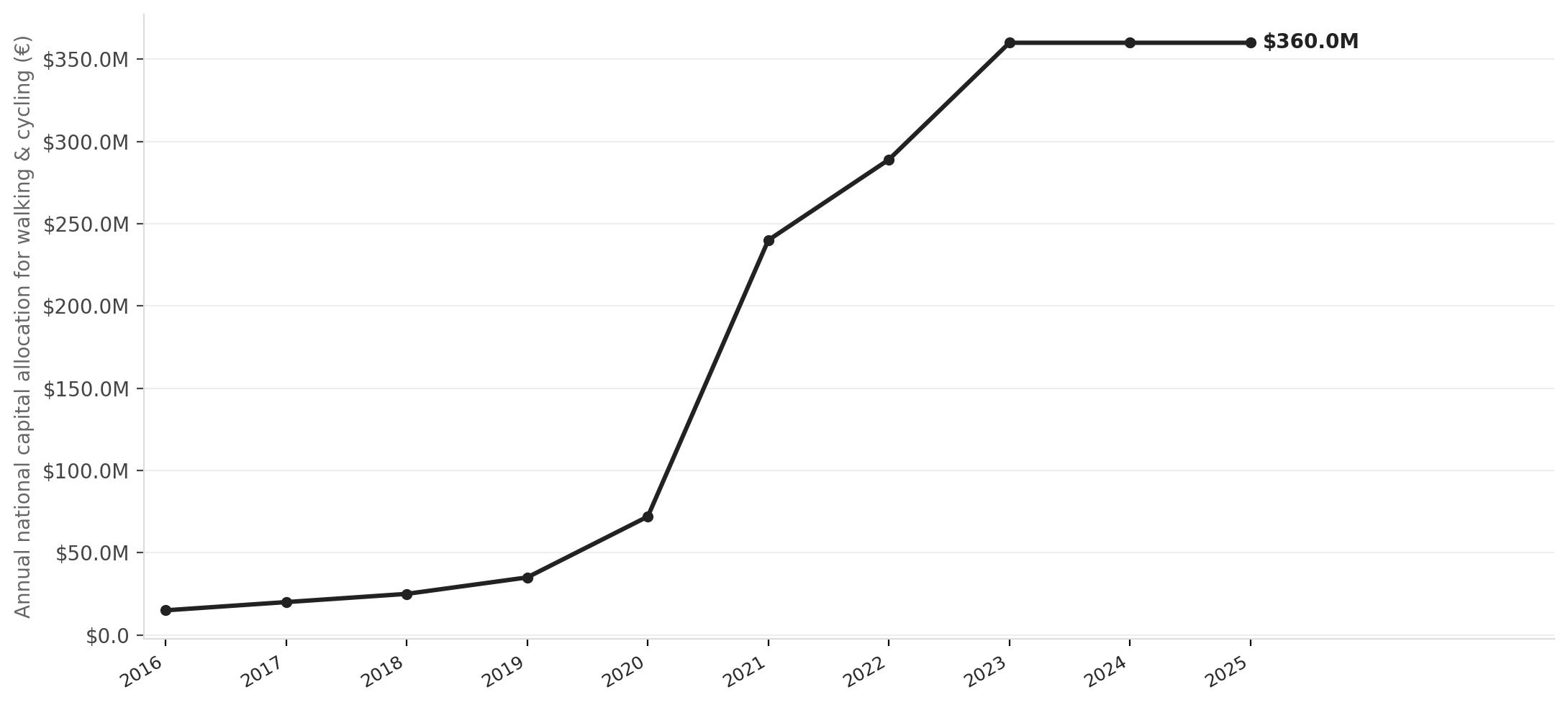
Funding flows through the National Transport Authority's Active Travel Investment Programme, itself a product of the 2020 Programme for Government commitment to spend €360 million a year on walking and cycling infrastructure, roughly 10 times what Ireland had historically invested. Dublin City Council alone has received more than €40 million annually from that programme since 2021.
The Milltown and Dundrum area is already served by the Green LUAS line, and the greenway is designed in part as a last-mile connector to public transport, as well as a direct route for the many commuters living in the leafy, densely populated corridor along the Dodder. Dublin's cycling modal share sits at around 5 to 7%, among the lowest of any major Western European capital.
The project faces practical complications. The route straddles the boundary between Dublin City Council and Dún Laoghaire-Rathdown County Council near Dundrum, requiring coordination between two authorities. The Dodder River is also a protected ecological corridor under EU habitats law, constraining how and where construction can happen. Residents groups in the area have historically resisted road-space reallocation, a pattern that has slowed or stalled schemes elsewhere in Dublin.
There is also a broader political question hanging over the project. The Green Party, the driving force behind the Active Travel funding commitment, was largely wiped out in the 2024 general election. Whether the new government will sustain the €360 million annual target is unresolved, making projects that reach the construction stage now more durable against potential future cuts.
No contractor has been selected yet. How quickly work begins will depend on procurement timelines and whether any legal or planning challenges emerge, a recurring obstacle for Dublin cycling schemes in recent years.