Colorado has sold legal recreational cannabis for over a decade, but if a driver pulled over tonight tests positive for THC in their blood, it still tells law enforcement almost nothing about whether that person is actually impaired right now. A new federally funded study is trying to solve that problem.
Researchers in Colorado are testing breath and eye-scanning devices that could detect cannabis impairment within the hours-long window when a user is acutely high, thanks to a $248,201 grant from the National Institute on Drug Abuse. The two-year study is designed to provide the kind of independent, rigorous validation that could eventually make one of these devices standard equipment for law enforcement, much as the alcohol breathalyzer became after the 1950s.
The core challenge is that THC behaves nothing like alcohol. Blood and urine tests can detect cannabis metabolites days or weeks after someone last used it, meaning a positive result is nearly useless for proving impairment at a specific moment. Colorado set a threshold of 5 nanograms of THC per milliliter of blood as an indicator of impairment, but that standard has been challenged from both sides: regular users can exceed it while fully sober, and occasional users can be impaired below it. The state's Colorado Department of Transportation has found that more than 20% of drivers killed in crashes tested positive for THC by 2020, up from about 11% the year retail sales began.
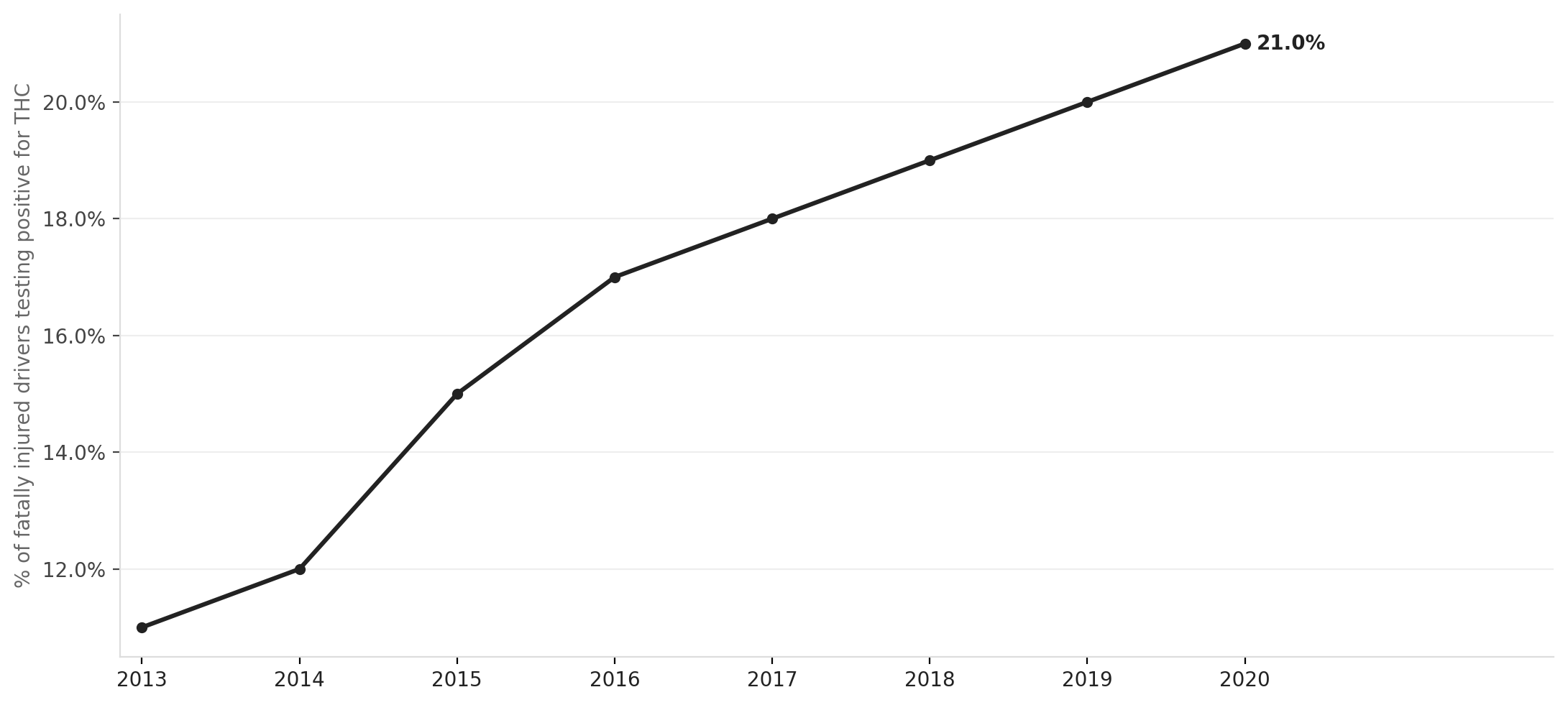
Source: NationGraph.
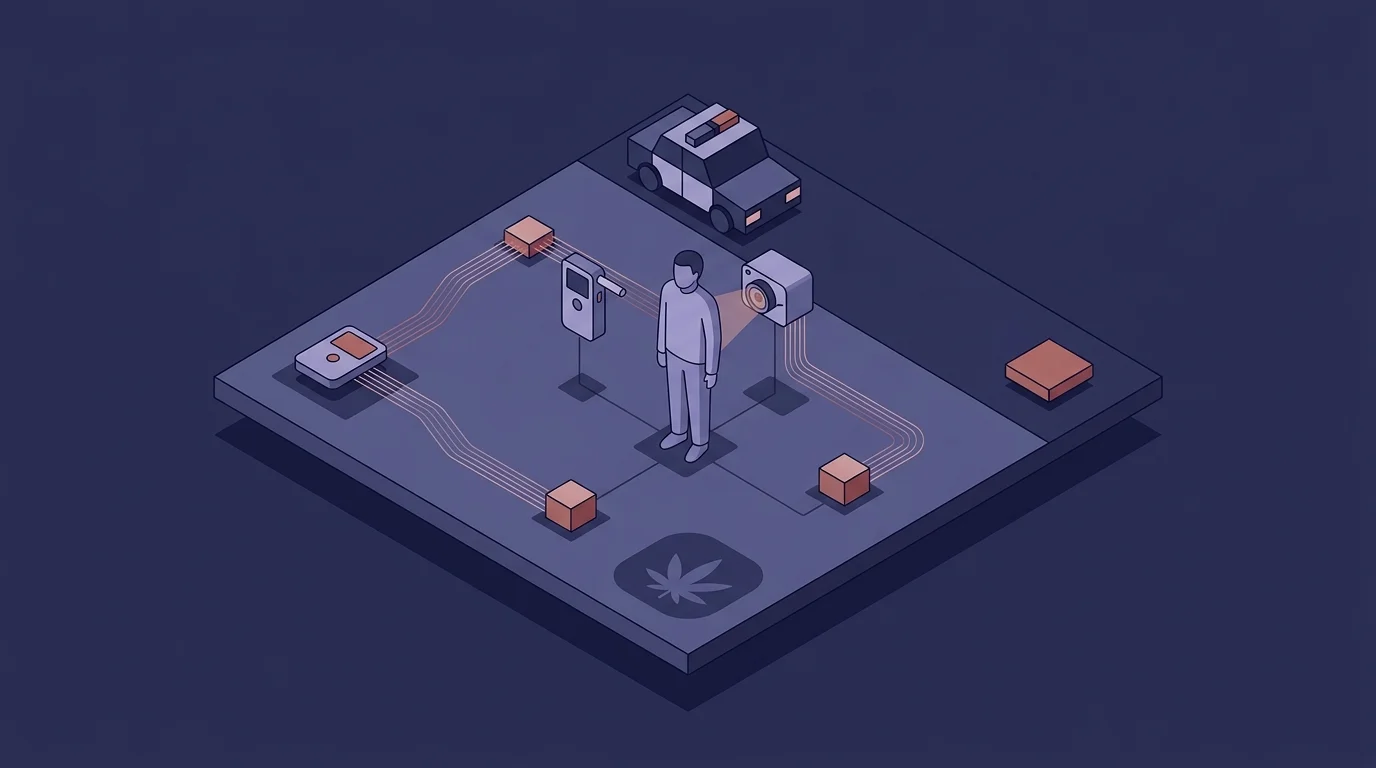
The study will enroll 45 participants and test four devices: two that sample THC directly from breath and two that measure changes in pupil size and light response, which cannabis is known to affect. Participants will be assessed before and after cannabis use, with measurements taken repeatedly over a 4.5-hour window to track how long the devices can detect acute impairment. Researchers will test both how consistently the devices perform on their own and whether combining breath and eye data improves accuracy.
Several of the devices being studied are already close to or on the market, sold by companies that have run their own validation tests. But manufacturer-funded results carry obvious credibility questions in court. Independent academic validation is what would be needed before a device could withstand legal scrutiny in a DUI case.
For Colorado, this research carries particular weight. The state has invested heavily in Drug Recognition Expert officers, specially trained to assess impairment through a 30- to 45-minute roadside evaluation, but there are never enough of them and their findings can be challenged as subjective. A portable, objective device that takes seconds would transform how the state enforces impaired driving law.
Results from the two-year study are expected to give law enforcement agencies, public health officials, and device manufacturers clearer guidance on which approaches are ready for real-world use and which still need work.