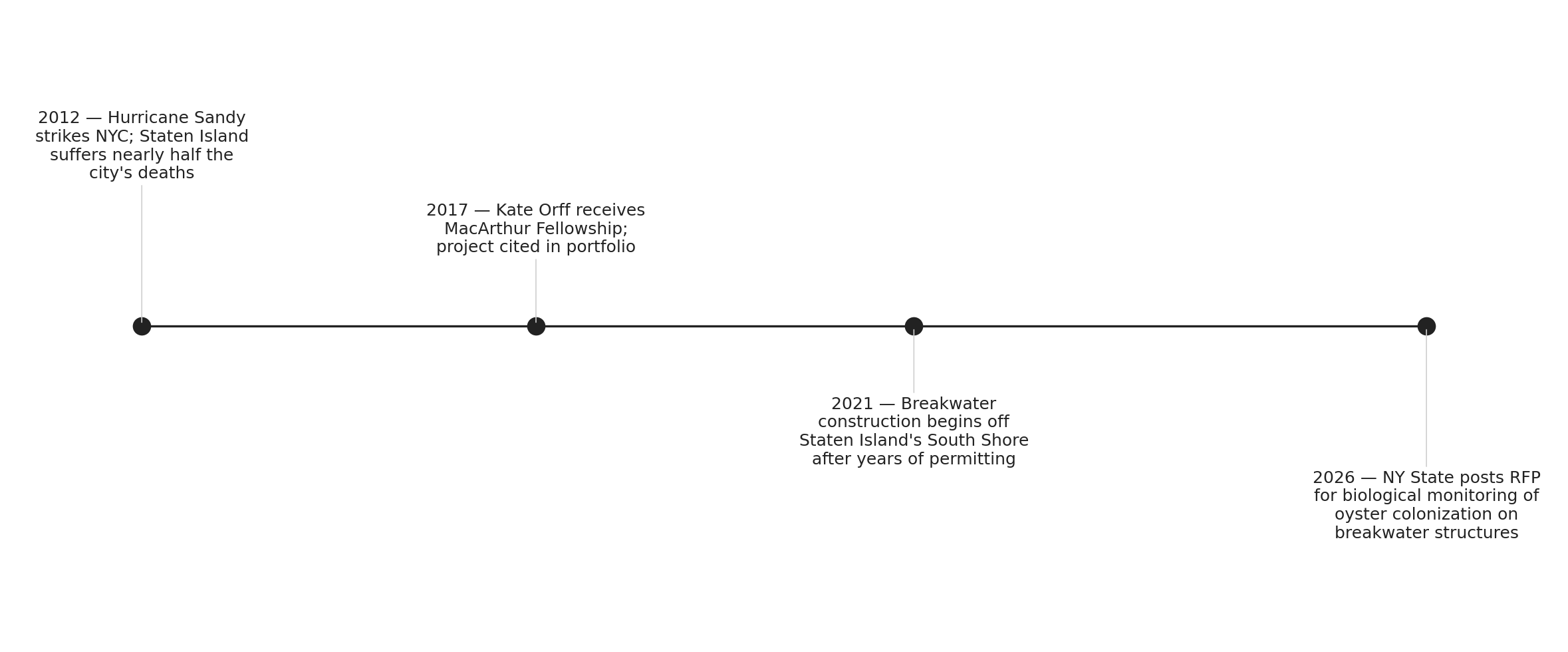
More than a decade after Hurricane Sandy killed 43 people in New York City and reshaped how the region thinks about its coastline, New York State wants to know whether one of its most unusual bets on the future is paying off.
The Governor's Office of Storm Recovery is hiring scientists to monitor whether oysters are successfully colonizing the Living Breakwaters structures along Staten Island's southern shore. The monitoring marks a pivotal moment for the project: the underwater breakwaters are in place, and now the state needs independent documentation of whether the ecological premise actually works.
The Living Breakwaters project was born out of a 2013 federal Rebuild by Design competition, which challenged designers and engineers to rethink coastal protection after Sandy's devastation. The concept, developed by landscape architect Kate Orff and her firm SCAPE, won roughly $60 million in federal Community Development Block Grant disaster recovery funds. Rather than building conventional seawalls, the project placed a series of textured concrete reef structures along the shoreline from Fort Wadsworth to Tottenville, designed to both reduce wave energy and provide habitat for oysters and other marine life.
Source: NationGraph.
The ecological ambition behind that design runs deep. New York Harbor was once home to an estimated 220,000 acres of oyster reefs, the largest oyster ecosystem on Earth, before overharvesting and pollution wiped them out in the 19th and early 20th centuries. Those reefs had functioned as natural breakwaters. Living Breakwaters is an explicit attempt to begin reversing that loss, treating oysters as infrastructure rather than just seafood.
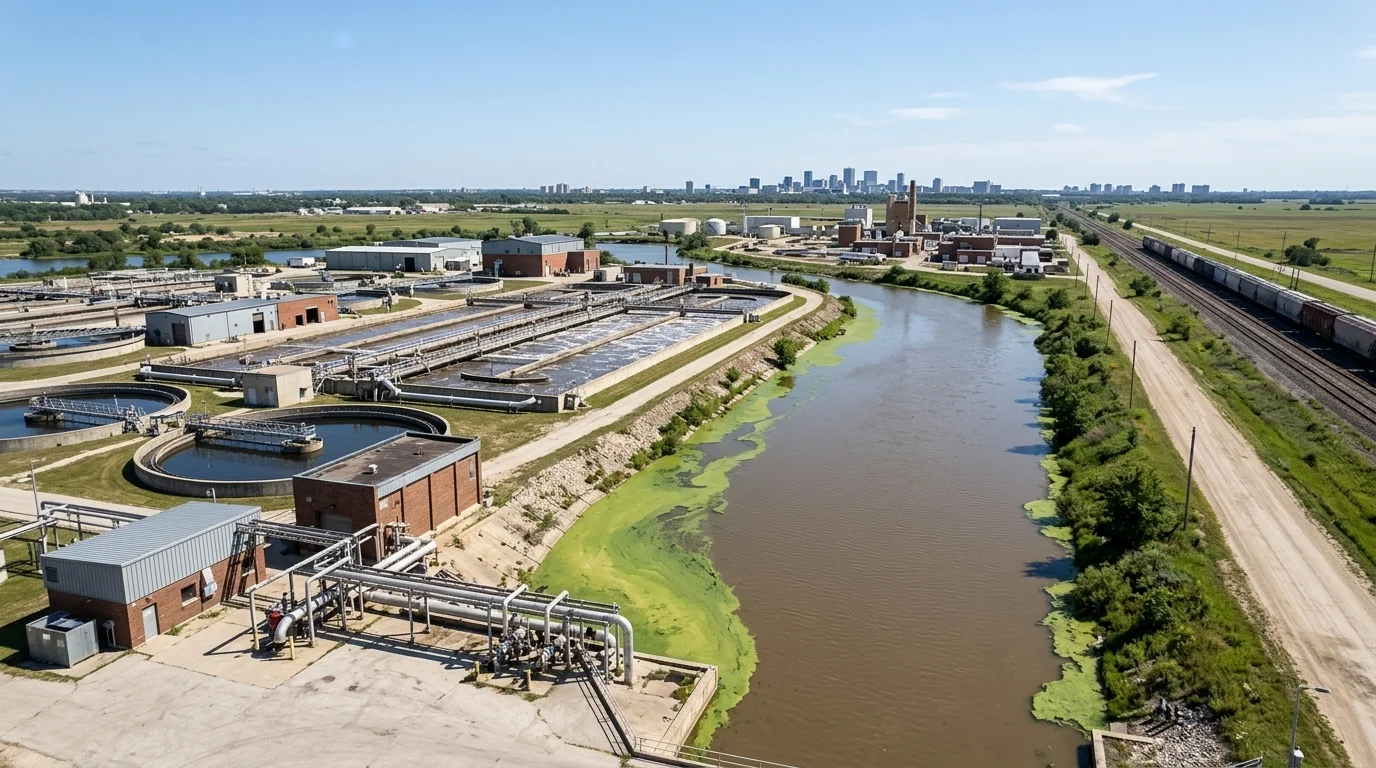
Whether oysters can actually thrive in Raritan Bay remains an open question. Water quality has improved dramatically since the Clean Water Act era, but combined sewer overflows from both the New York and New Jersey sides of the bay continue to affect conditions, and some environmental scientists have raised doubts about whether the habitat is viable enough for oysters to reproduce and spread.
The project has also faced political friction on Staten Island, where many residents in Sandy-devastated communities like Tottenville initially wanted traditional hard infrastructure and have grown frustrated with years of construction delays since the original 2014 funding award. The breakwaters are not flood barriers in the conventional sense and are not designed to stop storm surge, a distinction that has fueled ongoing debate about what the project can and cannot deliver.
What the monitoring results show will matter beyond Staten Island. Living Breakwaters is one of the most-cited examples in national and international discussions about nature-based coastal resilience, and its track record will influence how federal agencies and coastal cities invest in similar approaches going forward. The Army Corps of Engineers and federal climate programs have increasingly pointed to projects like this one as models, meaning scientists' findings here carry weight far outside New York Harbor.
New York State posted the request for proposals on the state's official procurement platform on June 4, 2026. The contract value and monitoring timeline have not been disclosed publicly.