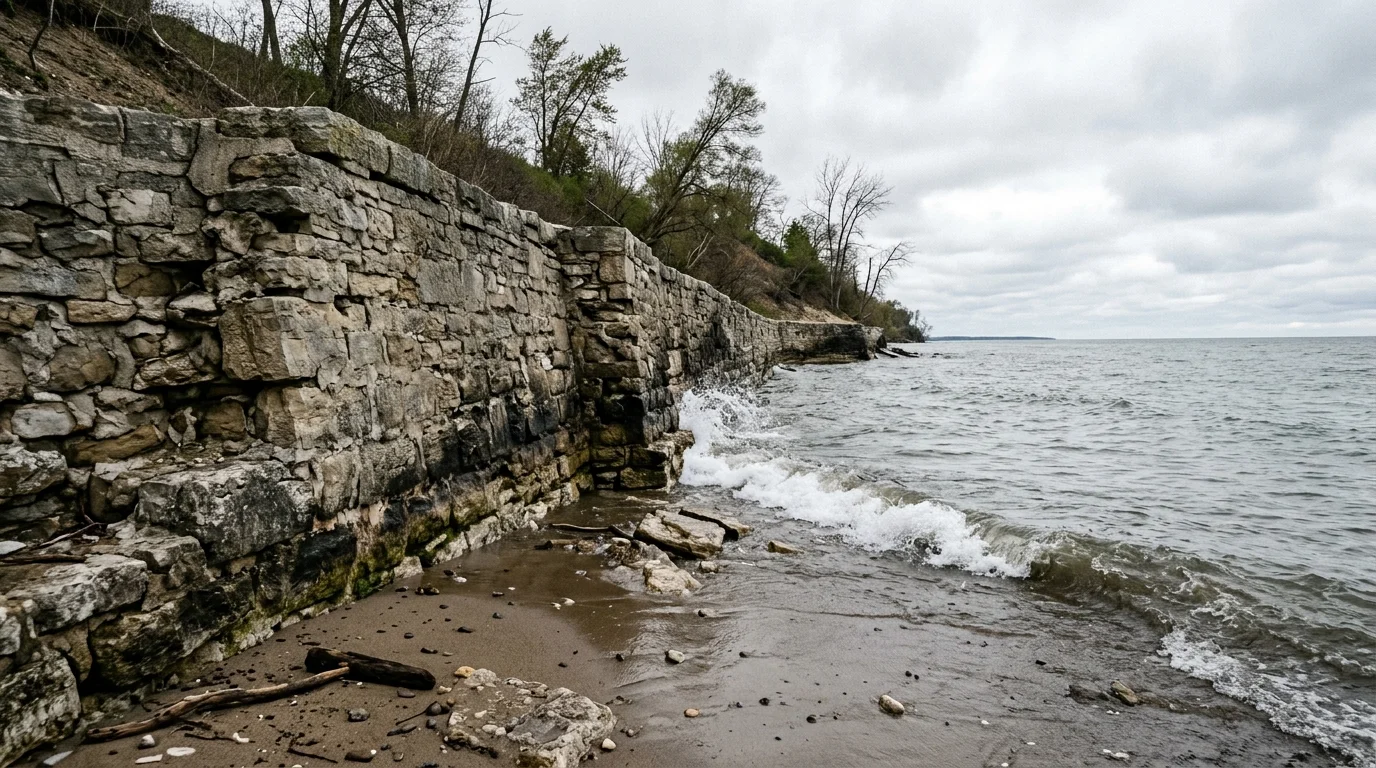
One of west Michigan's most beloved public beaches is losing its footing. Ottawa County is looking for a contractor to reconstruct the historic retaining wall at Ottawa Beach, a lakefront landmark near Holland that has been battered by years of surging Lake Michigan water levels and increasingly violent storms.
The project sits at a difficult intersection: the wall is part of the Historic Ottawa Beach Parks system in Park Township, which means the county can't simply pour a modern concrete barrier and call it done. Reconstruction must follow preservation standards that match the structure's historic character, a requirement that narrows the field to contractors with both marine construction experience and historic masonry skills. Cost and timeline figures were not included in the bid solicitation posted through MITN.
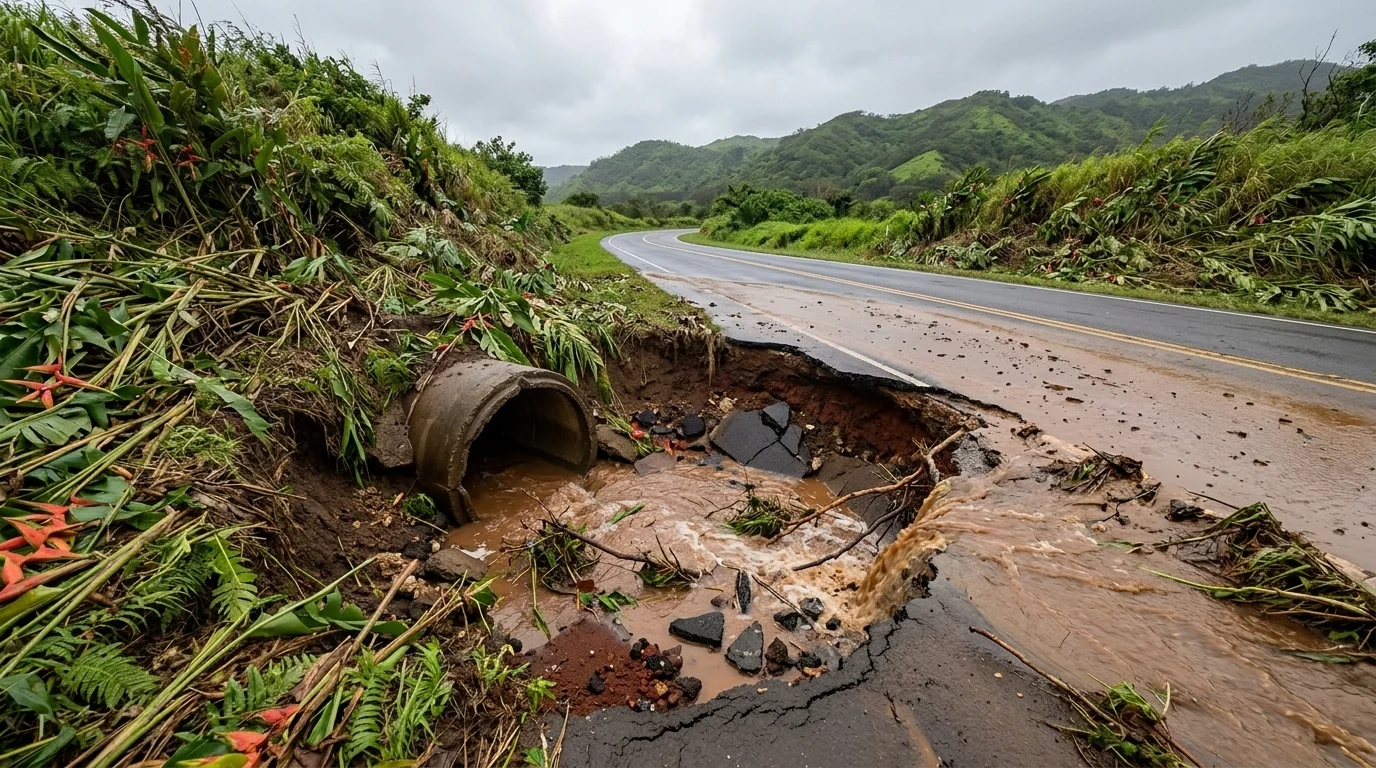
The urgency behind the project is rooted in what Lake Michigan has done to Ottawa County's shoreline over the past decade. Between 2013 and 2020, the lake rose roughly six feet, swinging from near-record lows to near-record highs amid climate-shifted precipitation and reduced winter ice cover that reshaped the Great Lakes. The surge was devastating along Ottawa County's developed waterfront: bluffs collapsed, homes along Lakeshore Drive were evacuated or lost, and public beaches shrank significantly. Even as lake levels have moderated since 2021, the coastline is now more exposed, and storm events that older seawalls were built to handle have grown more intense. Seiche events, ice shoves, and northwest gales routinely overtop and undermine shoreline structures built for a calmer era.
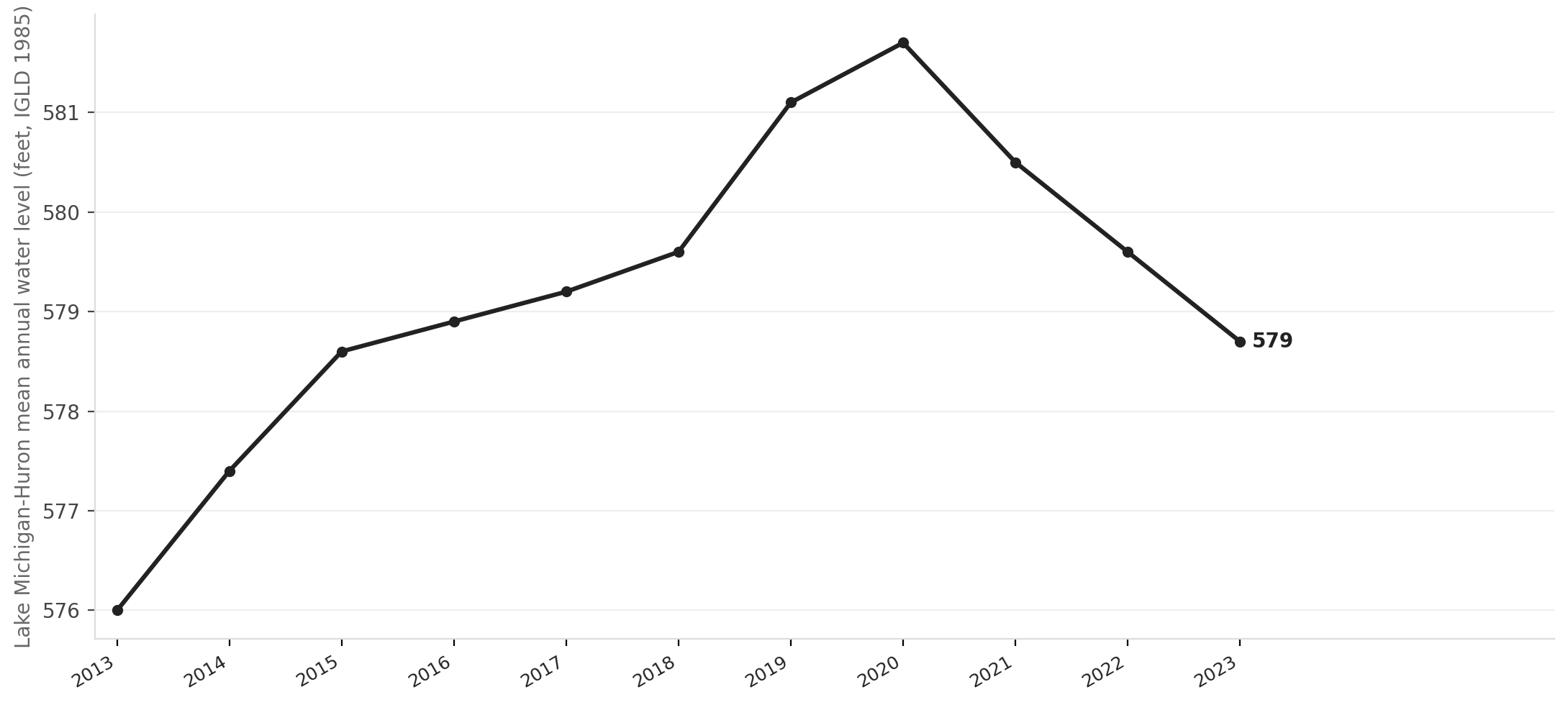
Source: NationGraph.
Ottawa Beach has deep roots in the region. The site at the mouth of the Black River was developed as a Victorian resort community in the 1880s, when the Ottawa Beach Hotel drew wealthy tourists by steamship and rail. The hotel burned in 1923, but the public parks system that grew up around it, including the Pump House Museum and Waukazoo Woods, remains central to the county's identity. Lakefront recreation and tourism are major economic drivers in Ottawa County, which has roughly 300,000 residents and a heavily developed Lake Michigan shoreline.
Ottawa County Parks has been working through a backlog of shoreline and park infrastructure repairs since the high-water crisis peaked, and the retaining wall project is part of that longer effort. The county's parks millage, which voters have repeatedly renewed, funds the system independently of the broader county budget. How quickly the wall can be rebuilt depends largely on finding the right contractor for a job that demands an uncommon combination of skills.