Twenty-eight Florida institutions issued a housing procurement solicitation in the last 30 days after going silent for more than 12 months, the largest such re-entry figure among Sun Belt states, ahead of Texas (24), Georgia (17), and North Carolina (14). The number is not a coincidence. It is what happens when $4 billion in federal disaster recovery dollars and a state tax-credit application deadline arrive in the same month.
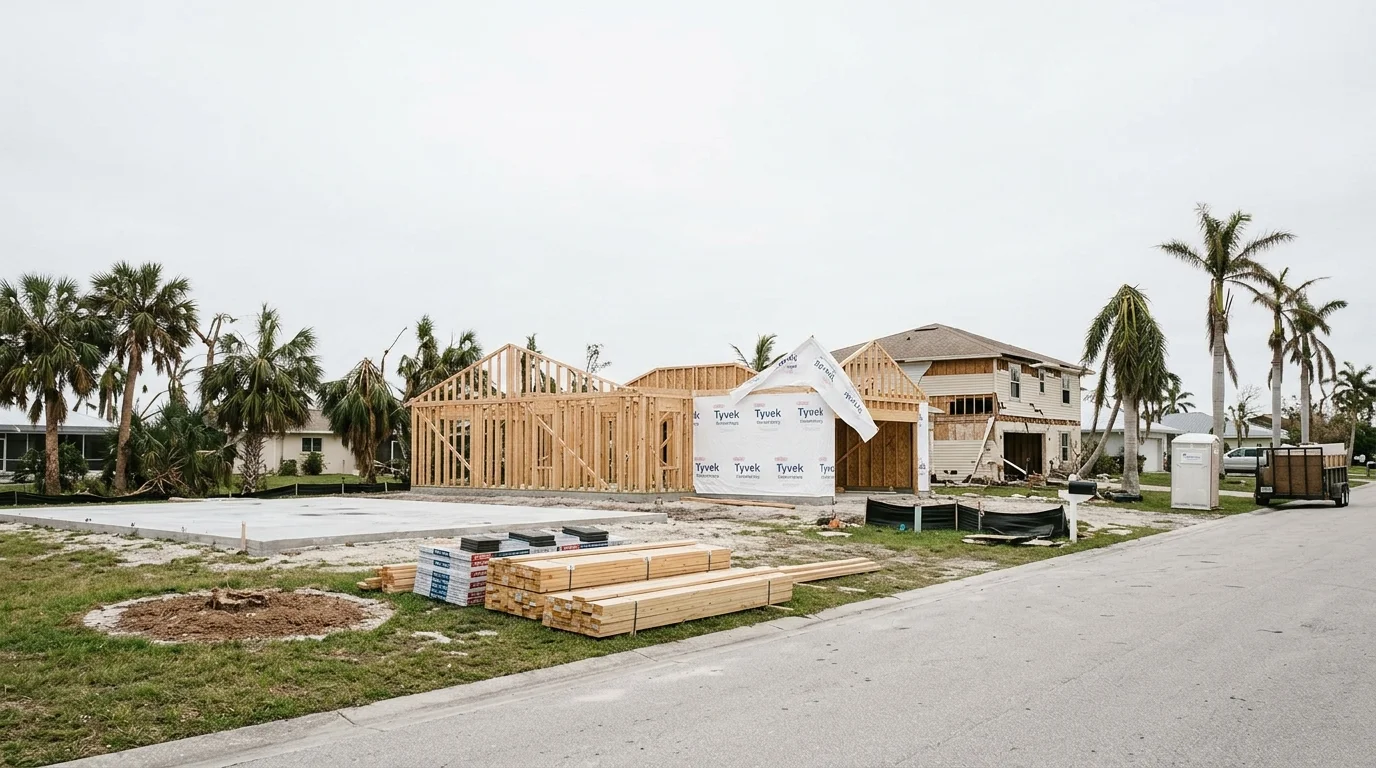
Congress authorized the money in December 2024 under the Disaster Relief Supplemental Appropriations Act (P.L. 118-158). HUD published its allocations in January 2025, distributing CDBG-DR funds across Florida counties devastated by Hurricanes Idalia, Debby, Helene, and Milton. The named amounts were large: Pinellas County received $813.8 million, Hillsborough $709.3 million, Pasco $585.7 million, Manatee $252.7 million, Sarasota $210 million, Lee $100.7 million. But the money did not move. Counties spent all of 2025 drafting action plans, running public-comment periods, and waiting for HUD approval reviews, a compliance queue that, for most Gulf Coast jurisdictions, ran 12 to 18 months.
The RFPs appearing now are the first sign that queue is clearing. Escambia County and Pensacola together account for at least five solicitations in the last 30 days alone, covering CDBG-DR construction pre-qualification, environmental review services, modular emergency shelters, and homeless housing. Hamilton County, a rural north-Florida jurisdiction not known for active housing procurement, issued a CDBG Housing Rehabilitation RFP targeting a minimum of 21 low-to-moderate-income units, its first housing solicitation in over a year. Hialeah released an RFP for multifamily residential buildings on city-owned properties with dedicated public-employee apartments, a workforce housing model with no recent precedent in the city's procurement history.
The second force driving the surge is calendar-driven rather than disaster-driven. Florida Housing Finance Corporation launched three simultaneous geographic Housing Credit RFAs, RFA 2026-201, 2026-202, and 2026-203, in June 2026, with application deadlines in August. The FHFC program requires local governments to submit matching co-applications, which means any municipality that wants a piece of the tax-credit cycle must issue its own solicitation inside the window. That mechanism pulled in Jacksonville's Local Stack Funding for Attainable Housing RFP, Miami-Dade's combined SHIP/HOME release, Aventura's Hero Housing Program, and Orange County's Goldenrod Village design solicitation, jurisdictions that had no active housing programs on the books a month ago.
Florida Gulf Coast University in Fort Myers issued a student housing RFQ in the same window, a signal that the recovery economy in Lee County is now broad enough to pull university capital programs into the same procurement moment.
This is a second wave, not the peak. Monthly housing RFP issuance in Florida surged from a trough of 22 institutions in November 2025 to a high of 64 in April 2026. The 28 institutions counted here are the subset that missed that initial surge, smaller counties, housing authorities operating on thinner administrative capacity, and municipalities that needed the FHFC deadline to force internal action. They are arriving late to a market that has already been moving for several months.
The political backdrop adds pressure. The Florida Policy Institute has documented that the Florida Department of Commerce has declined to establish a homeowner reimbursement program from the CDBG-DR allocation, directing the money instead toward infrastructure and rental housing construction. That choice has generated sustained pressure on county governments to demonstrate visible procurement activity, completed projects, open bids, contracts awarded, before the next legislative session.
For residents in the named Most Impacted and Distressed counties, the RFPs mean contractors are now being qualified, environmental reviews are being commissioned, and construction timelines are becoming real rather than projected. The gap between a federal allocation and a shovel in the ground typically runs two to three years for CDBG-DR programs; the counties entering procurement now in mid-2026 are running close to that timeline for the January 2025 allocation.
The signal to watch is August 2026. That is when the FHFC Housing Credit applications close and when several Gulf Coast counties have indicated they expect their HUD-approved action plans to convert into executed construction contracts. If the procurement volume holds through that deadline, Florida will have compressed what is normally a multi-year recovery ramp into roughly 18 months. If it stalls, because of contractor capacity constraints, HUD compliance findings, or the political fight over homeowner reimbursements, the 28 institutions that just rejoined the market may find themselves waiting again.