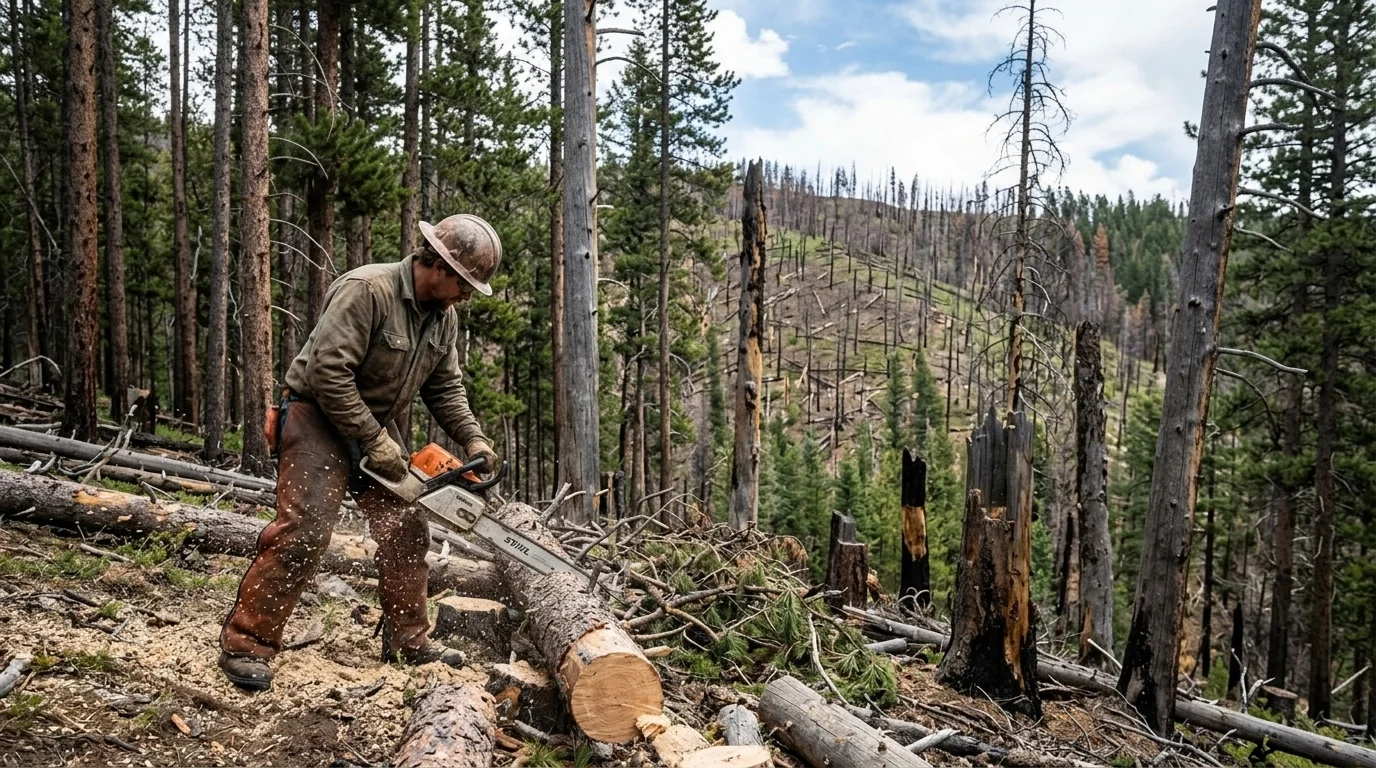
Red Feather Lakes, Colorado is pushing ahead with large-scale forest thinning designed to protect a mountain community that spent much of 2020 watching the state's largest wildfire in history burn through its surrounding hills.
The project targets the wildland-urban interface around Red Feather Lakes, a small unincorporated Larimer County community of a few hundred year-round residents nestled in the Roosevelt National Forest about 50 miles northwest of Fort Collins at 8,300 feet elevation. Rather than working property by property, the effort focuses on treating entire forest stands, clearing undergrowth, removing ladder fuels that allow ground fires to climb into tree canopies, and thinning unnaturally dense timber across contiguous acres. The solicitation is posted on the Rocky Mountain Bid System, though specific cost figures and acreage have not been publicly disclosed.
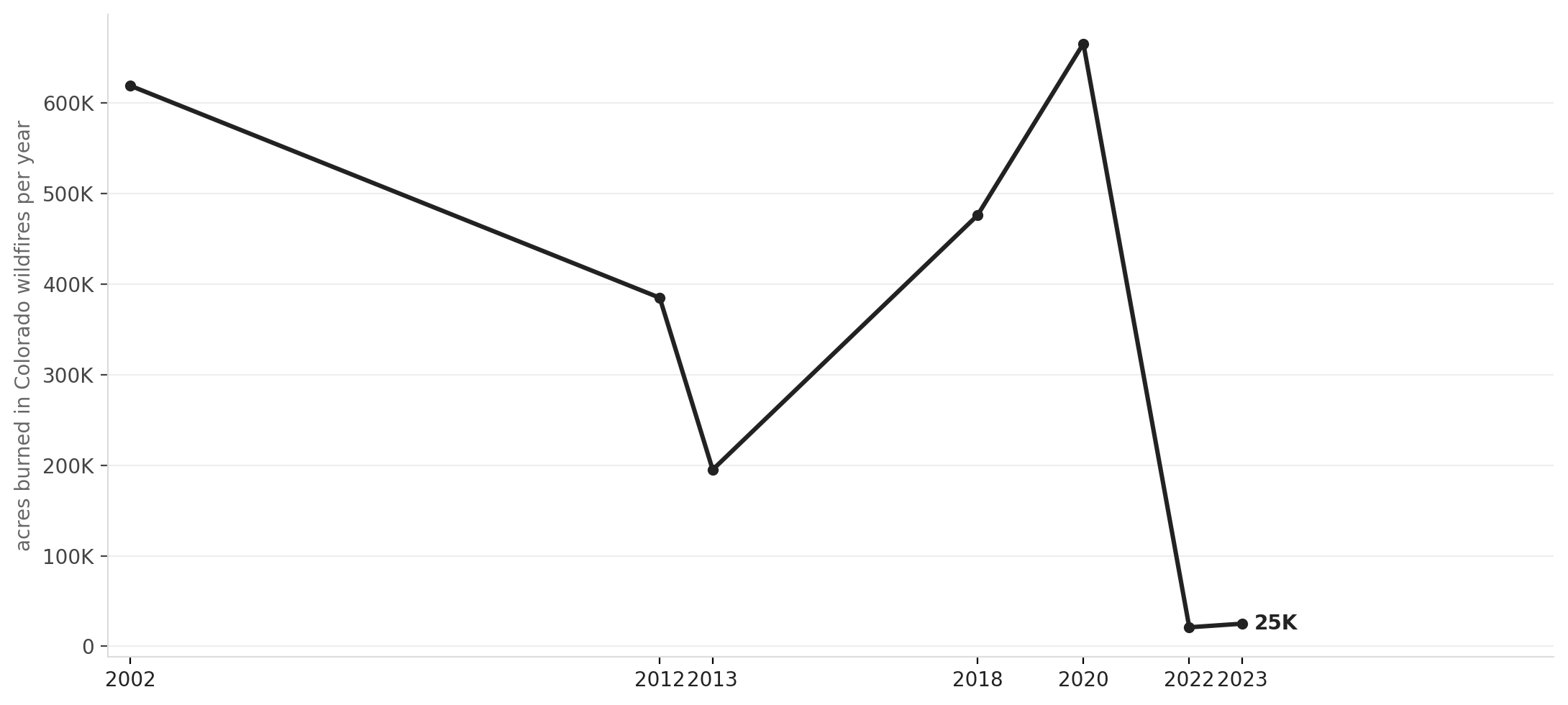
The backdrop is impossible to ignore. The Cameron Peak Fire ignited in August 2020, burned for 112 days, consumed 208,913 acres, destroyed 469 structures, and swept directly through and around Red Feather Lakes before it was contained. It remains the largest wildfire ever recorded in Colorado. Weeks later, the East Troublesome Fire ignited on the other side of the Continental Divide. The twin disasters made clear that decades of piecemeal, voluntary mitigation work had not kept pace with the risk.
Source: NationGraph.
The density of that fuel load has deep roots. A century of federal fire suppression prevented the low-intensity burns that once naturally thinned these forests. A mountain pine beetle epidemic in the 2000s and 2010s killed millions of Colorado trees, leaving standing dead timber throughout the Front Range. Persistent drought tied to climate change has dried out what remains.
The stakes extend well beyond the community itself. Red Feather Lakes sits near the headwaters of the Cache la Poudre River, Fort Collins' primary drinking water source. The Cameron Peak burn scar has continued producing sediment and debris flows into the watershed in the years since, a problem that has driven additional investment in upstream forest health. Protecting the forests above the Poudre matters to a metro area of hundreds of thousands of people downstream.
Federal policy has shifted to match the urgency. The U.S. Forest Service launched its 10-Year Wildfire Crisis Strategy in early 2022, designating the Colorado Front Range as one of 21 national priority landscapes for accelerated treatment. Funding from the 2021 Bipartisan Infrastructure Law and the 2022 Inflation Reduction Act gave land managers resources to move faster than had historically been possible. The Red Feather Lakes project reflects that pipeline reaching local scale.
For residents who lived through 2020, the question is whether treatment can outrun the next fire. Many face insurance non-renewals and rising mitigation costs. The community has one main road in and out, a chokepoint that has made evacuation planning a chronic concern for Larimer County emergency managers. The contractor selection process is now underway.