Washington issued 9 pickleball facility RFPs in the last 30 days, against a 12-month monthly average of roughly 2.4, a 3.7x spike, and nearly every one of them is coming from a city that is not Seattle.
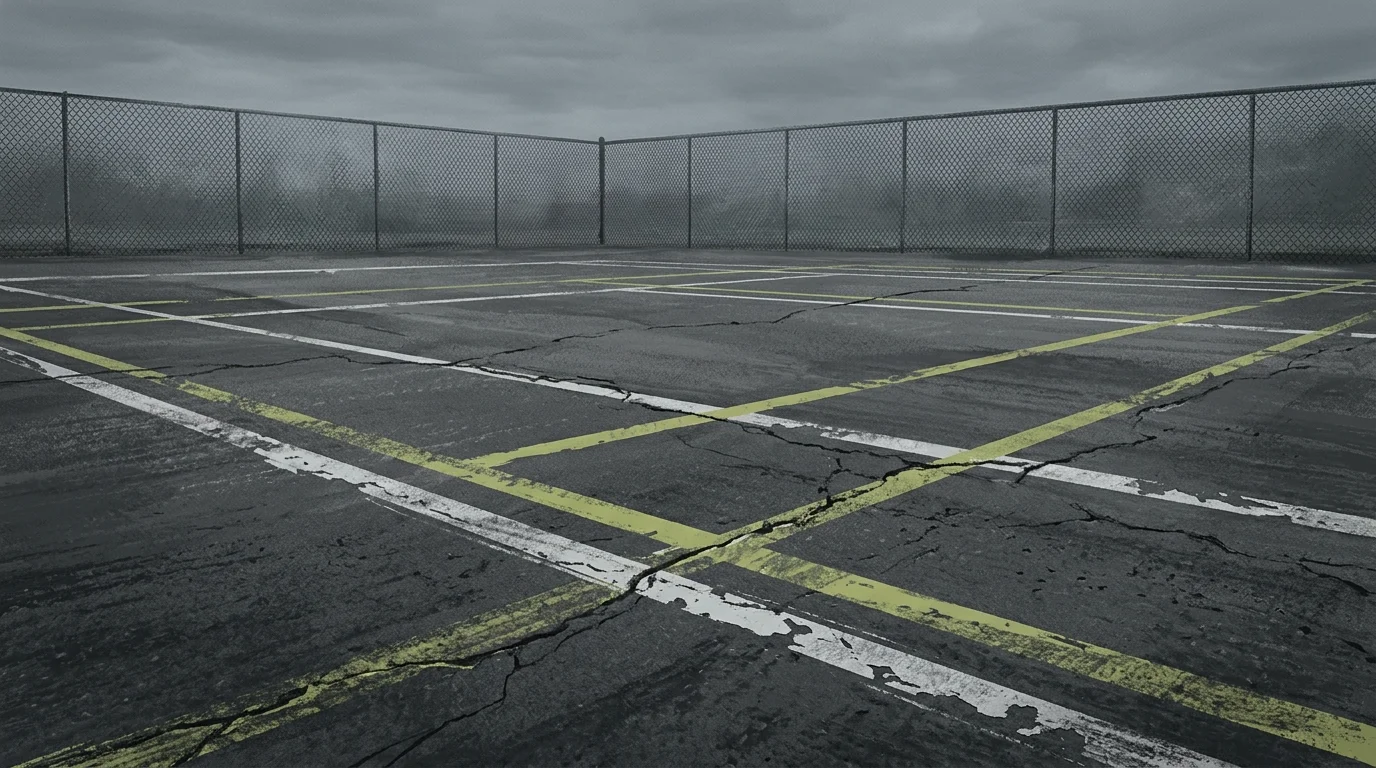
The acceleration is inseparable from a single document: Seattle Parks and Recreation's draft Outdoor Racquet Sports Strategy, released April 6, 2026, which would convert 36 dual-striped courts back to tennis-only by a June 22 deadline, shrinking the city's pickleball inventory from 92 courts to 56. The backlash has been loud: the Seattle Metro Pickleball Association gathered more than 2,400 petition signatures and filled public hearings on April 23 and again on May 4 through 7. But the political signal that matters most for infrastructure spending isn't the petition, it's the vacuum. When the largest city in the state that invented the sport signals it is walking away from shared-use courts, surrounding municipalities read that as an opening.
The geographic footprint of the current surge makes the dynamic plain. The most active clusters are Spokane County, where the City of Spokane, Spokane Valley, and Cheney are all moving simultaneously, and Snohomish County, where Arlington, Everett, and Lake Stevens have each entered the market. No single city dominates the list; the largest municipality involved has a population under 230,000. This is not one city making a big bet, it is a patchwork of mid-sized and small governments each deciding, in the same 30-day window, to get ahead of demand.
Source: NationGraph.
The funding mechanism explains why the timing is so compressed. Washington's Recreation and Conservation Office received a federal Land and Water Conservation Fund allocation of $2.08 million for its FY2024–2028 outdoor recreation grant cycle, which began in October 2024. Within that cycle, Snohomish County received $2 million and Spokane Valley received $1 million specifically for outdoor recreation development, grant awards that carry construction timelines and spend-down requirements. The RCO explicitly lists pickleball court resurfacing and new construction as eligible uses. Cities drawing on pass-through dollars from those awards have a deadline-driven incentive to issue RFPs now, not later. At $200,000 to $300,000 per new court, per Seattle Parks' own cost estimates, a $1 million award buys three to five courts, enough to anchor a dedicated facility.
The civic stakes here are higher than in most states. Washington designated pickleball its official state sport in March 2022 under SB 5615, signed by Gov. Inslee and codified in RCW 1.20.200. The sport was invented on Bainbridge Island in 1965. That history is not merely trivia: when a city council debates whether to build pickleball courts, it is debating a statutory state symbol, and the politics of inaction carry a different weight than they would for, say, bocce. Washington already ranks first nationally in per-capita pickleball participation and claims more than 3,500 courts across 715-plus sites. The current RFP surge, if it closes into contracts, would extend that lead.
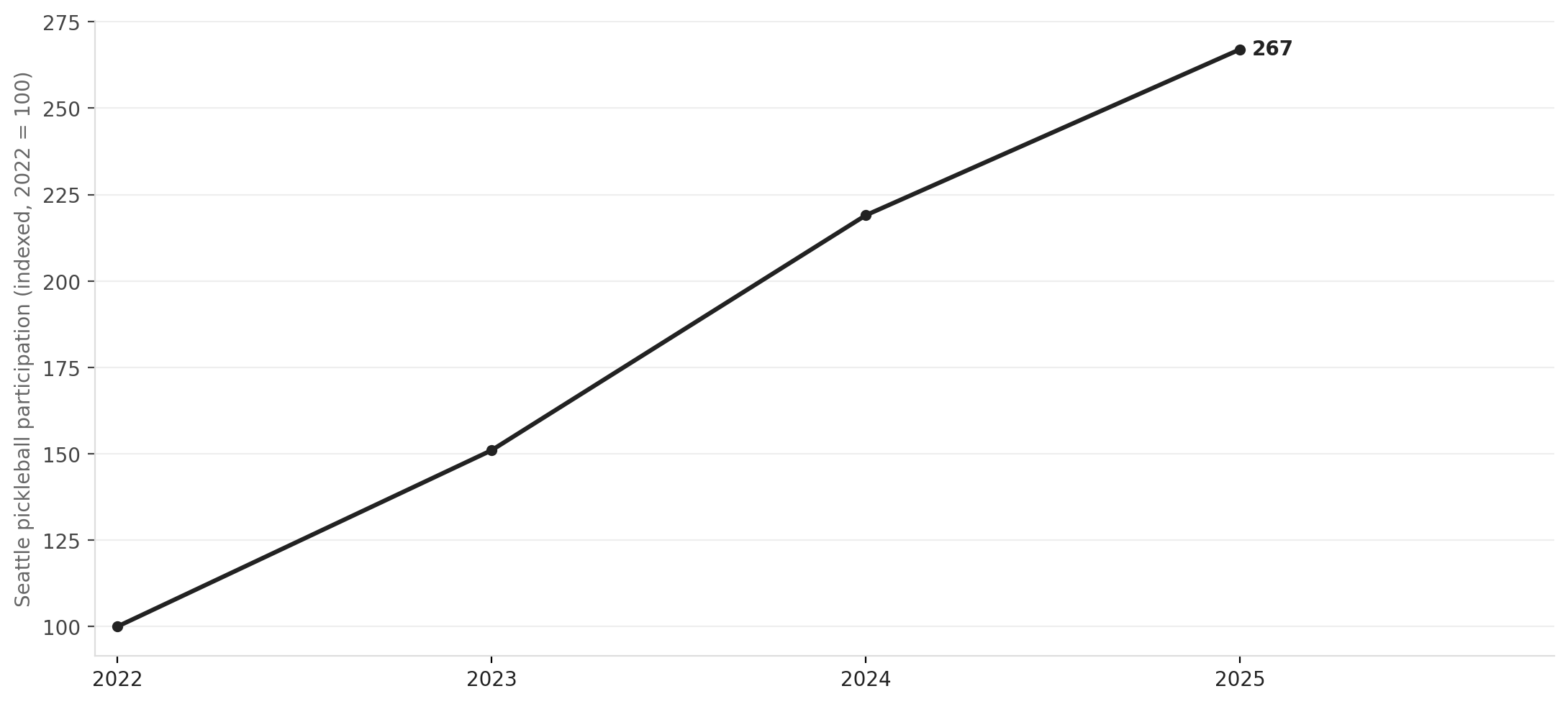
The Seattle situation also illustrates a structural tension in shared-use court management that other cities are watching closely. Pickleball participation in Seattle outpaced tennis for three consecutive years, up 51 percent in 2023, 45 percent in 2024, and 22 percent in 2025, yet the city has not resurfaced a pickleball court since 2023. The draft strategy's logic is that dual-striped courts satisfy neither sport well and that separating them produces better outcomes per user. Whether the Parks board accepts that argument will depend partly on what happens at the remaining public hearings, with the June 22 deadline still in play.
The private sector is also moving. The Seattle region is reportedly adding nearly 150 courts across nine major new facilities by late 2026, including a 27-court indoor complex in South Seattle. Private courts don't replace public ones for lower-income players or for the pick-up game culture that drives participation numbers, but they do change the political calculus: if affluent players have indoor options, the fight over public courts becomes a fight about who public courts are actually for.
For residents outside Seattle, the practical question is whether the current RFP wave closes into shovel-ready projects before the grant cycle's spend-down clock tightens. The next signal to watch is how many of the nine current RFPs convert to awarded contracts by fall 2026, and whether Seattle's Parks board, facing a June 22 decision, modifies the court-reduction proposal enough to contain the political momentum that has already pushed its neighbors into the procurement queue.