Maryland public institutions issued 11 solar RFPs in the last 30 days, more than double the state's trailing monthly average of roughly five, a 2.2x surge that maps almost exactly onto a single date: May 12, 2026, when Governor Wes Moore signed HB 1532, the Utility RELIEF Act.
The acceleration is not coming from private developers. It is a government procurement wave. Montgomery County Public Schools, the University of Maryland Baltimore County, the City of Rockville, Baltimore County, and the Maryland Transit Administration are among the active issuers pushing solar contracts out the door. These are institutions with large electricity bills, limited tolerance for utility cost volatility, and procurement offices that spent months watching the legislation move through Annapolis. When Moore's signature made the law effective immediately, the RFPs were ready.
The Utility RELIEF Act does several things at once, and the combination is what makes the window feel urgent. The law commits $200 million from Maryland's Strategic Energy Investment Fund: $100 million to offset utility bills and another $100 million for an annual bidding process for local clean energy projects. It locks in net metering rules for existing projects on a defined timeline through 2027–2030, resolving the regulatory ambiguity that had kept some procurement packages in limbo. And it legalizes plug-in solar up to 1,200 watts, making Maryland the fifth U.S. state to do so, with no utility approval required. SEIA Mid-Atlantic director Georgina Arreola-Lennox said the bill "doubles down" on rooftop and community solar after years of uncertain policy.
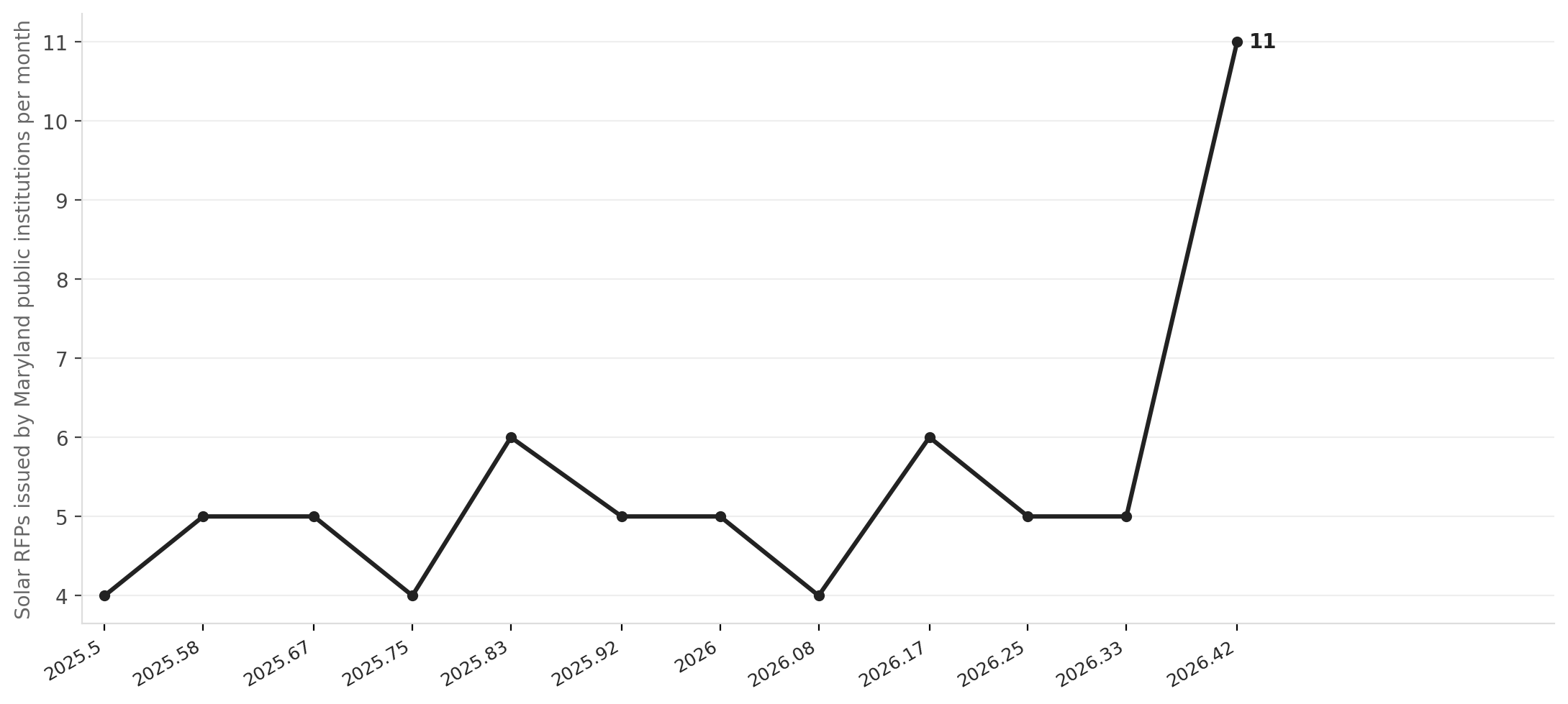
Source: NationGraph.
The urgency has been building longer than a single bill cycle. The 2025 Renewable Energy Certainty Act, which took effect July 1, 2025, resolved a prolonged dispute between counties and the Public Service Commission over who had authority to site solar projects. That fight had functionally stalled county-level and institutional procurement for years. Once the siting question was settled, agencies could design RFPs around actual project locations rather than hypothetical ones. The Utility RELIEF Act then answered the remaining question: what happens to net metering when rate structures shift? With that answered, the procurement backlog moved.
Underneath both pieces of legislation sits a hard statutory deadline. Maryland's Renewable Portfolio Standard requires 52.5% renewable energy by 2030, including 14.5% from solar specifically. That solar carve-out does not flex based on market conditions or legislative calendars. For a school district or transit authority operating on multi-year capital cycles, a contract signed in June 2026 represents a materially different compliance position than one signed in 2028, when the installation and interconnection queue will be longer and the buffer before the deadline will be shorter.
Utility costs are adding pressure on the other side. BGE raised electric distribution costs on January 1, 2026, part of a series of planned hikes that have made Maryland one of the faster-rising electricity markets in the mid-Atlantic. Large public institutions absorb those increases directly in their operating budgets. The combination of a compliance mandate, a fixed deadline, a fresh $100 million competitive funding pool, and rising baseline costs creates a procurement incentive that is stronger now than at almost any point in the last decade.
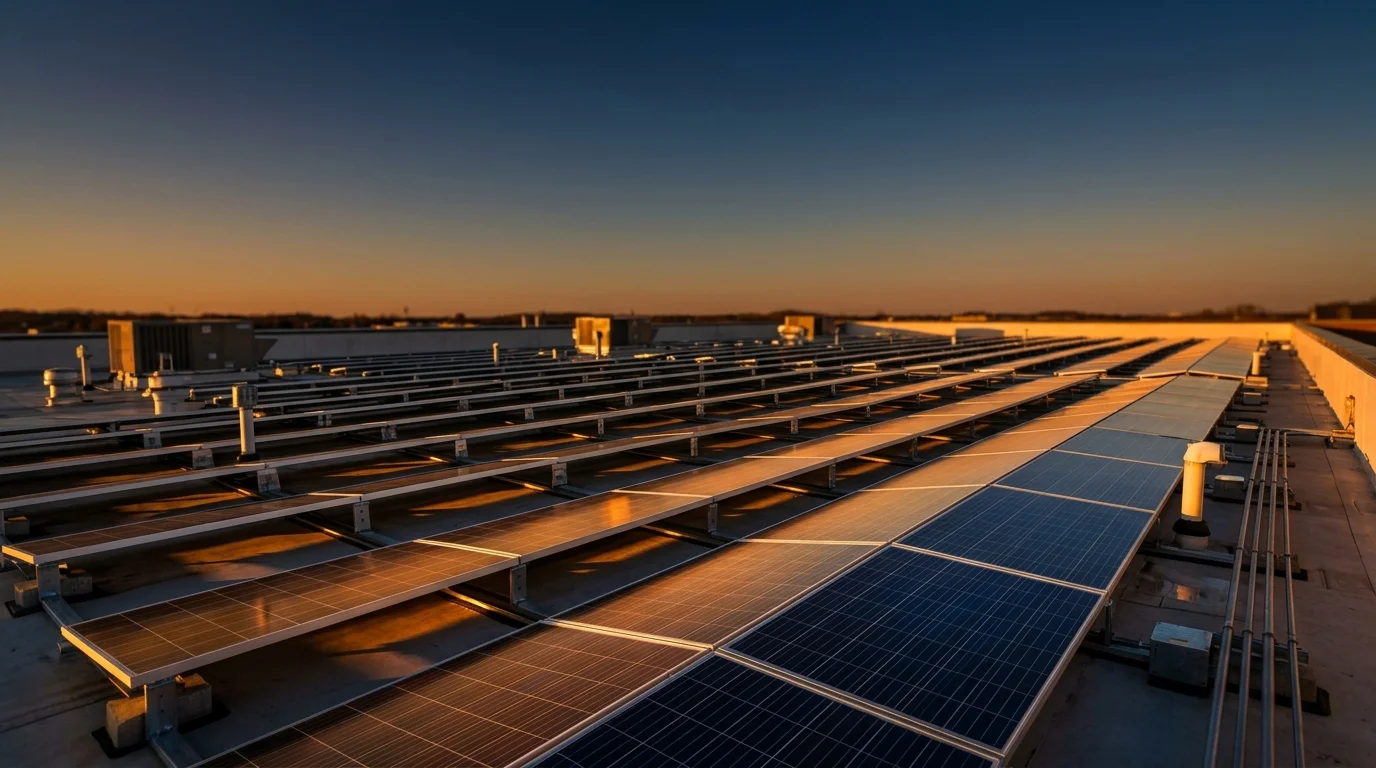
Montgomery County Public Schools has issued nine solar RFPs over the past 12 months, the highest volume of any single institution in the state. UMBC is running a multi-phase solar installation procurement. Rockville is moving on rooftop and carport photovoltaic systems across multiple facilities. The Maryland Transit Administration is folding solar into infrastructure projects. These are not pilot programs or exploratory studies. They are capital procurements by institutions that have decided the window is open and that waiting costs money.
Maryland's 12-month total of 71 solar RFPs still trails Virginia (137) and Pennsylvania (131), two states with longer procurement histories and larger institutional bases. But the rate of acceleration in May 2026 is sharper than Maryland's own baseline by a wider margin than either of those states has shown recently. The question is whether the surge holds through summer or whether it represents a one-time release of the procurement backlog.
The next signal to watch is the $100 million competitive bidding process for local clean energy projects that the Utility RELIEF Act created. According to the legislation, that process runs on an annual cycle. The first round of awards will indicate which institutions converted RFPs into signed contracts and how quickly the new funding pool gets absorbed. If the queue clears faster than the annual cycle replenishes it, the procurement pace will likely slow. If the state's backlog is deeper than one funding round can address, the pressure to issue and award before 2030 will keep activity elevated well past this spring.