Thirteen Florida water utilities have issued procurement solicitations in the past 30 days for the first time in over a year, producing 19 active RFPs where the same window last year produced zero. The institutions span the full range of Florida water infrastructure: tiny storm-battered coastal districts, major urban authorities, and county-level mitigation programs. What they share is a collision of two federal deadlines hitting at exactly the same moment.
The clearest illustration of that collision is Cedar Key Water and Sewer District. Cedar Key is a Gulf Coast community of roughly 700 people that took a direct hit from Hurricane Helene in 2024 and has been largely quiet in the procurement record since. In January 2026, Governor DeSantis announced $167.5 million in CDBG-DR and Rural Infrastructure Fund awards to 34 rural communities, including $11.4 million to Cedar Key split between potable water system hardening ($7.35M) and wastewater facility hardening ($4.12M). Within weeks, the district had two RFPs on the street simultaneously: one for engineering services, one for grant management. A utility that had issued nothing for more than a year is now running two procurement tracks at once because the grant money finally arrived and the spend-down clock is running.
That dynamic is playing out across a much larger geography. The same CDBG-DR tranche, combined with a prior $311 million round announced in late 2025, collectively reached 71 storm-impacted communities targeted by Hurricanes Idalia, Debby, Helene, and Milton. CDBG-DR dollars carry explicit spend-down requirements: once awarded, they must move into contracts or risk recapture. That alone would generate procurement activity. But a second deadline is running in parallel and it is arguably harder.
Source: NationGraph.
The Infrastructure Investment and Jobs Act's water State Revolving Fund authorization expires September 30, 2026. States that have not fully obligated their allocations by that date risk losing unspent funds. Florida is one of the largest SRF beneficiaries in the country: the Florida DEP received $844 million plus $90 million in new Drinking Water SRF capitalization grants from EPA starting July 2025, along with $83 million in Clean Water SRF capitalization, all requiring local procurement actions to actually flow. Florida DEP's FFY2026 SRF Intended Use Plans include a dedicated Supplemental Appropriation for Hurricanes Helene and Milton track layered on top of standard IIJA capitalization grants, meaning hurricane-hit communities can draw on both pipelines simultaneously, but only if they have active procurements ready.
The result is visible in which institutions are now bidding. Miami-Dade County, Toho Water Authority in Kissimmee, Orlando Utilities Commission, and the City of Lakeland represent the urban end of the spectrum, each with RFPs that had been dormant for more than a year. The City of Milton in Santa Rosa County, the Town of Branford in Suwannee County, and Flagler Beach represent storm-damaged smaller communities moving through procurement for the first time since the storms. Orange County's solicitations for the Long Lake and Verona Park areas carry explicit CDBG-DR designations in the RFP titles themselves, confirming these are grant-funded execution actions, not planning studies.
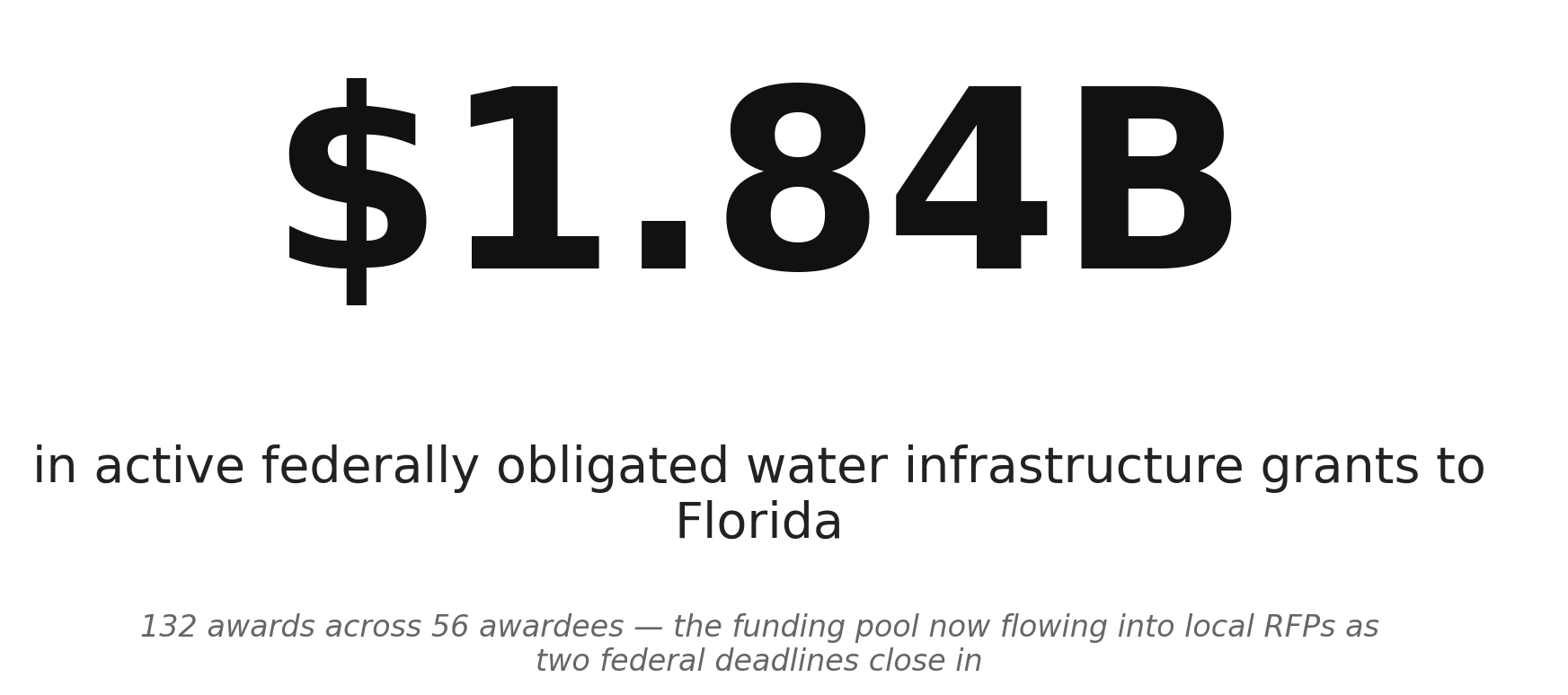
The fiscal bedrock beneath all of this is substantial: Florida currently holds $1.84 billion in active, federally obligated water infrastructure grants across 132 awards and 56 awardees. That stock of obligated-but-unspent federal money is what the procurement surge is now trying to deploy.
The urgency is sharpened by what has disappeared from the federal toolkit at the same time. FEMA's BRIC resilience grant program was terminated in April 2025 with no replacement, eliminating an alternative channel that smaller communities had used for exactly this category of hardening work. The White House FY2026 budget proposed cutting SRF funding by roughly 90% in the next cycle. For utilities deciding whether to move now or wait, the calculus has become straightforward: the money that exists is the money that is available, and the window to obligate it closes in September.
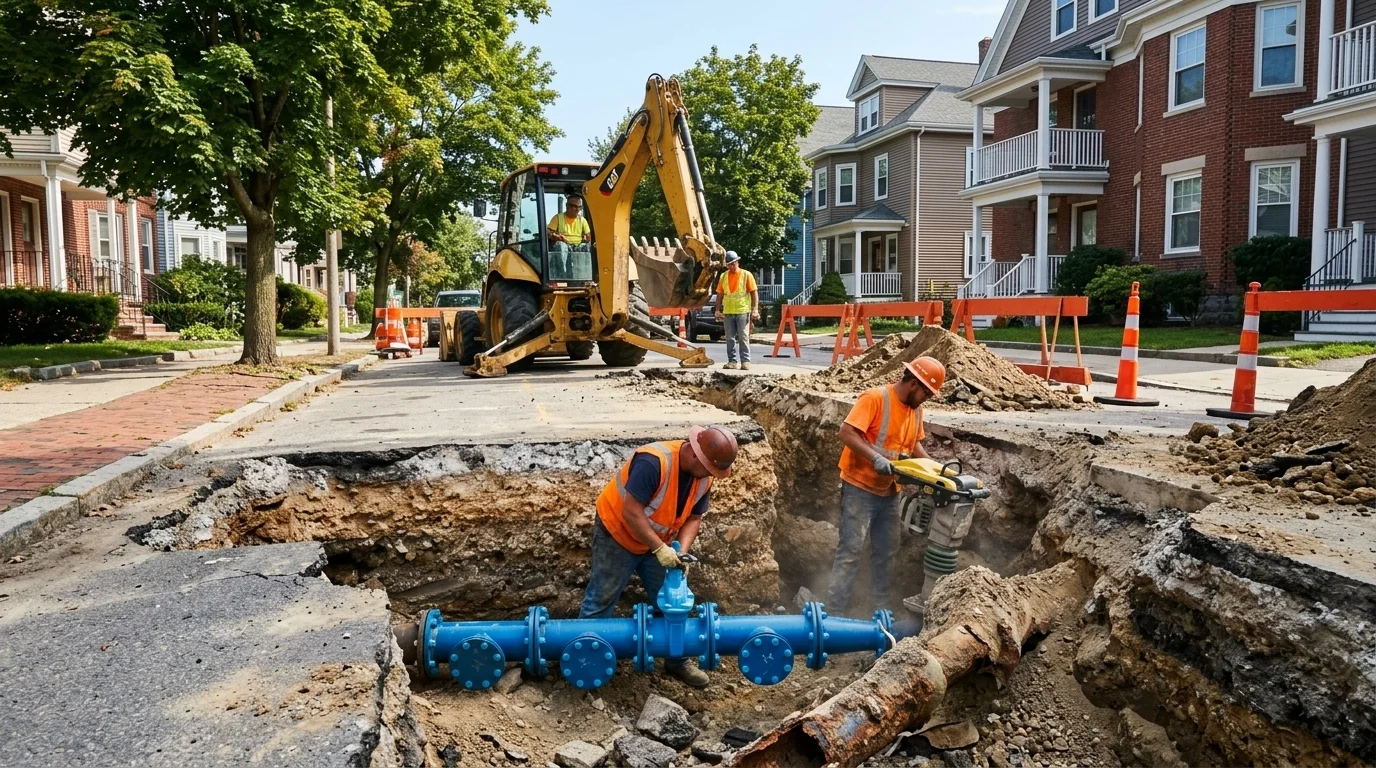
For residents of storm-hit communities in Levy County, Santa Rosa County, Suwannee County, and across the Gulf Coast, the practical meaning of this procurement wave is that water and wastewater infrastructure repairs that have been in planning limbo since 2023 and 2024 are finally entering the contracting phase. Engineering firms, construction contractors, and grant administrators will be in high demand across the state through the summer.
The signal to watch is what happens after September 30. If Congress does not reauthorize IIJA water SRF funding and no replacement resilience channel fills the BRIC gap, the 19 RFPs on the street today may represent the high-water mark for years. The question Florida utilities are racing to answer is whether they can get contracts executed before the federal clock stops.